UP Board Class 10th English Supplementary Chapter 1 Question Answer The Inventor Who Kept His Promise.

Class 10 English Supplementary Reader Chapter 1 Questions and Answers UP Board The Inventor Who Kept His Promise.

कक्षा 10 अंग्रेजी पाठ 1 प्रश्न उत्तर

These Solutions are part of UP Board Solutions for Class 10 English. Here we have given UP Board Solutions for Class 10 English Supplementary Reader Chapter 1 The Inventor Who Kept His Promise.

SHORT ANSWER TYPE QUESTIONS

Answer the following questions in about 25 words :
Question 1.
who was Edison ? Describe the invention that made him famous all over America.
(एडीसन कौन था ? उस आविष्कार का वर्णन कीजिए जिसने उसे पूरे अमेरिका में प्रसिद्ध कर दिया।)
[2009, 17]
                                     Or
who was Edison? How did he become famous all over America ? [2013]
(एडीसन कौन था ? वह पूरे अमेरिका में कैसे प्रसिद्ध हुआ ?)
Answer:
Edison was a famous American scientist who invented the electric light and gramophone that made him famous all over America. (एडीसनं एक प्रसिद्ध अमेरिकी वैज्ञानिक था जिसने विद्युत-प्रकाश (UPBoardSolutions.com) और ग्रामोफोन का आविष्कार किया और पूरे अमेरिका में प्रसिद्ध हो गया।)

UP Board Solutions

Question 2.
who invented electric light ?
(विद्युत-प्रकाश का आविष्कार किसने किया ?)
Answer:
Edison invented electric light. (एडीसन ने विद्युत-प्रकाश का आविष्कार किया।)

Question 3.
what did Edison love in his childhood ?
(अपने बचपन में एडीसन किस वस्तु से प्रेम करता था ?)
Answer:
Edison loved to do experiments in his childhood.
(अपने बचपन में एडीसन (UPBoardSolutions.com) प्रयोग करने से प्रेम करता था।)

UP Board Solutions

Question 4.
why was Edison taken out of school ? [2009, 11, 12]
(एडीसन को स्कूल से क्यों निकाल दिया गया ?)
Answer:
Edison was taken out of school because his teacher thought that he was naughty and stupid.
(एडीसन को स्कूल से इसलिए निकाल दिया गया, क्योंकि उसकी अध्यापिका उसे शरारती तथा मूर्ख समझती थी।)

Question 5.
How did Edison find his mother the best teacher for him ?
(एडीसन ने अपनी माँ को किस प्रकार सबसे अच्छी अध्यापिका पाया ?) [2010, 13, 14,.17]
Answer:
Edison found his mother as his best teacher because she always gave a satisfactory answer to his questions and helped him in all his experiments.
(एडीसन ने अपनी माँ को सबसे अच्छी अध्यापिका इसलिए पाया, क्योंकि वह सदैव उसके प्रश्नों का सन्तोषजनक उत्तर देती थीं और उसके परीक्षणों में उसकी सहायता करती थीं।)

Question 6.
What did Edison think when he saw the bird flying?
(जब एडीसन ने पक्षी को उड़ते हुए देखा तब उसने क्या सोचा ?)
Answer:
When Edison saw the bird flying, he thought, “Man can also fly if he eats worms.
(जब एडीसन ने पक्षी को उड़ते हुए देखा तब उसने सोचा, “मनुष्य भी उड़ सकता है यदि वह कीड़े खाये।”)

UP Board Solutions

Question 7.
what did Edison see at the poultry farm one day ?
(एक दिन मुर्गी फार्म पर एडीसन ने क्या देखा ?)
Answer:
One day at the poultry farm Edison saw a hen sitting on its eggs.
(एक दिन मुर्गी फार्म पर एडीसन ने एक मुर्गी को अपने अण्डों पर बैठा हुआ देखा।)

Question 8.
why did the poor girl fall ill?what did Edison’s motherwarn him?
(गरीब लड़की बीमार क्यों पड़ गयी ? एडीसन की माँ ने उसे क्या चेतावनी दी ?)
Answer:
Edison gave the poor girl a mixture of worms to drink. So she fell ill. Edison’s mother warned him not to do such silly experiments.
(एडीसन ने गरीब लड़की को कीड़ों का (UPBoardSolutions.com) मिश्रण पीने के लिए दिया। इसलिए वह बीमार पड़ गयी। एडीसन की माँ ने उसे ऐसे मूर्खतापूर्ण प्रयोग न करने की चेतावनी दी।)

UP Board Solutions

Question 9.
what was the funny experiment for which Edison was punished?
(एडीसन ने कौन-सा प्रयोग किया जिसके कारण उसे दण्डित किया गया ?)
                   Or
why did Edison get a beating from his mother ? [2013] 
(एडीसन अपनी माता के द्वारा क्यों पिटा ?)
Answer:
Once Edison saw a hen sitting on its eggs. His other told him that the hen was hatching its eggs so that chickens may come out of the eggs. The next morning he got a dozen of eggs and sat on them. He had only smashed the eggs and spoil his shorts. He got a good beating as punishment by his mother for his experiment.
(एक दिन एडीसन ने एक मुर्गी को अण्डों के ऊपर बैठे देखा। उसकी माँ ने उसे बताया कि मुर्गी अपने अण्डों को ‘से रही है जिससे कि चूजे अण्डों से बाहर आ सकें। अगले दिन एडीसन एक दर्जन अण्डे लाया और उन्हें सेने लगा। अण्डे टूट गये (UPBoardSolutions.com) और उसकी निक्कर खराब हो गयी। इस पर उसे उसकी माता के द्वारा भली प्रकार पीटकर दण्डित किया गया।)

Question 10.
why did Edison join the railways ? How much did he earn on the first day ? [2011, 14, 17]
(एडीसन ने रेलवे-सेवा क्यों की ? पहले दिन उसने कितना पैसा कमाया ?)
Answer:
Edison joined the railways to earn some money to meet the expenses on his experiments. He earned two dollars on the first day.
(एडीसन ने रेलवे-सेवा इसलिए की, क्योंकि उसे अपने परीक्षणों पर होने वाले खर्च के लिए धन की आवश्यकता थी। उसने पहले दिन दो डॉलर कमाये।)

UP Board Solutions

Question 11.
why was Edison dismissed from his job ?
(एडीसन को नौकरी से क्यों निकाल दिया गया ?)
Answer:
Edison was dismissed from his job because during a journey there was fire in the compartment of the train on account of his carelessness. (उसे नौकरी से इसलिए निकाल दिया, क्योंकि यात्रा के दौरान उसकी लापरवाही के कारण एक डिब्बे में आग लग गयी थी।)

Question 12.
what did Edison need more money for ?
(एडीसन को और अधिक धन की आवश्यकता क्यों थी ?)
Answer:
Edison needed more money to carry on his experiments.
(अपने प्रयोगों को आगे जारी रखने के लिए एडीसन (UPBoardSolutions.com) को और अधिक धन की आवश्यकता थी।)

Question 13.
Describe the important inventions made by Edison.
(एडीसन के द्वारा किए हुए मुख्य आविष्कारों का वर्णन कीजिए।) [2011, 12, 15, 16]
                       Or
What inventions were made by Edison? [2017]
(एडीसन द्वारा कौन-से आविष्कार किए गए थे?)
Answer:
Edison invented the gramophone and electric light besides many other inventions.
(एडीसन ने बहुत-से अन्य आविष्कारों के साथ-साथ विद्युत-प्रकाश और ग्रामोफोन का भी आविष्कार किया।

UP Board Solutions

Question 14.
How did Edison become famous in America ?
(एडीसन अमेरिका में कैसे प्रसिद्ध हुआ ?)
Answer:
Edison became famous in America by inventing the gramophone and electric light.
(ग्रामोफोन और विद्युत-प्रकाश के आविष्कार से एडीसन (UPBoardSolutions.com) अमेरिका में प्रसिद्ध हो गया।)

Question 15.
After how many experiments did Edison succeed in inventing electric light ?
(कितने प्रयोगों के पश्चात् एडीसन ने विद्युत-प्रकाश के आविष्कार में सफलता पायी ?)
Answer:
Edison succeeded in inventing the electric light after about twelve hundred experiments.
(एडीसन ने लगभग 1200 प्रयोगों के पश्चात् विद्युत-प्रकाश के आविष्कार में सफलता पायी।)

Question 16.
What did Edison promise to the people of America ?
(एडीसन ने अमेरिकावासियों को क्या वचन दिया था ?)  [2011, 14, 16, 17]
Answer:
Edison promised to the people of America that he would give them electric light in two years.
(एडीसन ने अमेरिकावासियों को यह वचन दिया था कि वह दो वर्ष में उन्हें विद्युत प्रकाश दे देगा।)

UP Board Solutions

Question 17.
when did the company manager give Edison a good job ?
(कम्पनी मैनेजर ने एडीसन को अच्छी नौकरी कब दी ?)
Answer:
When Edison repaired a machine within a short time, the company manager gave him a good job.
(जब एडीसन ने मशीन को थोड़े ही समय में ठीक कर दिया तब कम्पनी मैनेजर ने उसे एक अच्छी नौकरी दे दी।)

Question 18.
In what way did Edison make the world happy ? [2009, 11, 12, 17, 18]
(एडीसन ने संसार को किस प्रकार खुशहाल बनाया ?)
Answer:
Edison made the world happy by inventing the gramophone and electric light.
(एडीसन ने ग्रामोफोन और विद्युत-प्रकाश का (UPBoardSolutions.com) आविष्कार करके संसार को खुशहाल बनाया।)

UP Board Solutions

Question 19.
Why did his teacher think that Edison was stupid and naughty ?
(उसकी अध्यापिका ने यह क्यों सोचा कि एडीसन मूर्ख और शैतान है ?) [2012, 15, 16]
                                         Or
What made the teacher think that Edison was stupid and naughty ?
(अध्यापिका ने ऐसा कैसे सोचा कि एडीसन मूर्ख तथा शैतान है ?) [2009]
Answer:
Edison asked his teacher different types of questions. So his teacher thought that Edison was stupid and naughty. (एडीसन अपनी अध्यापिका से अनेक प्रकार के प्रश्न पूछता था। इसलिए उसकी अध्यापिका ने सोचा कि एडीसन मूर्ख और शैतान है।)

Question 20.
How did Edison serve his country during the First World War ?
(प्रथम विश्व युद्ध के समय एडीसन ने अपने देश की किस प्रकार सेवा की ?) [2015, 17]
                                  Or
Why was Edison awarded a medal ? [2014, 15, 16]
(एडीसन को पदक क्यों प्रदान किया गया ?)
Answer:
Edison served his country during the First World War by making forty war-time inventions. For this service he was awarded a medal. (एडीसन ने चालीस युद्धकालीन आविष्कार करके प्रथम विश्व युद्ध के समय (UPBoardSolutions.com) अपने देश की सेवा की। इस सेवा के लिए उसे पदक प्रदान किया गया।)

UP Board Solutions

Question 21.
How did Edison keep his promise to his countrymen ?
(एडीसन ने अपने देशवासियों को दिया अपना वायदा कैसे पूरा किया ?) [2011]
                        Or
What promise did Edison keep ? [2013]
(एडीसन ने कौन-सा वायदा निभाया ?)
                      Or
What was the promise that Edison kept ?
(वह कौन-सा वायदा था जो एडीसन ने निभाया ?)
Answer:
Edison promised his countrymen to give them electric light. He did 1200 experiments and gave electric light to his countrymen. Thus he kept his promise.
(एडीसन ने अपने देशवासियों को विद्युत-प्रकाश देने (UPBoardSolutions.com) का वचन दिया था। उसने 1200 प्रयोग किये और अपने देशवासियों को विद्युत-प्रकाश प्रदान किया। इस प्रकार उसने अपना वायदा पूरा किया।)

Question 22.
Edison said, “I would like to give to the world laughter and more light. Did he keep his word? How ? .
(एडीसन ने कहा था, “मैं संसार को अधिक खुशी और अधिक प्रकाश देना चाहता हूँ।’ क्या उसने अपने वचन को निभाया ? कैसे ?)
Answer:
Yes, Edison kept his word by the invention of gramophone and gave more laughter while the invention of electric light gave more light and happiness to the world,
(हाँ, एडीसन ने अपने वचन को निभाया। उसने ग्रामोफोन के आविष्कार से अधिक खुशी प्रदान की, जबकि विद्युत प्रकाश के आविष्कार से संसार को और अधिक प्रकाश और खुशी प्रदान की।)

UP Board Solutions

Question 23.
what happened on the Silver Jubilee of electric light ?
(विद्युत-प्रकाश की रजत जयन्ती पर क्या घटना घटित हुई ?)
Answer:
At the Silver Jubilee of electric light the President of U.S.A. honoured Edison, and when Edison stood to thank the President he suddenly fell ill.
(विद्युत-प्रकाश की रजत जयन्ती पर अमेरिकी राष्ट्रपति ने उसका अभिनन्दन किया, परन्तु जब वह राष्ट्रपति को धन्यवाद देने को खड़ा हुआ तो वह अकस्मात् बीमार पड़ गया।)

Question 24.
How did the great and eventful life of Edison end ? [2012, 15]
(एडीसन के महान और गौरवशाली जीवन का अन्त कैसे हुआ ?)
Answer:
In the Silver Jubilee function when Edison got up to thank the President, he suddenly fell ill and died on the morning of 18th October, 1931. Thus the great and eventful life of Socrates ended.
(रजत जयन्ती समारोह में जब एडीसन राष्ट्रपति को धन्यवाद देने के लिए उठे तभी वे अचानक बीमार पड़ गए और 18 अक्टूबर, 1931 की प्रात:काल उनका सवर्गवास हो गया। इस प्रकार एडीसन के महान् और गौरवशाली जीवन का (UPBoardSolutions.com) अन्त हो गया।)

Question 25.
What did the other scientists say when Edison started work on an electric bulb ?
(जब एडीसन ने बिजली के बल्बे पर काम करना आरम्भ किया तब अन्य वैज्ञानिकों ने क्या कहा ?)
                                      Or
Why did all the scientists laugh at Edison ? [2014, 18]
(सभी वैज्ञानिक एडीसन पर क्यों हँसे ?)
Ans.
When Edison started work on an electric bulb, other scientists laughed and said that it was impossible.
(जब एडीसन ने बिजली के बल्ब पर काम करना आरम्भ किया तब अन्य वैज्ञानिक हँसे और कहा कि यह असम्भव है।)

UP Board Solutions

Question 26.
what did Edison promise to his mother ? How did he keep it ?
(एडीसन ने अपनी माँ से क्या वायदा किया? उसने इसे कैसे पूरा किया?) [2013]
Answer:
Edison promised his mother to give him a dollar every night from what he earned. He gave him the money and kept his promise.
(एडीसन ने अपनी माँ से वायदा किया कि हर रात को जो कुछ वह कमाएगा उसमें से एक डॉलर उसे देगा। उसने अपनी माँ को धन दिया और वायदा निभाया।)

Question 27.
How did the fire accident occur ?
(आग की दुर्घटना कैसे घटी ?)
Answer:
One day he was doing an experiment in his laboratory, the train turned round a corner. A bit of phosphorus fell on the floor of his carriage and it caught fire.
(एक दिन वह अपनी प्रयोगशाला में प्रयोग कर रहा था कि ट्रेन एके कोने पर मुड़ी, थोड़ा-सा फॉस्फोरस डिब्बे के फर्श पर गिर गया और आग लग गई।)

Question 28.
How did Edison’s father encourage him to read more books ?
(एडीसन के पिता ने उसे अधिक पुस्तकें पढ़ने के लिए कैसे प्रोत्साहित किया ?) [2015]
                                      Or
Why did Edison’s father give him twenty-five cents for every book ?
(एडीसन के पिता उसे प्रत्येक पुस्तक के लिए 25 सेण्ट क्यों देते थे ?)
Answer:
Edison was fond of reading books. His father encouraged him by giving him 25 cents for reading a book.
(एडीसन पुस्तकें पढ़ने का बहुत शौकीन था। उसके (UPBoardSolutions.com) पिता ने उसे एक पुस्तक, पढ़ने के लिए 25 सेण्ट देकर प्रोत्साहित किया।)

UP Board Solutions

Question 29.
Which of the Edison’s inventions do you think is the most important and why ? [2010, 15]
(एडीसन कौन था ? उसके आविष्कारों में आप किसे महत्त्वपूर्ण समझते हैं और क्यों ?)
                                        Or
Describe the important invention made by Edison. [2015]
(एडीसन द्वारा बनाए गये महत्त्वपूर्ण आविष्कार का वर्णन कीजिए।)
Answer:
Edison was brilliant scientist of his age. He is known for many useful inventions. But he is famous for the invention of electric bulb. Invention of electric bulb is boon for humankind. If he did not invent the electric bulb, then we live in darkness today.
(एडीसने अपने समय का प्रतिभाशाली वैज्ञानिक था। वह (UPBoardSolutions.com) अपने बहुत-से महत्त्वपूर्ण आविष्कारों के लिए जाना जाता है। लेकिन वह विद्युत बल्ब के आविष्कार के लिए प्रसिद्ध है। विद्युत बल्ब मानव सभ्यता के लिए एक वरदान है। यदि वह विद्युत बल्ब का आविष्कार नहीं करता, तो हम आज भी अँधेरे में रहते।)

Question 30.
why has the life of Edison been called great and eventful ? [2016]
(एडीसन के जीवन को महान् और गौरवशाली क्यों कहा जाता है ?)
Answer:
The life of Edison has been called great and eventful because he gave the world more laughter and more light by inventing gramophone and electric bulb.
(एडीसन के जीवन को महान् और गौरवशाली कहा गया है क्योंकि उसने ग्रामोफोन और विद्युत बल्ब का आविष्कार करके संसार को अधिक प्रसन्नता और अधिक प्रकाश दिया।)

UP Board Solutions

MULTIPLE CHOICE TYPE QUESTIONS

Select the most suitable alternative to complete each of the following statements:

1. Edison told his teacher, “But the kites have no wings and still we can fly them in the sky. It was ……….. [2011, 14, 17]
(a) a silly statement.
(b) an intelligent statement.
(c) a doubtful statement.
(d) a wrong statement.

2. Edison gave his teacher ……….
(a) a silly answer.
(b) an intelligent answer.
(c) a doubtful answer.

3. When Edison went on asking questions in the class, the teacher thought that …………..
[2011, 12, 13, 14, 15, 16,17]
(a) he was trying to befool her.
(b) he was stupid and naughty. “
(c) he was very intelligent.
(d) arrogant

4. Edison was fond of …….. [2011, 12, 13, 14, 15, 16, 17, 18]
(a) telling stories.
(b) playing games.
(c) doing experiments.
(d) flying kites.

UP Board Solutions

5. when Edison tried his experiment on his servant girl, …. [2013, 15, 16, 17, 18]
(a) she began to fly.
(b) she fell down on the ground.
(c) she fell ill.
(d) she started running.

6. Edison got a beating from his mother because ………. [2012, 14, 15, 16]
(a) he had smashed the eggs and spoilt his shorts.
(b) he had hatched the eggs.
(c) he had eaten up all the eggs.

7. Edison’s father gave him twenty-five cents for every book he read because ……… [2012, 15, 18]
(a) he had failed in all his experiments.
(b) he wanted Edison to read more.
(c) Edison’s ideas were wrong.
(d) he was a funny boy.

8. Electric light shone for the first time in America in …….. [2011, 13, 14, 15, 16, 17, 18]
(a) 1878.
(b) 1880.
(c) 1882.
(d) 1872

UP Board Solutions

9. The scientist who invented electric light was …….
(a) an Indian.
(b) an American.
(c) a German.
(d) an Austrian.

10. Edison was taken out of the school because …………… [2011, 15, 17]
(a) his teacher was dissatisfied with him and wanted him to be withdrawn from school.
(b) he was dissatisfied with the teacher.
(c) the teacher did not permit Edison to ask questions.

11. Edison’s parents took him out of the school because ……..
(a) they lacked money.
(b) the teacher asked them to do so.
(C) the teacher was mad.
(d) he was a dull boy.

12. Edison used his pocket money …..
(a) to buy sweets and chocolates.
(b) to buy books.
(c) to set up a small laboratory.
(d) to go out and see new places.

UP Board Solutions

13. He invented gramophone in …
(a) 1882.
(b) 1878.
(c) 1898.
(d) 1888.

14. Edison became famous with the discovery of …………
(a) television.
(b) railway wagon.
(c) radio.
(d) gramophone.

15. Edison died on ……. [2014, 16, 17]
(a) 18th Oct. 1931.
(b) 13th Sept. 1929.
(c) 14th Sept. 1886.
(d) 2nd Nov. 1930.

UP Board Solutions

16. Edison succeeded in making an electric bulb after nearly …….. [2012, 15, 18]
(a) one thousand experiments.
(b) two thousand experiments.
(c) one thousand and two hundred experiments.
(d) one thousand and five hundred experiments.

17. The teacher thought that Edison was :…………. [2013]
(a) stubborn and haughty
(b) a genius
(c) stupid and naughty
(d) very mischievous

18. The silver jubilee of the invention of electric bulb was celebrated in : [2016]
(a) 1878
(b) 1880
(c) 1882
(d) 1929

UP Board Solutions

TRUE/FALSE STATEMENTS

State whether the following statements are ‘True’ or ‘False’:

1. Thomas Alva Edison was a German. [2011, 16, 17]
2. The teacher thought that Edison was stupid and naughty.
3. For Edison his mother was the best teacher. [2011, 12, 14, 16]
4. Young Edison found in his mother his tolerable teacher.
5. Edison bought toys and sweets with the pocket money his father gave him. [2012, 14, 16]
6. When Edison offered a wonderful mixture made from pulped worms to the servant girl, she refused to drink it.
7. Edison was born in Canada. [2009, 11, 14]
8. The Silver Jubilee of the invention of electric light was celebrated in 1929. [2014]
9. Edison was a dull boy during his student days. [2012, 15, 18]
10. Edison promised to give Americans electric light in one year.
11. Edison took up a job in the railways when he was just twelve years old.
12. Electric lights shone for the first time in America in 1880.
13. Edison did not serve his (UPBoardSolutions.com) country during the First World War.
14. Edison died on 4th September, 1882.
15. Edison did not thank the President for the award. [2008]
16. Edison succeeded in inventing the electric light after performing a thousand experiments.
17. Edison served his country during the First World War. 18. Edison showed his talking machine to the President of the United States of America at the White House in Washington.
19. As a child, Edison was fond of asking questions. [2013, 17]
20. As a child, Edison was not fond of asking questions. [2012, 14]
21. Edison was taken out of school because he was a stupid boy.
22. Edison was fond of books and read a lot of them.
23. Edison was never satisfied till he got the right answer. [2009, 14, 15, 18]
24. Edison was a German scientist. [2009, 11, 16]
25. Some of Edison’s experiments were silly but he learnt a lot from them. [2009, 17]
26. Edison was born in India. [2012]
27. Edison got a beating from his mother because he had eaten all the eggs. .
28. Edison invented the gramophone in 1877.
29. Thomas Alva Edison was a great inventor of England. [2012, 15, 18]
30. Edison made the world happier and brighter.
31. Edison said, “I shall never invent anything which will destroy life. I want to make people happy.” [2010, 11, 12 16, 17]
32. The President of America invited Edison to the White House. [2010, 11]
33. On 4th Sept, 1882, for the first time, New York shone in the brightness of electric light. [2011, 13, 17]
UP Board Solutions

34. Even in his childhood Edison loved to do experiments. [2012, 14, 15, 16, 17]
35. Parents of Edison did not encourage him in his experiment. [2013, 18]
36. Edison was a great American sailor. [2013, 16]
37. The President of the USA received (UPBoardSolutions.com) Edison and honoured him in a big function. [2013, 16]
38. Edison did not join the railways. [2013]
39. Edison made forty war-time inventions. [2014, 15]
40. Edison promised his mother to give her a dollar every night from what he earned. [2015]
41. Edison served his country during the World War II. [2015, 18]
42. Edison succeeded in making an electric bulb. [2015]
43. Edison joined the railways because he needed more money for his experiments. [2015]
44. Edison invented many things which can destroy life. [2015]
45. Edison was a great inventor but he was never awarded a medal for his inventions. [2016]
46. Thomas Alva Edison was a great singer. [2016]
47. Edison was born in England. [2016]
48. Edison made more than one thousand experiments. [2016, 17]
49. The invention of his talking machine (UPBoardSolutions.com) made Edison famous all over America. [2017]
50. Edison was an Australian scientist. [2017]
Answer:
1. F. 2. T. 3. T. 4. F. 5. F. 6. F. 7. F. 8. T. 9. T. 10. F. 11. T. 12. T. 13. F. 14. F. 15. T. 16. F. 17. T, 18. T, 19. T, 20. F, 21. T, 22. T, 23. T, 24. F, 25. T. 26. F, 27. F, 28. F, 29. F, 30. T, 31. T, 32. T, 33. T, 34. T, 35. T, 36. F, 37. T, 38. F. 39. T, 40. T, 41. F. 42. T. 43. T. 44. F, 45. F, 46. F, 47. F, 48. T. 49. T, 50. F.

Hope given UP Board Solutions for Class 10 English Supplementary Reader Chapter 1 are helpful to complete your homework.

If you have any doubts, please comment below. UP Board Solutions try to provide online tutoring for you.
UP Board Class 10th English Chapter 4 Question Answer The Nation Builders (Ralph Waldo Emerson).

Class 10 English Poetry Chapter 4 Questions and Answers UP Board The Nation Builders (Ralph Waldo Emerson).

कक्षा 10 अंग्रेजी पाठ 4 प्रश्न उत्तर

These Solutions are part of UP Board Solutions for Class 10 English. Here we have given UP Board Solutions for Class 10 English Poetry Chapter 4 The Nation Builders (Ralph Waldo Emerson).

Comprehension Questions 

In the examination paper, there are asked only two questions from each paragraph. Given below are some more questions for extra practice.

Read the following stanzas and answer the questions put there upon :

(1) Not gold, but on by …………….. fast and suffer long. [2009, 18]

Question .
1. Write the title of the poem from which the above lines have been taken. Who is the author of the poem? |
(उपर्युक्त पंक्तियाँ जिस कविता से ली गई हैं उसका नाम लिखिए। कविता के रचयिता कौन हैं?)
2. What type of people do we need to make a nation great and strong ?
(हमें किसी राष्ट्र को महान् और शक्तिशाली बनाने के लिए कैसे व्यक्तियों की आवश्यकता है ?)

UP Board Solutions
                                     Or
Who can make a nation great and strong ?
(राष्ट्र को महान् तथा शक्तिशाली कौन बना सकता है ?)
3. Why can’t gold make a nation great ? | (धन राष्ट्र को महान् क्यों नहीं बना सकता ?)
                                    Or
Explain the expressions given below :
(निम्नलिखित अभिव्यक्तियों की व्याख्या कीजिए )
Stand fast’, ‘suffer long.
4. What is the meaning of a people’ in the second line ?
(दूसरी पंक्ति में ‘a people’ का क्या अर्थ है ?)
5. What does gold mean in the poem ?
(कविता में ‘gold” शब्द का क्या अर्थ है?)
6. What do brave men do for truth and honour’s sake ?
(वीर पुरुष सच्चाई और सम्मान की रक्षा के लिए क्या करते हैं ?)
Answer:
1. The title of the poem from which (UPBoardSolutions.com) the above lines have been taken is ‘The Nation Builders. The author of this poem is Ralph Waldo Emerson.
(उपर्युक्त पंक्तियाँ जिस कविता से ली गई हैं उसका नाम ‘The Nation Builders’ है। इस कविता के रचयिता Ralph Waldo Emerson हैं।)
2. To make a nation great and strong we need men who can stand to fight and suffer for a long time for the sake of truth and honour.
(एक्ल राष्ट्र को महान् और शक्तिशाली बनाने के लिए हमें ऐसे व्यक्तियों की आवश्यकता है, जो सत्य और सम्मान की रक्षा के लिए लम्बी लड़ाई लड़ सकें और कष्ट भी सहन कर सकें।)
3. Gold can’t make a nation great because it has no life.
(धन राष्ट्र को महान् नहीं बना सकता क्योंकि इसमें जीवन नहीं होता।)

UP Board Solutions
                                       Or
The given expression means the people who are firm and can suffer for their country.
(दिये हुए कथन का तात्पर्य है कि वे व्यक्ति जो दृढ़ हैं और अपने देश के लिए कष्ट सहन कर सकते हैं।)
4. A people’ means a nation’.
(A people’ का अर्थ है-एक राष्ट्र।)
5. In the poem gold means material wealth or money.
(कविता में ‘gold’ का अर्थ है भौतिक सम्पत्ति या धन।)
6. Brave men stand fast and suffer long for truth and honour’s sake.
(वीर पुरुष सच्चाई तथा सम्मान की रक्षा के लिए दृढ़तापूर्वक डटे रहते हैं तथा यातनाएँ उठाते हैं।)

(2) Brave men who……. lift them to the sky. [2010, 11, 13, 16, 17]

Question .
1. What does this line mean here : ‘who work while others sleep.
(“who work while others sleep.’ इस पंक्ति का क्या अर्थ है ? )
2. What is the gist of the above noted stanza ? How can nation be built strong?
(उपर्युक्त पद्यांश का क्या सारांश है ? एक राष्ट्र को शक्तिशाली कैसे बनाया जा सकता है ?)
3. What type of men help to build a strong foundation of a nation ?
(किस प्रकार के व्यक्ति एक राष्ट्र की नींव दृढ़ बनाने में सहायता करते हैं ?)
                                   Or
How can a nation be built strong ?
(एक राष्ट्र को शक्तिशाली कैसे बनाया जा सकता है?)
                                  Or
who build a nation’s pillars deep?
(राष्ट्र की नींव को गहरा कौन बनाते हैं ?).
4. What does the poet mean by ‘And lift them to the sky’ ?
(And lift them to the sky पंक्ति से कवि का क्या तात्पर्य है ?)
5. What are the qualities of brave men given in this stanza?
(इस पद्यांश में वीर व्यक्तियों के कौन-कौन से गुण दिये गये हैं ?)
6. What do brave men do while others sleep?
(वीर व्यक्ति क्या करते हैं जबकि अन्य सो जाते हैं ?)

UP Board Solutions
Answer:
1. This line means that the brave (UPBoardSolutions.com) people work hard while others pass their time
in idleness. (इस पंक्ति का अर्थ है कि वीर व्यक्ति परिश्रम करते हैं, जबकि अन्य व्यक्ति सुस्ती में अपना समय बिताते हैं।)
2. The gist of the stanza is that nation needs brave, courageous and hard working people. The nation can be built strong by our bravery, courage and hard work.
(पद्यांश का सारांश है कि राष्ट्र को वीर, साहसी और परिश्रमी व्यक्तियों की आवश्यकता है। अपनी | बहादुरी, साहस और परिश्रम से ही राष्ट्र को शक्तिशाली बनाया जा सकता है।)
3. The people who are hard-working and courageous help to build a strong foundation of a nation.
(जो व्यक्ति साहसी तथा परिश्रमी होते हैं, वे ही अपने राष्ट्र की नींव दृढ़ बनाने में सहायता करते हैं।)
                                   Or
A nation can be made strong by hard work and courage.
(किसी राष्ट्र को साहस के साथ कठिन परिश्रम से शक्तिशाली बनाया जा सकता है।)
4. The poet means by this line that those people raise the nation to a great height.
(इस पंक्ति से कवि का तात्पर्य यह है कि वे लोग राष्ट्र को बुलन्दी पर पहुँचा देते हैं।)

UP Board Solutions
5. The qualities of brave men are that

  1. they work while others sleep and
  2. they hold courage when others run away.

(बहादुर व्यक्तियों के गुण हैं कि

  1. वे उस समय भी कार्य करते हैं जब अन्य व्यक्ति सो जाते हैं तथा
  2. वे उस समय भी साहस से डटे रहते हैं जब दूसरे मैदान छोड़कर भाग जाते हैं।)

6. Brave men work hard while others sleep.
(वीर व्यक्ति कठिन परिश्रम करते हैं जबकि अन्य सो जाते हैं।).

UP Board Solutions

APPRECIATION OF THE POEM

Question 1.
who can make a nation great and strong ?
(एक राष्ट्र को महान् और शक्तिशाली कौन बना सकता है? )
Answer:
Only people can make a nation great and strong.
(केवल जनता ही एक राष्ट्र (UPBoardSolutions.com) को महान् और शक्तिशाली बना सकती है।)

Question 2.
What type of men are needed to make a nation great and powerful ?
(किसी राष्ट्र को महान् और शक्तिशाली बनाने के लिए कैसी जनता की आवश्यकता है?)
Answer:
Brave, hard working and courageous men can make a nation strong.
(वीर, परिश्रमी और साहसी जनता ही किसी राष्ट्र को महान् और शक्तिशाली बना सकती है।)

UP Board Solutions

CENTRAL IDEA OF THE POEM

[2009, 10, 11, 12, 13, 14, 15, 16, 17, 18]
The poet R. W. Emerson says that not wealth but only men can make a nation great. If we want our nation to be great, we have to be brave, courageous and hard-working. These qualities would provide a strong base on which a great, strong and glorious building of a nation can stand.
(कवि R.W. Emerson कहता है कि धन नहीं, केवल व्यक्ति ही किसी राष्ट्र को (UPBoardSolutions.com) महान् बना सकते हैं। यदि हम अपने राष्ट्र को महान् बनाना चाहते हैं तब हमें वीर, साहसी और परिश्रमी बनना होगा। ये गुण एक ऐसी शक्तिशाली नींव प्रदान करेंगे जिस पर एक राष्ट्र की महान्, शक्तिशाली तथा भव्य इमारत खड़ी हो सकेगी।)

UP Board Solutions

ADVICE OF THE POET

The poet advises us to work for the nation sincerely and laboriously. We should face all the challenges bravely for making our nation great. We should sacrifice all our pleasures for the sake of our nation.
(कवि हमें शिक्षा देता है कि हम देश के लिए ईमानदारी और (UPBoardSolutions.com) मेहनत से कार्य करें। हम अपने देश को महान् बनाने के लिए सभी चुनौतियों का मुकाबला बहादुरी से करें। हमें अपने देश के लिए अपने सभी सुखों का बलिदान कर देना चाहिए।)

Hope given UP Board Solutions for Class 10 English poetry Chapter 4 are helpful to complete your homework.

If you have any doubts, please comment below. UP Board Solutions try to provide online tutoring for you.
UP Board Class 10th English Chapter 3 Question Answer The Ganga (Jawaharlal Nehru).

Class 10 English Prose Chapter 3 Questions and Answers UP Board The Ganga (Jawaharlal Nehru). 

कक्षा 10 अंग्रेजी पाठ 3 प्रश्न उत्तर

These Solutions are part of UP Board Solutions for Class 10 English. Here we have given UP Board Solutions for Class 10 English Prose Chapter 3 The Ganga (Jawaharlal Nehru).

Comprehension Questions On Paragraphs

In the examination paper, there are asked only two questions from each
paragraph. Given below are some more questions for extra practice. Read the following passages and answer the questions put thereupon :

(1) I have received so much ……..retained or preserved. [From para 1 [2010, 11, 15]]

Question.
1. What is the most precious gift that the author has received from his countrymen?
(वह सबसे मूल्यवान उपहार कौन-सा है जो लेखक को अपने देशवासियों से प्राप्त हुआ है ?)
2. What has overwhelmed the writer of the lesson ?
(किस वस्तु ने इसे पाठ के लेखक को अभिभूत कर दिया है?).
3. What does the author owe to his comrades and colleagues ?
(लेखक अपने सहकर्मियों और साथियों का किस बात का ऋणी है ?)
4. What does the writer hope in the remaining years of his life?
(अपने शेष बचे हुए जीवन में लेखक क्या आशा करता है ?)
5. What is the desire of the writer after his death ?
(मृत्यु के बाद लेखक की क्या इच्छा है ?)
                   Or
How does the writer want his body to be treated after his death ?
(अपनी मृत्यु के बाद लेखक अपने शरीर के साथ कैसा व्यवहार चाहता है ?) ।
6.Where should his ashes be sent in case he dies in a foreign country ?
(यदि उनकी मृत्यु विदेश में हो तो उनकी राख को कहाँ भेजा जाए ?)
                   Or
What does the author wish if he died in a foreign country?
(लेखक की क्या इच्छा है यदि उनकी मृत्यु विदेश में हो ?)
Answer:
1. The most precious gift that the author has received from his countrymen is their love and affection.
(सबसे मूल्यवान उपहार जो लेखक को अपने देशवासियों से प्राप्त हुआ है, वह है उनका प्रेम तथा स्नेह।)
2. The affection of all classes of (UPBoardSolutions.com) Indian people has overwhelmed the writer.
(भारतीय लोगों के सभी वर्गों के व्यक्तियों के स्नेह ने लेखक को अभिभूत कर दिया है। )
3. The author owes deeper debt of gratitude to his comrades and colleagues,because they had been joint partners in great works and in triumphs and sorrows.
(लेखक अपने साथियों और सहकर्मियों के अधिक आभारी हैं, क्योंकि वे सभी महान् कार्यों में तथा विजय एवं दुःखों में उनके सहभागी रहे हैं।)
4. The writer hopes that in the remaining years of his life he would not be unworthy of his people and their affection.
(लेखक आशा करता है कि अपने जीवन के शेष बचे हुए दिनों में वह अपने लोगों के तथा उनके स्नेह के अयोग्य नहीं होगा।)
5. The writer desires that after his death his body should be cremated where he dies..
(लेखक की इच्छा है कि मृत्यु के बाद उनके शरीर का दाह-संस्कार वहीं कर दिया जाए जहाँ वे मरें।)
6. If the author dies in a foreign country, he wishes that his body should be cremated there and his ashes should be sent to Allahabad. (यदि लेखक की मृत्यु विदेश में हो तब उसकी इच्छा है कि उसका शरीर वहीं जला दिया जाए और उसकी राख को इलाहाबाद भेज दिया जाए।)

UP Board Solutions

(2) My desire to have ……………….their flowing waters. [From para 2]

Question.
1. Whose varying moods’, etc. has the author referred to in this passage?
(इस गद्यांश में ‘varying mood’ आदि शब्दों से लेखक ने किस ओर इंगित किया है ?)
2. Why was the author deeply attached to the Ganga ?
(लेखक गंगा से इतना अधिक प्यार क्यों करता था?)
3. Why did Nehru want a handful of his ashes immersed in the Ganga at Allahabad ?
(नेहरू जी अपने शरीर की एक मुट्ठी राख को इलाहाबाद में गंगा में क्यों बहाना चाहते थे ?)
Answer:
1. The author has referred to the varying moods of the rivers Ganga and Jamuna.
(लेखक ने गंगा नदी व जमुना नदी के varying moods की ओर इंगित किया है।)
2. The author was deeply attached to the Ganga because since his childhood he has been watching moods of the Ganga and Jamuna. As the seasons changed he has thought of their history, myth, tradition, song and story.
(लेखक गंगा से अत्यधिक जुड़ा हुआ था, क्योंकि अपने बचपन से ही वह गंगा और जमुना के स्वरूपों को देखता रहा है। जैसे-जैसे मौसम बदले, उसने उनके इतिहास, पौराणिक कथा, परम्परा, गीत और कहानी के विषय में सोचा है।)
3. Nehru wanted a handful of his ashes to be immersed in (UPBoardSolutions.com) the Ganga at Allahabad because he had been attached to the Ganga and Jamuna since his childhood.
(नेहरू जी अपने शरीर की एक मुट्ठी राख को इलाहाबाद में गंगा में बहाना चाहते थे, क्योंकि गंगा और जमुना से उनका लगाव बचपन से ही रहा था।)

(3) The Ganga especially…………work have been cast. [From para 3 [2009, 14]]

Question.
1. Why is the author reminded of the snow-covered mountain on seeing the river Ganga ?
(गंगा नदी को देखकर लेखक को बर्फीले पहाड़ों की याद क्यों आती है ?) ।
2. How can it be said that the river Ganga represents India’s culture and civilization?
(यह कैसे कहा जा सकता है कि गंगा नदी भारतीय संस्कृति और सभ्यता का प्रतिनिधित्व करती है ?)
3. Why is the Ganga beloved of the Indian people ?
(गंगा भारत के लोगों को क्यों प्रिय है ?)
4. What does the Ganga symbolize ?
(गंगा किस बात की प्रतीक है ?)
5. What does the Ganga remind Pt. Nehru of ?
(गंगा पं० नेहरू को किस बात की याद दिलाती है ?)
6. Which words in the passage mean :
(a) victory,
(b) mixed intimately
Answer:
1. The river Ganga reminds the author of the snow-covered mountains because he loved these mountains very much.
(गंगा नदी को देखकर लेखक को बर्फीले पहाड़ों की याद इसलिए आती है, क्योंकि वे उसे बहुत प्रिय हैं।)
2. The river Ganga has been a symbol of India’s age-long culture and civilization. So it can be said that it represents India’s culture and civilization. (गंगा नदी भारत की युगों पुरानी संस्कृति और सभ्यता की प्रतीक रही है। इस कारण कहा जा सकता
है कि यह भारत की सभ्यता और संस्कृति का प्रतिनिधित्व करती है।)
3. The Ganga is beloved of the Indian people because her racial memories, her hopes and fears, her songs of triumph and defeats are intertwined round her.
(गंगा भारत के लोगों की प्रिय है क्योंकि उसके चारों ओर भारत की जातीय स्मृतियाँ, उसकी आशाएँ और भय, उसकी विजय और पराजय के गीत जुड़े हुए हैं।)
4. The Ganga symbolizes India’s age-long culture and civilization. , ”
(गंगा भारत की युगों पुरानी संस्कृति और सभ्यता की प्रतीक है।)।
5. The Ganga reminds Pt. Nehru of snow-covered peaks and deep valleys of Himalayas and the rich and vast plains below.
(गंगा पं० नेहरू को हिमालय की बर्फ से ढकी (UPBoardSolutions.com) चोटियों, गहरी घाटियों तथा नीचे विशाल और
उपजाऊ मैदानों की याद दिलाती है।)
6. (a) victory = triumph,
(b) mixed intimately = intertwined.

UP Board Solutions

(4) Smiling and dancing …………………….ocean of the future. [From para 4 [2009, 15, 17]]

Question.
1. What, according to the writer, is the scene of the Ganga like in the morning and when the evening shadows fall ?
(लेखक के अनुसार प्रात:काल तथा सायंकाल के समय गंगा का दृश्य कैसा होता है ?)
                     Or
How does the Ganga look in the morning sunlight ?
(गंगा प्रात:काल कैसी दिखाई पड़ती है ?)
2. How does, according to the writer, the Ganga look during the winter ?
(लेखक के अनुसार जाड़ों में गंगा कैसी दिखाई देती है ?)
                    Or
When does the Ganga become a narrow, slow and graceful stream ?
(गंगा संकीर्ण, मन्द तथा शोभायुक्त जलधारा कब बन जाती है ?)
3. What is the scene of the Ganga like during the monsoon ?
(मानसून के मौसम में गंगा का दृश्य कैसा लगता है ?)
4. How does, according to the writer the Ganga look during the winter ?
(लेखक के अनुसार सर्दी में गंगा कैसी दिखाई पड़ती है ?)
Answer:
1. According to the writer the Ganga looks smiling and dancing in the morning and dark, gloomy and full of mystery in the evening.
(लेखक के अनुसार प्रात:काल के समय गंगा मुस्कराती हुई और नाचती हुई दिखाई देती है जबकि
शाम को अँधेरी, उदास तथा रहस्यमयी प्रतीत होती है।)
2. The Ganga looks like a narrow, slow and graceful stream in winter.
(जाड़ों में गंगा संकीर्ण, मन्द तथा शोभायुक्त जलधारा के रूप में प्रतीत होती है।)
3. During monsoon the Ganga looks broad bosomed and with sea’s power to destroy
(बरसात में गंगा विशाल वक्षःस्थल वाली तथा (UPBoardSolutions.com) समुद्र की विनाशकारी शक्ति लिये हुए दिखाई देती है।)
4. According to the writer, the Ganga looks a narrow, slow and graceful stream during the winter.
(लेखक के अनुसार सर्दी में गंगा सँकरी, धीमी और सुशोभित धारा प्रतीत होती है।)

UP Board Solutions

(5)And though I have……….wishes India’s shores. [From para 5 [2011, 12, 16, 18]]

Question.
1. Write the name of the lesson from which the above passage has been taken. Who is the author of this lesson?
(उपर्युक्त गद्यांश जिस पाठ से लिया गया है उसका नाम लिखिए। इसे पाठ का लेखक कौन है?)
2. Why has Nehru discarded much of the past traditions ?
(नेहरू ने भूतकाल की बहुत-सी परम्पराओं को क्यों त्याग दिया है ?)
3. What does the author want India to get rid herself of ?
(लेखक भारत को किन बातों से छुटकारा दिलाना चाहता है?)
4. What is the writer conscious of ?
(लेखक किस बात से सचेत है ?)
5. What gives inspiration to the writer?
(लेखक को कौन-सी बात प्रेरणा देती है ?)
6. Which chain would the author not break?
(लेखक कौन-सी जंजीर को नहीं तोड़ेगा ?)
7. What is the last homage of the author to India’s cultural inheritance ?
(भारत की सांस्कृतिक विरासत के प्रति लेखक की अंतिम श्रद्धांजलि क्या है ?)
8. Why did Pt. Nehru not want to discard the past completely ?
(पं० नेहरू अतीत को पूरी तरह से क्यों छोड़ना नहीं चाहते ?) ,
Answer:
1. The above passage has been taken from the lesson ‘The Ganga’. The author of this lesson is Jawaharlal Nehru.
(उपर्युक्त गद्यांश “The Ganga’ नामक पाठ से लिया गया है। इसके लेखक जवाहरलाल नहेरू हैं।)
2. Nehru has discarded much of past traditions and customs because they bind and constrain her, and divide people of India.
(नेहरू ने भूतकाल की बहुत-सी परम्पराओं और रीति-रिवाजों को त्याग दिया है, क्योंकि वे उसे
बाँधती हैं, सीमित करती हैं और भारत के लोगों को विभाजित करती हैं।)
3. The author wants India to get rid herself of all shackles that bind and constrain and divide her people.
(लेखक चाहता है कि भारत उन जंजीरों से छुटकारा पा ले जो भारत के लोगों को (UPBoardSolutions.com) बाँधती हैं और विभाजित करती हैं।)
4. The writer is conscious of, that he too, like all of us is a link in the unbroken chain which goes back to the dawn of history in the immemorial past of India.
(लेखक इस बात से सचेत है कि हम सभी के समान वह भी उस अटूट कड़ी का अंग है, जो भारत के अति प्राचीन अतीत में इतिहास के आरम्भ तक जाती है।)
5. The unbroken chain gives inspiration to the writer.
(अटूट जंजीर लेखक को प्रेरणा देती है।)
6. The author would not break the unbroken chain which goes back to the dawn of history in the immemorial past of India.
(लेखक उस अटूट कड़ी को नहीं तोड़ेगा जो भारत के अति-प्राचीन अतीत में इतिहास के आरम्भ तक जाती है।)
7. The last homage of the author to India’s cultural inheritance was that he wanted that a handful of his ashes be thrown into the Ganga at Allahabad.
(भारत की सांस्कृतिक विरासत के प्रति लेखक की अंतिम श्रद्धांजलि थी कि वे चाहते थे कि उनकी एक मुट्ठी राख इलाहाबाद में गंगा में प्रवाहित कर दी जाए।)
8. Pt. Nehru did not want to discard the past completely because he himself was a part of that great inheritance.
(पं० नेहरू अतीत को पूरी तरह छोड़ना नहीं चाहते थे, क्योंकि वे स्वयं भी उस महान विरासत का एक भाग थे।)

UP Board Solutions

(LONG ANSWER TYPE QUESTIONS

Answer the following questions in about 60 words :
Question 1.
What did the Ganga mean to Jawaharlal Nehru? Why does Nehru call the Ganga ‘the river of India’? What did the Ganga remind Nehru of ? |
(गंगा से जवाहरलाल नेहरू के लिए क्या तात्पर्य था ? नेहरू जी गंगा को भारत की नदी’ क्यों कहते हैं ? गंगा नेहरू जी को किस बात की याद दिलाती है ?)
                                          Or
What feelings has the writer expressed about the Jamuna and the Ganga in the lesson “The Ganga’ ?
(“The Ganga’ पाठ में लेखक ने जमुना और गंगा के बारे में क्या भावनाएँ व्यक्त की हैं?)
                                          Or
why was Nehruji so attached to the Ganga ? [2012, 13, 15, 17, 18]
(नेहरू जी को गंगा के प्रति लगाव क्यों था?)
                                          Or
What is the significance of the Ganga for Nehru and for India ?
(नेहरू जी तथा भारत के लिए गंगा का क्या महत्त्व है ?) [2011, 12, 13, 16, 18]
                                          Or
What were the views of Pandit Jawaharlal Nehru about the river Ganga and about the people of the country ? [2009, 11, 13, 14, 16, 17, 18]
(पं० जवाहरलाल नेहरू के गंगा नदी तथा देश की जनता के बारे में क्या विचार थे?)
                                          Or
What do you come to know about Pt. Nehru after reading the lesson “The Ganga’ ? [2016]
(गंगा नामक पाठ को पढ़कर आपको पं० जवाहरलाल नेहरू के विषय में क्या पता लगता है ?)
Answer:
The Ganga and the Jamuna meant a lot to Jawaharlal Nehru. He had been attached to them ever since his childhood. His attachment had grown with years. He had watched their changing moods with the change of seasons. They had been a source of great inspiration for him. Inspite of this his attachment to the Ganga was not religious. Nehru calls the Ganga (UPBoardSolutions.com) ‘the river of India’ because it is loved by her people. The songs of India’s victories, defeats, racial memories, hopes and fears are interwoven round the Ganga. It is also a symbol of India’s age-long culture and civilization which have ever been changing and ever-flowing like the Ganga. The Ganga reminded Nehru of the snow-covered peaks and the deep valleys of the Himalayas which he loved so much and of the rich and vast plains below, where his life and work had been shaped.
(नेहरू जी के लिए गंगा और जमुना का अत्यधिक महत्त्व है। वे अपने बचपन से ही इनसे जुड़े हुए हैं। समय के साथ इनसे उनका लगाव बढ़ता ही गया है। उन्होंने बदलती ऋतुओं के साथ-साथ इनके बदलते स्वरूप को देखा है। ये उनके लिए प्रेरणा के महान स्रोत हैं। इसके बावजूद गंगा से उनका लगाव धार्मिक नहीं था। गंगा नदी को नेहरू जी ‘भारत की नदी’ कहते हैं, क्योंकि यह यहाँ के सभी लोगों को प्रिय है। भारत की हार-जीत, प्रजातीय संस्मरण, आशा और आशंकाएँ सभी गंगा से गुंथी हुई हैं। यह भारत की उस प्राचीन संस्कृति एवं सभ्यता की प्रतीक है, जो गंगा की तरह सतत् प्रवाह में है तथा सतत् परिवर्तनशील भी है। गंगा नेहरू जी को बर्फ से ढकी चोटियों, हिमालय की गहरी घाटियों, जिनको वे बेहद प्यार करते थे, की याद दिलाती है; साथ ही उन विशाल मैदानों की भी जहाँ उन्होंने जीवनभर कार्य किया तथा उनका जीवन गढ़ा गया।)

Question 2.
what was the will of Pt. Nehru ? Describe its main points. Why did Nehru want his ashes to be immersed into the Ganga ?
(पं० नेहरू की वसीयत क्या थी ? इसके मुख्य बिन्दुओं का वर्णन कीजिए। नेहरू जी अपनी राख को गंगा में प्रवाहित कराना क्यों चाहते थे ?)
                                       Or
How does Nehru want his ashes to be disposed of
(पं० नेहरू अपनी राख को किस प्रकार समाप्त कराना चाहते थे ?)
                                       Or
Why did Nehru want his ashes to be scattered over the fields of India ? [2016] 
(नेहरू जी क्यों चाहते थे कि उनकी रार, का अधिकांश भाग भारत के खेतों में बिखेर दिया जाए ?)
                                      Or
What does Pt. Nehru desir: to be done to his body after his death ?
(अपनी मृत्यु के बाद पं० नेहरू अपने शरीर को कैसे समाप्त कराना चाहते थे ?) [2011, 13, 15, 16]
Answer:
1. According to his Will Pt. Nehru wanted that when he should die, his body should be cremated.
2. He wanted that a handful of his ashes should be thrown in the Ganga at Allahabad. He made it clear that it was only due to his intense love for the Ganga and the Jamuna since his childhood.
3. He also wanted that the major (UPBoardSolutions.com) portion of his ashes should be scattered over the fields of India, so that the ashes of his body should be mixed in the soil of India of which it was made.

1. अपनी वसीयत के अनुसार पं० नेहरू चाहते थे कि जब वे मरें तब उनका दाह-संस्कार किया जाए।
2. वे चाहते थे कि उनके शरीर की एक मुट्ठी राख इलाहाबाद में गंगा में डाल दी जाए। उन्होंने यह भी स्पष्ट किया कि वे ऐसा इसलिए चाहते हैं क्योंकि वे बचपन से ही गंगा और यमुना के प्रति आकर्षित रहे हैं।
3. वे यह भी चाहते थे कि उनकी राख का अधिकांश भाग भारत के खेतों में बिखेर दिया जाए, जिससे उनके शरीर की राख भारत की मिट्टी में मिल जाए जिससे यह बना है।)

UP Board Solutions

Question 3.
Why does Nehru want much of the past traditions and customs to be discarded ? What part of it does he want to preserve?
(नेहरू जी अतीत के रीति-रिवाज को क्यों छोड़ देना चाहते हैं ? इसके कौन-से भाग को वे बचाना चाहते हैं ?)
                                     Or
Why does Nehruji want India to get rid herself of ?  [2014]
(भारत की कौन-सी बातों को पं० नेहरू छुड़वाना चाहते थे ?)
Answer:
Nehru is proud of India’s past. But he does not like many of its customs and traditions. These are very harmful. They divide her people. They prevent the free development of spirit. Nehru wants the people to get rid of all such customs and traditions. But, he wants some of our past customs and traditions to be preserved. They remind us of our glorious past. They serve as a link between the past and the present. Nehru wants to preserve this part of our past customs and traditions. He values it greatly. He calls it a treasure. He gets inspiration from it.
(नेहरू जी को भारत के अतीत पर गर्व है। परन्तु वे इसके अधिकतर पुराने रीति-रिवाजों को पसन्द नहीं करते हैं। ये रीति-रिवाज बहुत हानिकारक हैं। ये इसके लोगों के बीच फूट डालते हैं। ये आत्मा के स्वतन्त्र विकास को भी रोकते हैं। नेहरू (UPBoardSolutions.com) जी चाहते हैं कि लोग ऐसी सभी पुरानी रीतियों और परम्पराओं से छुटकारा पा लें। किन्तु वे चाहते हैं कि हमारी पुरानी रीतियों और परम्पराओं के कुछ भाग को बचाकर रखा जाए। वे हमें हमारे वैभवपूर्ण अतीत की याद दिलाते हैं। वे वर्तमान तथा अतीत के बीच एक कड़ी का भी कार्य करते हैं। नेहरू जी हमारी इन्हीं पुरानी रीतियों एवं परम्पराओं के इसी भाग को बचाकर रखना चाहते हैं। वे इसे बहुमूल्य समझते हैं। वे इससे प्रेरणा भी प्राप्त करते हैं।)

Question 4.
What does Pt. Nehru say about the Ganga and her different moods in different seasons ?
(पं० नेहरू गंगा के विषय में और भिन्न-भिन्न मौसमों में उसके भिन्न-भिन्न स्वरूपों के विषय में क्या कहते हैं ?)
Answer:
Pt. Nehru says that the Ganga is especially is the river of India and is the beloved of her people. She has been a symbol of India’s age long culture and civilization. She has different moods in different seasons. She looks smiling and dancing in the morning sunlight and dark and gloomy as the evening shadows fall. She becomes a narrow, slow and graceful stream in winter and a vast roaring thing during the monsoon having the power of sea to destroy. To Pt. Nehru Ganga has been a symbol and memory of the past, present and future of India.

(पं० नेहरू कहते हैं कि गंगा विशेष रूप से भारत की नदी है और उसकी जनता की प्रिय है। वह भारत की युगों पुरानी संस्कृति और सभ्यता की प्रतीक रही है। भिन्न-भिन्न मौसमों में उसके भिन्न-भिन्न स्वरूप होते हैं। वह,प्रातः काल सूर्य के प्रकाश में मुस्कराती तथा नृत्य करती मालूम होती है और संध्या के समय उदास तथा रहस्यमय मालूम पड़ती है। सर्दियों में वह एक संकरी, धीमी और सुन्दर नदी बन जाती है और वर्षा ऋतु में समुद्र के समान विशाल और शोर करती हुई वस्तु हो जाती है मानों समुद्र की नष्ट करने की शक्ति प्राप्त कर ली हो। पं० नेहरू के लिए गंगा भूतकाल, वर्तमान काल तथा भविष्य की एक प्रतीक और स्मृति रही है।)

UP Board Solutions

SHORT ANSWER TYPE QUESTIONS

Read the following questions and answer them in about 25 words:

Question 1.
To Nehru what was the most precious gift? who gave it to him in plenty?
What did he hope for? [2010, 11, 12]
(नेहरू के लिए सबसे अधिक कीमती उपहार क्या था ? यह उन्हें पर्याप्त मात्रा में किसने दिया ? उनकी क्या आशा थी ?)
Answer:
The love and affection of his countrymen was the most precious gift to Nehru. All classes of people gave it to him in plenty. He hopes that in the remaining years he may live, he shall not be unworthy of his people and their affection.
(अपने देशवासियों का प्रेम और स्नेह नेहरू के (UPBoardSolutions.com) लिए सबसे कीमती उपहार था। सभी वर्गों के लोगों ने उन्हें यह पर्याप्त मात्रा में दिया। उनकी यही आशा थी कि उनके जीवन के शेष समय में वे अपने लोगों तथा उनके प्यार के अयोग्य सिद्ध न हों।)

Question 2.
what was Nehru unable to repay to the Indian people ? [2015, 17, 18]
(नेहरू भारतीयों को क्या चुकाने में असमर्थ रहे थे ?)
Answer:
Nehru was unable to repay the love and affection which he received from the Indian people.
(भारतीयों से जो प्रेम और स्नेह नेहरू को मिला, उसे चुकाने में वे असमर्थ रहे थे।)

Question 3.
Can Pt. Nehru repay the love and affection of Indian people? Why or why not ?
(क्या पं० नेहरू भारतीयों के प्रेम तथा स्नेह का मूल्य चुका सकते हैं ? क्यों या क्यों नहीं ?)
Answer:
Pt. Nehru cannot repay the love and affection of Indian people because he has nothing to repay so precious a thing.
(पं० नेहरू भारतीयों के प्यार तथा स्नेह का मूल्य नहीं चुका सकते, क्योंकि इतनी मूल्यवान् वस्तु का मूल्य चुकाने के लिए उनके पास कुछ भी नहीं है।)

UP Board Solutions

Question 4.
Did Nehru consider the Ganga a holy river ? Why did he want his a shes immersed in the
Ganga ?
(क्या नेहरू गंगा को एक पवित्र नदी मानते थे ? वे क्यों चाहते थे कि उनकी राख गंगा में विसर्जित की जाए ?)
Answer:
Nehru did not consider the Ganga a holy river. He wanted his ashes immersed in the Ganga because he had been attached to it since his childhood. (नेहरू गंगा को एक पवित्र नदी नहीं मानते थे। वे चाहते थे कि उनकी राख गंगा में प्रवाहित कर दी जाए, क्योंकि बचपन से ही उनका लगाव गंगा से था।)

Question 5.
Why does Nehru call the Ganga ‘the river of India’ ? [2009, 14]
(नेहरू गंगा को भारत की नदी’ क्यों कहते हैं ?)
Answer:
Nehru calls the Ganga ‘the river of India’ because (UPBoardSolutions.com) it has been the symbol of India’s culture and civilization. It reminds of the hopes, fears, successes and defeats of the people of India.
(नेहरू गंगा को भारत की नदी’ कहते हैं, क्योंकि यह भारत की संस्कृति और सभ्यता का प्रतीक रही है। यह मरत के लोगों की आशाओं, भय, सफलता तथा हार की याद दिलाती है।)

Question 6.
What does the Ganga symbolize? [2012, 16]
(गंगा किस बात की प्रतीक है ?)
Answer:
The Ganga symbolizes India’s age-long culture and civilization.
(गंगा भारत की दीर्घकालीन संस्कृति और सभ्यता की प्रतीक है।)

Question 7.
what did the Ganga remind him of ? [2015]
(गंगा उन्हें किस बात की याद दिलाती थी ?)
Answer:
The Ganga reminded Nehru of the snow-covered peaks and deep valleys of the Himalayas, and its rich and vast plains.
(गंगा नेहरू को हिमालय पर्वत की बर्फ से ढकी चोटियों और गहरी घाटियों तथा अपने उपजाऊ एवं विस्तृत मैदानों की याद दिलाती है।)

UP Board Solutions

Question 8.
How long before he died, did Nehru write his will ? How do you know ?
(अपनी मृत्यु से कितने समय पूर्व नेहरू जी ने अपनी वसीयत लिखी ? आप इस बात को कैसे जानते हैं?)
Answer:
Nehru wrote his Will about ten years before he died. I know he wrote his Will on June 21, 1954 and he died on May 27, 1964. (नेहरू जी ने अपनी वसीयत अपने मरने के लगभग दस वर्ष पूर्व लिखी थी। मैं जानता हूँ कि (UPBoardSolutions.com) उन्होंने अपनी वसीयत 21 जून, 1954 ई० को लिखी और उनकी मृत्यु 27 मई, 1964 ई० को हुई।)

Question 9.
what is Nehru anxious of ?
(नेहरू जी किस बात के लिए उत्सुक हैं ?)
Answer:
Nehru is anxious that India should get rid herself of all traditions and customs that bind, constrain and divide her people.
(नेहरू जी इस बात के लिए उत्सुक हैं कि भारत उन सभी परम्पराओं और रीति-रिवाजों से छुटकारा पा ले जो उसे बाँधती हैं, कैद करती हैं और उसकी जनता को विभाजित करती हैं।)

Question 10.
what did Nehru receive from Indian people? [2017]
(नेहरू जी ने भारतीयों से क्या प्राप्त किया?)
Answer:
Nehru received love and affection from Indian people.
(नेहरू जी ने भारतीयों से प्यार और स्नेह प्राप्त किया।

Question 11.
why is the Ganga beloved of the people of India ?
(गंगा भारतीय लोगों की प्रिय क्यों है ?)
Answer:
Ganga is beloved of the people of India because she has been the symbol of India’s age-long culture and civilization ever changing, ever flowing.
(गंगा भारतीयों की प्रिय है क्योंकि वह भारत की युगों पुरानी संस्कृति और सभ्यता की प्रतीक रही है, जो कि सदैव परिवर्तनशील होते हुए भी सदैव अग्रसर रही है।)

Question 12.
what were the two main points which Nehru made in his will ?
(वे दो कौन-सी मुख्य बातें थीं जो नेहरू जी ने अपनी वसीयत में लिखीं ?)
Answer:
The two main points which Nehru wrote in his Will were:

  1. His body should be cremated where he dies.
  2. A handful of his ashes should be thrown (UPBoardSolutions.com) in the Ganga and its major portion should be scattered on the fields of India.

(दो मुख्य बातें जो नेहरू जी ने अपनी वसीयत में लिखीं, वे थीं :

  1. उनके शरीर का दाह-संस्कार वहीं किया जाये जहाँ उनकी मृत्यु हो।
  2. उनकी एक मुट्ठी राख को गंगा में विसर्जित कर दिया जाये और अधिकांश भाग को भारत के खेतों में बिखेर दिया जाये।)

UP Board Solutions

Question 13.
Why did Nehru want the major portion of his ashes scattered over the fields of India ? [2012, 14]
(नेहरू जी क्यों चाहते थे कि उनकी राख का अधिकांश भाग भारत के खेतों में बिखेर दिया जाए ?)
Answer:
Nehru wanted that major portion of his ashes should be scattered over the fields of India so that the ashes of his body should be mixed in the soil of India of which it was made.
(नेहरू जी चाहते थे कि उनकी राख का अधिकांश भाग भारत के खेतों में बिखेर दिया जाए ताकि वह उसी मिट्टी में मिल जाए जिससे यह बना है।)

Question 14.
How does Pandit Jawaharlal Nehru express his thankfulness to the country men ?
(पंडित जवाहरलाल नेहरू अपने देशवासियों के प्रति अपनी कृतज्ञता कैसे व्यक्त करते हैं ?)
Answer:
Pt. Nehru is overwhelmed by the affection and respect bestowed upon him by his countrymen. He expresses his thankfulness to them by sincerely hoping to remain worthy of their affection throughout the remaining part of his life.
(पंडित नेहरू अपने देशवासियों द्वारा दिये गये सम्मान व स्नेह से अभिभूत हैं। वे उनके प्रति कृतज्ञता प्रकट करने के लिए कहते हैं कि वे जीवन-पर्यन्त उनके स्नेह के योग्य बने रहेंगे।)

Question 15. 
Why did Nehru owe a deep debt of gratitude to his friends and comrades ?
(नेहरू अपने मित्रों एवं साथियों के प्रति कृतज्ञता का एक कर्ज क्यों मानते हैं ?)
Answer:
Nehru’s friends and comrades worked shoulder to shoulder with him in great undertakings. They shared many joys and sorrows with him. So, Nehru felt a debt of gratitude towards them. (नेहरू जी के मित्रों और साथियों ने कन्धे से कन्धा मिलाकर महान् कार्यों में उनके साथ काम किया। उन्होंने उनके साथ उनकी खुशियाँ और दु:ख बाँटे। इसी कारण नेहरू जी उनके प्रति (UPBoardSolutions.com) कृतज्ञता का ऋण महसूस करते हैं।)

Question 16.
Why did Nehru feel so much attached to the Ganga and the Jamuna ? [2010, 18] 
9नेहरू गंगा व यमुना नदी से इतना अधिक लगाव क्यों महसूस करते थे ?)
                                   Or
How was Nehru attached to the Ganga ? [2011, 12, 16, 18]
(नेहरू जी को गंगा से इतना लगाव क्यों था?)
Answer:
Nehru had been watching the Ganga and the Jamuna at Allahabad closely since his childhood. He had watched their moods all these years. So he was greatly attached to these rivers.
(नेहरू जी बचपन से ही गंगा व जमुना नदी को इलाहाबाद में करीब से देखते आ रहे हैं। उन्होंने इनके बदलते रूप को भी देखा है। इसी कारण इनके प्रति उनका लगाव इतना गहरा था।)

UP Board Solutions

Question 17.
To Nehru, how does the Ganga look like in the morning and in the evening?
(सुबह और शाम को गंगा नेहरू जी को कैसे दिखायी देती है ?)
Answer:
To Nehru, Ganga looks smiling and dancing in the morning sunlight. But it looks dark and gloomy and full of mystery as the evening shadows fall.
(नेहरू जी को गंगा प्रात:कालीन सूर्य के प्रकाश में मुस्कराती और नाचती प्रतीत होती है। लेकिन जैसे ही सायंकाल की छाया पड़ती है यह अँधियारी और उदास तथा रहस्यपूर्ण दिखाई पड़ती है।)

Question 18.
What does the Ganga look like in winter and during the monsoon ?
(शीत ऋतु और मानसून के दौरान गंगा किसके समान दिखायी पड़ती है ?)
Answer:
In winter the Ganga becomes a narrow stream and looks very graceful. During the monsoon it again turns into a roaring and vast river with something of the sea’s power to destroy.
(शीत ऋतु में गंगा एक सँकरी धारा का रूप ले लेती है (UPBoardSolutions.com) जो कि बड़ी शोभायमान प्रतीत होती है। मानसून के दौरान यह फिर से विशाल और गर्जनशील नदी का रूप ले लेती है जिसमें सागर को कुछ विनाशकारी अंश आया प्रतीत होता है।)

Question 19.
What, according to Nehru, should India get rid of ? [2014]
(नेहरू जी के अनुसार, भारत को किससे छुटकारा पाना चाहिए ?)
Answer:
According to Nehru, India should get rid of the past traditions and customs that bind, divide and suppress her people. They prevent the free development of one’s body and spirit.
(नेहरू जी के अनुसार भारत को पुराने रीति-रिवाजों से मुक्ति प्राप्त करनी चाहिए जो कि उसके लोगों को बेड़ियों में बाँधते हैं, बॉटते हैं और उनका दमन करते हैं। ये मनुष्य के मुक्त आत्मिक व शारीरिक विकास में बाधक हैं।)

UP Board Solutions

Question 20.
Why does Nehru not wish to cut himself off from the past completely?
(नेहरू जी अतीत से पूर्णतया अलग होने की चाह क्यों नहीं रखते ?)
Answer:
Nehru does not wish to cut himself off the past completely because he is proud of that great inheritance. It is like an unbroken chain of which he himself is a link.
(नेहरू जी अतीत से पूर्णतया अलग होना इसलिए नहीं चाहते क्योंकि उन्हें अपनी महान् विरासत पर गर्व है। यह एक बिना टूटी जंजीर के समान है, जिसकी वे भी एक कड़ी हैं।)

Question 21.
How can it be said that the Ganga at Allahabad was very dear to Pt. Nehru ? |
(यह कैसे कह सकते हैं कि इलाहाबाद में स्थित गंगा नेहरू जी को बहुत प्रिय थी?)
Answer:
The Ganga at Allahabad was very dear to Nehruji since his childhood. She reminded him of the rich and vast plains where his life and work had been cast.
(इलाहाबाद में स्थित गंगा नेहरू जी को अपने बचपन से ही बहुत (UPBoardSolutions.com) अधिक प्रिय थी। यह उन्हें उस उपजाऊ और विशाल मैदानों की याद दिलाती थी जहाँ उनका जीवन व कार्य ढले थे।)

Vocabulary  

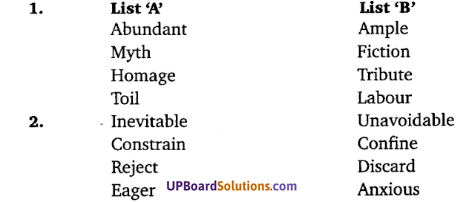
(a) Match the words in List ‘A’ with their nearest meaning in List ‘B’:

UP Board Solutions for Class 10 English Prose Chapter 3 The Ganga (Jawaharlal Nehru)
Answer:
UP Board Solutions for Class 10 English Prose Chapter 3 The Ganga (Jawaharlal Nehru)

(b) Fill in the blanks with proper words given below :
 (1) Words : owe, gratitude, inevitably, sentiments
Answer:

  1. Try to understand the sentiments of your countrymen.
  2. You will inevitably get first division.
  3. We owe greatly devotion and love to our motherland.
  4. I can never forget your gratitude.

(2) Words : symbol, discarded, constrain, inspiration
Answer:

  1. Now the people have discarded many blind faiths.
  2. We get inspiration from our forefathers.
  3. Many old traditions constrain (UPBoardSolutions.com) the people of India.
  4. This gift is only the symbol of affection.

UP Board Solutions

(c) Use the following words and phrases in your own sentences so as to make their
meanings clear :

Words : disposed off, discarded, abundance, varying, gloomy
Answer:
1. He has disposed off all his old furniture.
2. The scientists have discarded many old theories.
3. Pt. Nehru got love from the people of India in abundance.
4. I can’t guess anything from his varying moods.
5. Due to an accident, the atmosphere has become gloomy.

Hope given UP Board Solutions for Class 10 English Prose Chapter 3 are helpful to complete your homework.

If you have any doubts, please comment below. UP Board Solutions try to provide online tutoring for you.
 

UP Board Solutions for Class 10 Hindi Chapter 7 छान्दोग्य उपनिषद् षष्ठोध्यायः (संस्कृत-खण्ड)

UP Board Solutions for Class 10 Hindi Chapter 7 छान्दोग्य उपनिषद् षष्ठोध्यायः (संस्कृत-खण्ड)

These Solutions are part of UP Board Solutions for Class 10 Hindi. Here we have given UP Board Solutions for Class 10 Hindi Chapter 7 छान्दोग्य उपनिषद् षष्ठोध्यायः (संस्कृत-खण्ड).

अवतरणों का ससन्दर्भ हिन्दी अनुवाद

प्रश्न 1.
॥ ॐ ॥ श्वेतकेतुहरुणेय आस तं ह पितोवाच श्वेतकेतो वस ब्रह्मचर्यं न वै सोम्यास्मत्कुलीनोऽननूच्य ब्रह्मबन्धुरिव भवतीति ॥1॥
उत्तर
[आरुणेय = आरुणि का पुत्र। आस = था। पितोवाच = पिता ने कहा। वस ब्रह्मचर्यम् = ब्रह्मचर्य का पालन करो। वै = क्योंकि। कुलीनोऽननूच्य = कुल (परिवार) में कोई ऐसा (व्यक्ति) नहीं हुआ। ब्रह्मबन्धुरिव = ब्रह्मबंधु के समान।]

सन्दर्भ-प्रस्तुत श्लोक हमारी पाठ्य-पुस्तक ‘हिन्दी’ के ‘संस्कृत-खण्ड’ के ‘छान्दोग्य उपनिषद् । षष्ठोध्यायः’ पाठ से उद्धृत है।

प्रसंग—इस श्लोक में आरुणि अपने पुत्र श्वेतकेतु को ज्ञान (UPBoardSolutions.com) की बातें बता रहे हैं। [विशेष—इस पाठ के अन्य सभी श्लोकों के लिए यही सन्दर्भ व प्रसंग प्रयुक्त होगा।

व्याख्या–आरुणि का पुत्र श्वेतकेतु था। उससे एक बार पिता ने कहा-“हे श्वेतकेतु! तुम ब्रह्मचर्य का पालन करो क्योंकि हमारे कुल में ऐसा कोई व्यक्ति नहीं हुआ, जो ब्रह्मबन्धु के समान ने लगता हो।

(जो ब्राह्मण अपने को ब्राह्मण समझता हो लेकिन ब्राह्मणोचित आचरण न करता हो उसे गुरुकुल जाना आवश्यक है। उसे गुरुकुलावास आवश्यक प्रतीत होता है।)

UP Board Solutions

प्रश्न 2.
स ह द्वादशवर्ष उपेत्य चतुर्विंशतिवर्षः सर्वान्चेदानधीत्य महामना अनूचानमानी स्तब्ध एयाय तं ह पितोवाच ॥2॥
उत्तर
[द्वादशवर्षम् उपेत्य = बारह वर्ष पर्यन्त। सर्वान्वेदानधीत्य = समस्त वेदों को (UPBoardSolutions.com) पढ़कर। मेहामना = पांडित्यमना। अनूचानमानी = स्वाभिमानी, अहंकार युक्त होकर। स्तब्ध = शान्त होकर। एयाय = लौटा।] |

व्याख्या-बारह वर्ष पर्यन्त आश्रम जाकर चौबीस वर्ष आयु पर्यन्त श्वेतकेतु समस्त वेदों को पढ़कर स्वाभिमानी, पाण्डित्यमना, अहंकार युक्त होकर लौटा तो उसके पिता ने कहा।

प्रश्न 3.
श्वेतकेतो यन्नु सोम्येदं महामना अनूचानमानी स्तब्धोऽस्युत तमादेशमप्राक्ष्य: येनाश्रुतं श्रुतं भवत्यमतं मतमविज्ञातं विज्ञातमिति कथं नु भगवः स आदेशो भवतीति ॥3॥
उत्तर
[स्तब्धोऽस्युत = किंकर्तव्यविमूढ़ होते हुए। तमादेशमप्राक्ष्यः = तुमने कौन-सी विशेषता पायी है। येनाश्रुतम् = जिसके द्वारा (समझ लेने पर) जो सुना न गया हो ऐसा पदार्थ। अविज्ञातम् = जो ज्ञात न हुआ हो। कथं नु भगवः = क्या आपने पूछा है।]

व्याख्या-हे श्वेतकेतु! तुम जो इस तरह से अमनस्वी, पाण्डित्यमना और अभिमान से युक्त हो, तुमने कौन-सी विशेषता पायी है? क्या तुम जानते हो कि कौन-सा ऐसा पदार्थ है जिसके समझ लेने पर अश्रुत पदार्थ का ज्ञान हो जाता है, जो अतार्किक है उसे (UPBoardSolutions.com) तार्किक भी याद हो जाये और अविज्ञात भी ज्ञात होता है? अनिश्चित भी निश्चित हो जाता है। क्या तुमने गुरु से पूछा है?

UP Board Solutions

प्रश्न 4.
यथा सोम्यैकेन मृत्पिण्डेन सर्वं मृन्मयं विज्ञातं स्याद्वाचारम्भणं विकारो नामधेयं मृत्तिकेत्येव सत्यम् ॥4॥
उत्तर
[मृत्पिण्डेन = मिट्टी से बने पदार्थ विशेष के द्वारा। मृन्मयम् = मिट्टी से युक्त। आचारम्भणम् = आवरण। मृत्तिकेत्येव = मिट्टी ही है।]

व्याख्या-पिता आरुणि ने कहा-“हे श्वेतकेतु! जिस प्रकार (मिट्टी के बने) पात्रों को देखकर उनके मिट्टी द्वारा बने होने का आभास नहीं किया जा सकता है किन्तु वास्तव में वे मिट्टी के बने होते हैं। अर्थात् पात्रों में मृत्तिकत्व है यही सत्य है।

प्रश्न 5.
यथा सोम्यैकेन लोहमणिना सर्वं लोहमयं विज्ञातं स्याद्वाचारम्भणं विकारो नामधेयं लोहमित्येव सत्यम् ॥5॥
उत्तर
[यथा = जैसे। लोहमणिना = चुम्बक। लोहमयम् =लौहत्व। ]

व्याख्या–पिता आरुणि ने कहा-“हे श्वेतकेतु! जिस प्रकार चुम्बक को (UPBoardSolutions.com) देखकर उसके लोहे द्वारा बने होने का आभास नहीं किया जा सकता है किन्तु वास्तव में वह लोहे का बना होता है। अर्थात् चुम्बक में लौहत्व है यही सत्य है।

UP Board Solutions

प्रश्न 6.
यथा सोम्यैकेन नखनिकृन्तनेन सर्वं काष्र्णायसं विज्ञातं स्याद्वाचारम्भणं विकारो नामधेयं कृष्णायसमित्येव सत्यमेवं सोम्य स आदेशो भवतीति ॥6॥
उत्तर
[नखनिकृन्तनेन = नाखून काटने का यंत्र विशेष (नेलकटर)। काष्र्णायसम् =काँसे की धातु का।]

व्याख्या–पिता आरुणि ने आगे कहा–“हे श्वेतकेतु! जिस प्रकार नेलकटर को देखकर उसके काँसे द्वारा बने होने का आभास नहीं किया जा सकता है किन्तु वास्तव में वह काँसे का बना होता है। अर्थात् नेलकटर में काँसत्व है यही सत्य है।

प्रश्न 7.
न वै नूनं भगवन्तस्त एतदवेदिषुर्यध्द्येतदवेदिष्यन्कथं मे नावक्ष्यन्निति भगवांस्त्वेव मे तदबीविति तथा सोम्येति होवाच ॥7॥
उत्तर
[न वै नूनम् =ऐसा कहे जाने पर। भगवांस्त्वेव =आप ही मेरे।]

व्याख्या-पिता के ऐसा कहने पर श्वेतकेतु ने कहा-“आप ही (UPBoardSolutions.com) मेरे पूजनीय गुरुजी हैं। जिसने उसे इस प्रकार का आत्म-बोध कराया।

UP Board Solutions

अतिलघु-उत्तरीय संस्कृत प्रश्नोत्तर

प्रश्न 1
श्वेतकेतुः कस्य पुत्रः आसीत्?
या
श्वेतकेतुः कः आसीत?
उत्तर
श्वेतकेतुः आरुणेयपुत्रः आसीत्।

UP Board Solutions

प्रश्न 2
कः द्वादशवर्षम् उपेत्य चतुर्विंशतिवर्षः वेदानधीत्य आगतः? ।
उत्तर
श्वेतकेतुः द्वादशवर्षम् उपेत्य चतुर्विंशतिवर्ष: वेदानधीत्य आगतः।

प्रश्न 3
श्वेतकेतुः कतिवर्षाणि सर्वान् वेदान् अपठत्?
उत्तर
श्वेतकेतुः द्वादशवर्षाणि (UPBoardSolutions.com) सर्वान् वेदान् अपठत्।

UP Board Solutions

प्रश्न 4
अनूचानमानी कः अभवत्?
उत्तर
अनूचानमानी श्वेतकेतुः अभवत्।

प्रश्न 5
मृत्पिण्डेन किं विज्ञातम्?
उत्तर
मृत्पिण्डेन सर्वं मृण्मयं विज्ञातम्।

प्रश्न 6
कुत्र लोहमयं विज्ञातम्?
उत्तर
लोहमणिनी लोहमयं विज्ञातम्।

प्रश्न 7
कः आरुणिं गुरुरूपेण स्वीकरोति?
उत्तर
श्वेतकेतुः आरुणिं गुरुरूपेण (UPBoardSolutions.com) स्वीकरोति।

UP Board Solutions

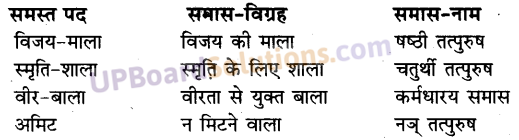
अनुवादात्मक

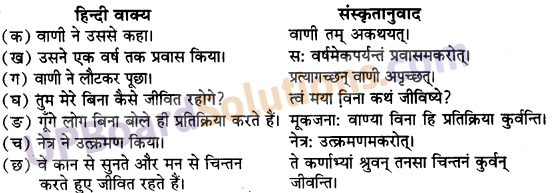
प्रश्न 1.
निम्नलिखित वाक्यों का संस्कृत में अनुवाद कीजिए-
उत्तर
UP Board Solutions for Class 10 Hindi Chapter 7 छान्दोग्य उपनिषद् षष्ठोध्यायः (संस्कृत-खण्ड) img-1

UP Board Solutions

व्याकरणत्मक

प्रश्न 1
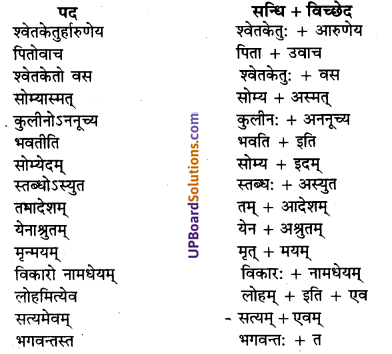
निम्नलिखित संधि पदों का संधि-विच्छेद कीजिए-
उत्तर
UP Board Solutions for Class 10 Hindi Chapter 7 छान्दोग्य उपनिषद् षष्ठोध्यायः (संस्कृत-खण्ड) img-2

UP Board Solutions

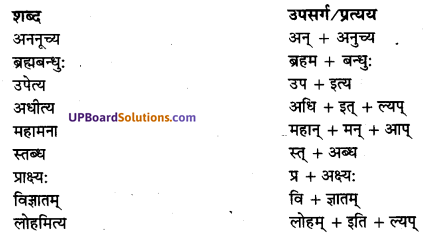
प्रश्न 2
निम्नलिखित शब्दों में से उपसर्ग अथवा प्रत्यय अलग कीजिए
उत्तर
UP Board Solutions for Class 10 Hindi Chapter 7 छान्दोग्य उपनिषद् षष्ठोध्यायः (संस्कृत-खण्ड) img-3

We hope the UP Board Solutions for Class 10 Hindi Chapter 7 छान्दोग्य उपनिषद् षष्ठोध्यायः (संस्कृत-खण्ड) help you. If you have any query regarding UP Board Solutions for Class 10 Hindi Chapter 7 छान्दोग्य उपनिषद् षष्ठोध्यायः (संस्कृत-खण्ड), drop a comment below and we will get back to you at the earliest.


UP Board Solutions for Class 10 Hindi Chapter 9 सुभद्राकुमारी चौहान (काव्य-खण्ड)

UP Board Solutions for Class 10 Hindi Chapter 9 सुभद्राकुमारी चौहान (काव्य-खण्ड)

These Solutions are part of UP Board Solutions for Class 10 Hindi. Here we have given UP Board Solutions for Class 10 Hindi Chapter 9 सुभद्राकुमारी चौहान (काव्य-खण्ड).

कवयित्री-परिचय

प्रश्न 1.
श्रीमती सुभद्राकुमारी चौहान का जीवन-परिचय देते हुए उनकी प्रमुख काव्य-कृतियों (रचनाओं) पर प्रकाश डालिए। [2009, 10]
या
कवयित्री सुभद्राकुमारी चौहान का जीवन-परिचय दीजिए एवं उनकी किसी एक रचना का नाम लिखिए। [2011, 12, 13, 14, 16, 18]
उत्तर
सुभद्राकुमारी चौहान की कविताओं से एक सच्ची वीरांगना का ओज और शौर्य प्रकट होता है। इनकी काव्य-रचनाओं ने भारतीय युवाओं के उदासीन जीवन में उत्साह का संचार कर स्वतन्त्रता-प्राप्ति के लिए अग्रसर होने की प्रेरणा प्रदान की। आपकी (UPBoardSolutions.com) कविताएँ जन-जन के गले का हार बनीं और आप जन-कवयित्री के रूप में जानी जाने लगीं।

UP Board Solutions

जीवन-परिचय–क्रान्ति की अमरसाधिका सुभद्राकुमारी चौहान का जन्म सन् 1904 ई० में इलाहाबाद जिले के निहालपुर गाँव में हुआ था। इनके पिता रामनाथ सिंह सुशिक्षित, सम्पन्न और प्रतिष्ठित व्यक्ति थे। इनकी प्रारम्भिक शिक्षा क्रॉस्थवेट गर्ल्स कॉलेज में हुई और 15 वर्ष की उम्र में इनका विवाह खण्डवा (मध्य प्रदेश) के ठाकुर लक्ष्मणसिंह चौहान के साथ हुआ। इनके पति ब्रिटिश राज्य के विरुद्ध राष्ट्रीय आन्दोलनों में भाग लेते थे। सुभद्राकुमारी भी पति के साथ राजनीतिक आन्दोलनों में भाग लेती रहीं, जिसके परिणामस्वरूप ये अनेक बार जेल भी गयीं। असहयोग आन्दोलन में भाग लेने के कारण इनका अध्ययन-क्रम भंग हो गया था। राष्ट्रपिता महात्मा गाँधी से प्रेरित होकर ये राष्ट्र-प्रेम पर कविताएँ लिखने लगीं। हिन्दी-काव्य-जगत् में ये ही ऐसी कवयित्री थीं, जिन्होंने अपनी ओजमय कविता द्वारा लाखों (UPBoardSolutions.com) भारतीय तरुण-तरुणियों को स्वतन्त्रता-संग्राम में भाग लेने हेतु प्रेरित किया। ‘झाँसी वाली रानी थी’ तथा ‘वीरों का कैसा हो वसन्त’ कविताएँ तरुण-तरुणियों में क्रान्ति की ज्वाला फेंकती रहीं। इन्हें पं० माखनलाल चतुर्वेदी से भी पर्याप्त प्रोत्साहन मिला, परिणामस्वरूप इनकी देशभक्ति का रंग और भी गहराता गया। आप मध्य प्रदेश विधानसभा की सदस्या भी रहीं। सन् 1948 ई० में हुई एक वाहन-दुर्घटना में नियति ने एक प्रतिभाशाली कवयित्री को हिन्दी-साहित्य जगत् से असमय ही छीन लिया। ।

काव्य-कृतियाँ-सुभद्राकुमारी चौहान की प्रमुख काव्य-कृतियाँ निम्नवत् हैं

(1) मुकुल–इस संग्रह में वीर रस से पूर्ण ‘वीरों का कैसा हो वसन्त’ आदि कविताएँ संग्रहीत हैं। इस काव्य-संग्रह पर इन्हें सेकसरिया’ पुरस्कार प्राप्त हुआ था। |
(2) त्रिधारा-इस काव्य-संग्रह में ‘झाँसी की रानी की समाधि पर’ प्रसिद्ध कविता संग्रहीत है। इनके इस संग्रह में देशप्रेम की भावना व्यक्त होती है।
(3) सीधे-सादे चित्र,
(4) बिखरे मोती तथा
(5) उन्मादिनी। ये तीनों इनके कहानी-संकलन- हैं।

साहित्य में स्थान–श्रीमती सुभद्राकुमारी चौहान ने अपने काव्य में जिस वीर नारी को प्रदर्शित किया है वह अपने आपमें स्पृहणीय और नारी जगत् के लिए आदर्श है। आप अपनी ओजस्वी वाणी और एक समर्थ कवयित्री के रूप में हिन्दी-साहित्य में अपना (UPBoardSolutions.com) विशेष स्थान रखती हैं। .

UP Board Solutions

पद्यांशों की ससन्दर्भ व्याख्या

झाँसी की रानी की समाधि पर
प्रश्न 1.
इस समाधि में छिपी हुई है, एक राख की ढेरी ।।
जल कर जिसने स्वतन्त्रता की, दिव्य आरती फेरी ॥
यह समाधि यह लधु समाधि है, झाँसी की रानी की ।
अंतिम लीलास्थली यही है, लक्ष्मी मरदानी की ॥
यहीं कहीं पर बिखर गयी वह, भग्न विजय-माला-सी।
उसके फूल यहाँ संचित हैं, है यह स्मृति-शाला-सी ॥
सहे वार पर वार अंत तक, लड़ी वीर बाला-सी ।
आहुति-सी गिर चढ़ी चिता पर, चमक उठी ज्वाला-सी ॥ [2009, 11, 12, 15, 17]
उत्तर
[दिव्य = अलौकिक। लीलास्थली = कर्मस्थली। मरदानी = (UPBoardSolutions.com) पौरुषयुक्त आचरण करने वाली। भग्न = टूटी हुई। फूल = अस्थियाँ संचित = एकत्रित। स्मृतिशाली = स्मारक, स्मृति-भवन। वार = आघात। ]

सन्दर्भ-प्रस्तुत काव्य-पंक्तियाँ हमारी पाठ्य-पुस्तक ‘हिन्दी’ के ‘काव्य-खण्ड’ में संकलित श्रीमती सुभद्राकुमारी चौहान की कविता ‘झाँसी की रानी की समाधि पर’ शीर्षक से अवतरित हैं। यह कविता उनके ‘त्रिधारा’ नामक काव्य-संग्रह से ली गयी है।

[विशेष—इस शीर्षक से सम्बन्धित सभी पद्यांशों के लिए यही सन्दर्भ प्रयुक्त होगा।]

प्रसंग-इन पंक्तियों में रानी लक्ष्मीबाई के बलिदान के महत्त्व पर प्रकाश डालते हुए उनके प्रति भावपूर्ण श्रद्धांजलि अर्पित की गयी है।

UP Board Solutions

व्याख्या-यह रानी लक्ष्मीबाई की समाधि है। इसमें रानी के शरीर की राख है। रानी ने अपने शरीर का बलिदान देकर यहीं पर स्वतन्त्रता की आरती उतारी थी। यह छोटी-सी समाधि लक्ष्मीबाई के महान् त्याग और देशभक्ति की निशानी है। यही स्थान (UPBoardSolutions.com) रानी की जीवन-लीला का अन्तिम स्थल है, जहाँ रानी ने पुरुषों जैसी वीरता का प्रदर्शन कर स्वयं का बलिदान कर दिया था।

कवयित्री कहती हैं कि अपनी समाधि के आस-पास ही रानी लक्ष्मीबाई टूटी हुई विजयमाला के समान बिखर गयी थीं। युद्धभूमि में अंग्रेजी सेना के साथ बहादुरी से लड़ते हुए रानी के शरीर के अंग यहीं-कहीं बिखर गये थे। इस समाधि में वीरांगना लक्ष्मीबाई की अस्थियाँ एकत्र कर रख दी गयी हैं, जिससे कि देश की भावी पीढ़ी उनके गौरवपूर्ण त्याग-बलिदान से प्रेरणा ले सके। | कवयित्री कहती हैं कि वीरांगना लक्ष्मीबाई अन्तिम साँस तक शत्रुओं की तलवारों के प्रहार सहती रहीं। जिस प्रकार यज्ञ-कुण्ड में आहुतियाँ पड़ने से अग्नि प्रज्वलित होती है, उसी प्रकार रानी के आत्मबलिदान से आजादी की आग चारों ओर (UPBoardSolutions.com) फैल गयी। रानी के इस महान् त्याग ने अग्नि में आहुति का काम किया, जिससे लोग अधिक उत्साह से स्वतन्त्रता-संग्राम में भाग लेने लगे और रानी की कीर्ति चारों ओर फैल गयी।

काव्यगत सौन्दर्य-

  1. कवयित्री ने रानी लक्ष्मीबाई की वीरता और बलिदान की गौरवगाथा का। गान किया है।
  2. भाषा-सरल सुबोध खड़ी बोली।
  3. शैली–ओजपूर्ण आख्यानक गीति शैली।
  4. रस-वीर।
  5. छन्द-तुकान्त-मुक्त।
  6. गुण–प्रसाद और ओज।
  7. शब्दशक्ति–अभिधा।
  8. अलंकार-‘यहीं-कहीं …………….. ज्वाला-सी’ में उपमा, उदाहरण देने में दृष्टान्त, ‘आरती’ और ‘फूल’ में श्लेष और सर्वत्र अनुप्रास एवं रूपक ।। |

प्रश्न 2.
बढ़ जाता है मान वीर का, रण में बलि होने से ।
मूल्यवती होती सोने की, भस्म यथा सोने से ॥
रानी से भी अधिक हमें अब, यह समाधि है प्यारी ।
यहाँ निहित है स्वतन्त्रता की, आशा की चिनगारी ॥ [2011, 15]
उत्तर
[ मान = सम्मान। रण = युद्ध। मूल्यवती = मूल्यवान। निहित = रखी है।]

प्रसंग-इन पंक्तियों में कवयित्री कहती हैं कि देश के गौरव की रक्षा के लिए अपना बलिदान करने से रानी का महत्त्व और अधिक बढ़ गया है।

UP Board Solutions

व्याख्या-कवयित्री कहती हैं कि स्वतन्त्रता पर बलि होने से वीर का सम्मान बढ़ जाता है। रानी लक्ष्मीबाई भी युद्ध में बलिदान हुईं; अत: उनका सम्मान उसी प्रकार और भी अधिक बढ़ गया, जैसे कि सोने की अपेक्षा स्वर्णभस्म अधिक मूल्यवान होती है। (UPBoardSolutions.com) यही कारण है कि रानी लक्ष्मीबाई की यह समाधि हमें रानी लक्ष्मीबाई से भी अधिक प्रिय है; क्योंकि इस समाधि में स्वतन्त्रता-प्राप्ति की आशा की एक चिंगारी छिपी हुई है, जो आग के रूप में फैलकर पराधीनता से मुक्त होने के लिए देशवासियों को सदैव प्रेरणा प्रदान करती रहेगी।

काव्यगत सौन्दर्य-

  1. कवयित्री ने लक्ष्मीबाई की समाधि से स्वतन्त्रता-प्राप्ति की प्रेरणा प्राप्त करने के लिए युवकों का आह्वान किया है।
  2. भाषा-सरल खड़ी बोली।
  3. शैली–ओजपूर्ण व आख्यानक गीति शैली।
  4. रस-वीर।
  5. छन्द-तुकान्त-मुक्त।
  6. गुण-ओज एवं प्रसाद।
  7. शब्दशक्ति –अभिधा।
  8. अलंकार-‘बढ़ जाता है ……………..” सोने से’ में दृष्टान्त, ‘आशा की चिनगारी’ में रूपक और अनुप्रास।
  9. भावसाम्य-कवयित्री के समान ही ओज के कवि श्यामनारायण पाण्डेय भी देशहित में अपना सिर कटवा देने वाले को ही सच्चा वीर मानते हैं

जो देश-जाति के लिए, शत्रु के सिर काटे, कटवा भी दे .
उसको कहते हैं वीर, आन हित अंग-अंग छैटवा भी दे।

प्रश्न 3.
इससे भी सुन्दर समाधियाँ, हम जग में हैं पाते ।
उनकी गाथा पर निशीथ में, क्षुद्र जंतु ही गाते ॥
पर कवियों की अमर गिरा में, इसकी अमिट कहानी।
स्नेह और श्रद्धा से गाती, है, वीरों की बानी ॥ [2012, 17]
बुंदेले हरबोलों के मुख, हमने सुनी कहानी ।
खूब लड़ी मरदानी वह थी, झाँसी वाली रानी ॥
यह समाधि, यह चिर समाधि-है, झाँसी की रानी की। [2016]
अंतिम लीलास्थली यही है, लक्ष्मी मरदानी की ॥
उत्तर
[ निशीथ = रात्रि। क्षुद्र = तुच्छ, छोटे-छोटे। जन्तु = प्राणी, कीड़े। गिरा = वाणी। अमिट = कभी न मिटने वाली। बानी = वाणी।]

प्रसंग-इन पंक्तियों में कवयित्री ने रानी लक्ष्मीबाई की (UPBoardSolutions.com) समाधि को अन्य समाधियों से अधिक महत्त्वपूर्ण माना है।

UP Board Solutions

व्याख्या-कवयित्री कहती हैं कि संसार में रानी लक्ष्मीबाई की समाधि से भी सुन्दर अनेक समाधियाँ बनी हुई हैं, परन्तु उनका महत्त्व इस समाधि से कम ही है। उन समाधियों पर रात्रि में गीदड़, झींगुर, छिपकली आदि क्षुद्र जन्तु गाते रहते हैं अर्थात् वे समाधियाँ अत्यन्त उपेक्षित हैं, जिन पर तुच्छ जन्तु निवास करते हैं, परन्तु कवियों की अमर वाणी में रानी लक्ष्मीबाई की समाधि की कभी न समाप्त होने वाली कहानी गायी जाती है; क्योंकि रानी की समाधि के प्रति उनमें श्रद्धाभाव है पर अन्य समाधियाँ ऐसी नहीं हैं। इस समाधि की कहानी को वीरों की वाणी बड़े प्रेम और श्रद्धा के साथ गाती है। अतः यह समाधि अन्य समाधियों की अपेक्षा अधिक महत्त्वपूर्ण और पूज्य है।

बुन्देले और हरबोलों के मुँह से हमने यह गाथा सुनी है कि झाँसी की रानी (UPBoardSolutions.com) लक्ष्मीबाई पुरुषों की भाँति बहुत वीरता से लड़ी। यह अमर समाधि उसी झाँसी की रानी की है। यही उस वीरांगना की अन्तिम कार्यस्थली है।

काव्यगत सौन्दर्य-

  1. कवयित्री ने रानी की समाधि के प्रति अपना श्रद्धा-भाव व्यक्त किया है।
  2. भाषा-सरल साहित्यिक खड़ी बोली।
  3. शैली-आख्यानक गीति की ओजपूर्ण शैली।
  4. रसवीर।
  5. गुण–प्रसाद और ओज।
  6. शब्दशक्ति -व्यंजना।
  7. अलंकार सर्वत्र अनुप्रास है।
  8. भावसाम्य-कला और कविता उन्हीं का गान करती है, जो विलासमय मधुर वंशी के स्थान पर रणभेरी का घोर-गम्भीर गर्जन करते हैं। जो कविता ऐसा नहीं करती, वह बाँझ स्त्री के समान है। कवि माखनलाल चतुर्वेदी ने कवयित्री की भाँति ही कवि और कविता के विषय में कहा है-

यह किसने कहा कला कविता सब बाँझ हुई ?
बलि के प्रकाश की सुन्दरता ही साँझ हुई,
मधुरी वंशी रणभेरी का डंका हो अब,
नव तरुणाई पर किसको, क्या शंका हो अब ?

काव्य-सौन्दर्य एवं व्याकरण-बोध

प्रश्न 1.
निम्नलिखित पंक्तियों में प्रयुक्त अलंकार का नाम लिखकर उनका लक्षण भी लिखिए-
(क) बढ़ जाता है मान वीर का रण में बलि होने से।
मूल्यवती होती सोने की भस्म यथा सोने से ।
रानी से भी अधिक हमें अब, यह समाधि है प्यारी,
यहाँ निहित है स्वतन्त्रता की, आशा की चिनगारी॥
(ख) यहीं कहीं पर बिखर गयी वह, भग्न विजयमाला-सी।
उत्तर
(क) अनुप्रास, रूपक और पुनरुक्तिप्रकाश।
(ख) उपमा।
अनुप्रास का लक्षण-एक ही वर्ण की आवृत्ति दो या दो से अधिक बार होती है।
रूपकका लक्षण–उपमेय में उपमान का निषेधरहित आरोप होता है; जैसे—आशा की चिनगारी।
पुनरुक्तिप्रकाश का लक्षण–एक ही शब्द की पुनः-पुनः आवृत्ति होती है; जैसे—सोने।
उपमा का लक्षण-उपमेय की उपमान से सुन्दर और स्पष्ट समता दिखाई जाती है; जैसेविजयमाला-सी।।
काव्य-पंक्तियों में जब उदाहरण रूप में कुछ कहा (UPBoardSolutions.com) जाता है; जैसे-सोने की भस्म यथा सोने से।

UP Board Solutions

प्रश्न 2.
निम्नलिखित पंक्तियों में रस को पहचानिए
बुंदेले हरबोलों के मुख, हमने सुनी कहानी।
खूब लड़ी मरदानी वह थी, झाँसी वाली रानी ॥
उतर
वीर रस।

प्रश्न 3.
निम्नलिखित पदों में समास का नाम बताते हुए समास-विग्रह कीजिए-
विजय-माला, स्मृति-शाला, वीर-बाला, अमिट
उत्तर
UP Board Solutions for Class 10 Hindi Chapter 9 सुभद्राकुमारी चौहान (काव्य-खण्ड) img-1

UP Board Solutions

प्रश्न 4.
निम्नलिखित शब्दों में उपसर्ग और प्रत्ययों को पृथक् करके लिखिए-
मूल्यवती, निहित, अमर, अन्तिम।
उत्तर
UP Board Solutions for Class 10 Hindi Chapter 9 सुभद्राकुमारी चौहान (काव्य-खण्ड) img-2

We hope the UP Board Solutions for Class 10 Hindi Chapter 9 सुभद्राकुमारी चौहान (काव्य-खण्ड) help you. If you have any query regarding UP Board Solutions for Class 10 Hindi Chapter 9 सुभद्राकुमारी चौहान (काव्य-खण्ड), drop a comment below and we will get back to you at the earliest.