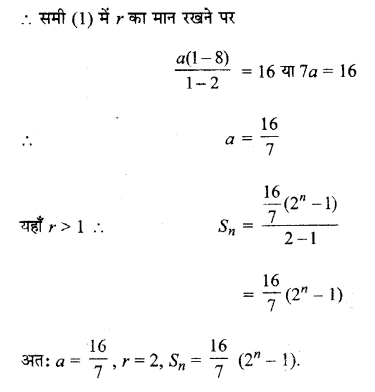
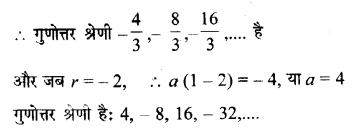
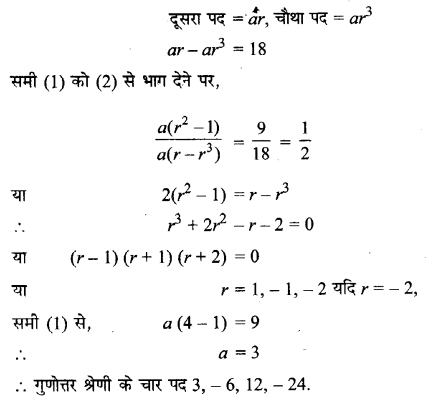
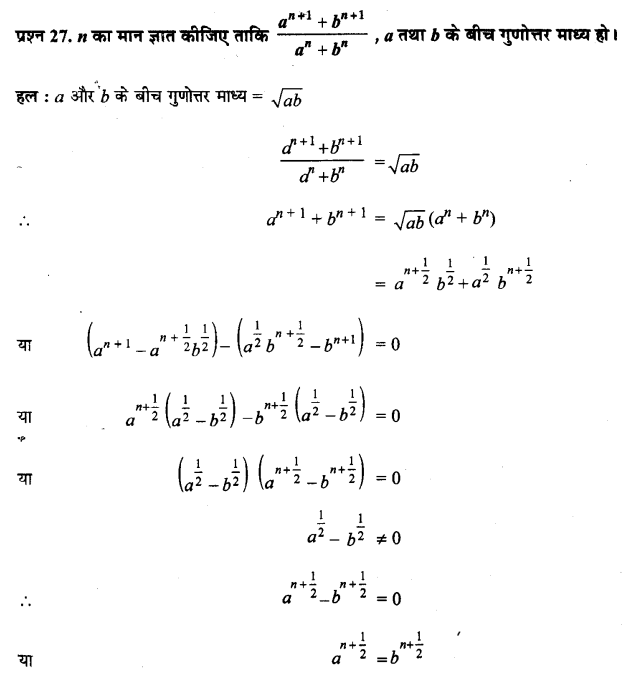
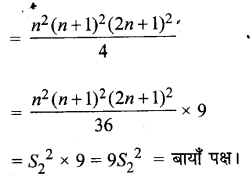
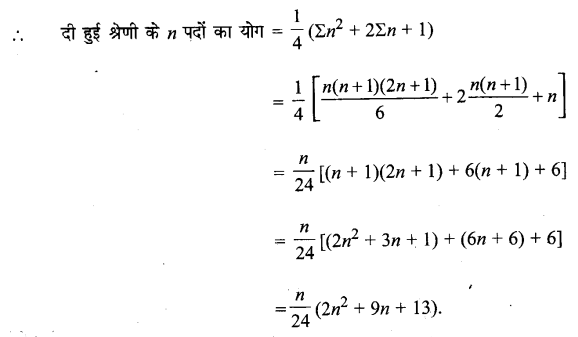
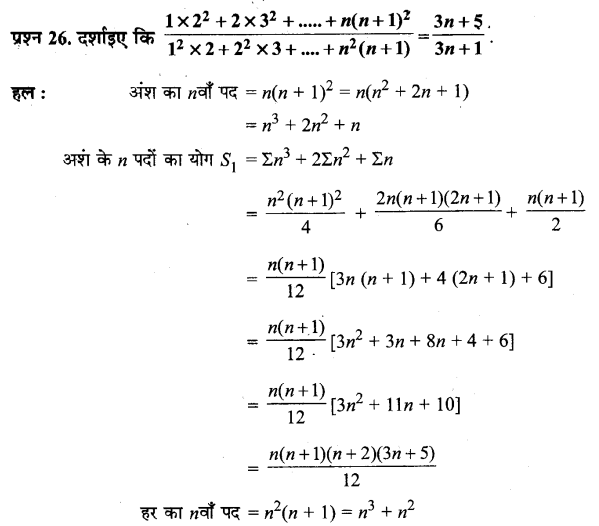
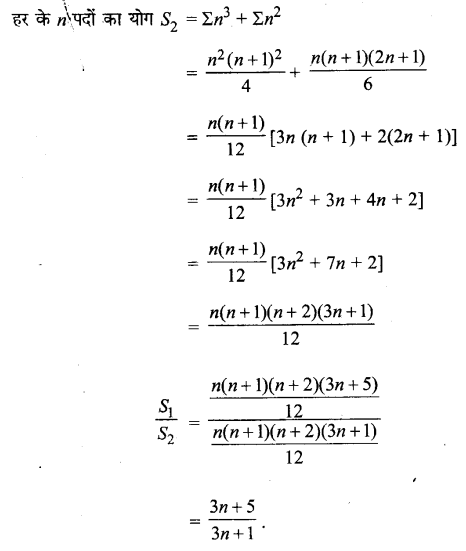
UP Board Solutions for Class 11 Maths Chapter 9 Sequences and Series

UP Board Solutions for Class 11 Maths Chapter 9 Sequences and Series (अनुक्रम तथा श्रेणी)

These Solutions are part of UP Board Solutions for Class 11 Maths. Here we have given UP Board Solutions for Class 11 Maths Chapter 9 Sequences and Series (अनुक्रम तथा श्रेणी).

प्रश्नावली 9.1

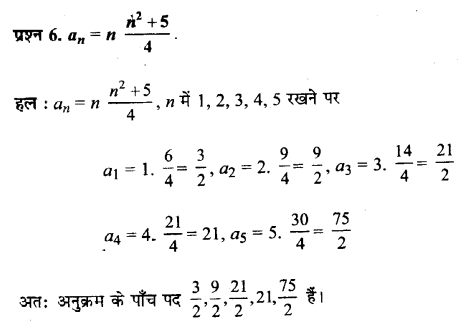
प्रश्न 1 से 6 तक के अनुक्रमों में प्रत्येक के प्रथम पाँच पद लिखिए, जिनका नाव पद दिया गया है।

प्रश्न 1.
an = n(n + 2).
हल:
an = n(n + 2)
n का मान 1, 2, 3, 4, 5 रखने पर
a1 = 1 x 3 = 3,
a2 = 2 x 4 = 8,
a3 = 3 x 5 = 15,
a4 = 4 x 6 = 24,
a5 = 5 x 7 = 35
अतः दिए गए अनुक्रम के पाँच पद 3, 8, 15, 24, 35 हैं।

UP Board Solutions

प्रश्न 2.
an = [latex]\frac { n }{ n + 1 }[/latex]
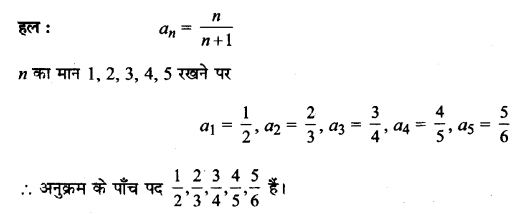
UP Board Solutions for Class 11 Maths Chapter 9 Sequences and Series 9.1 2

प्रश्न 3.
an = 2n
UP Board Solutions for Class 11 Maths Chapter 9 Sequences and Series 9.1 3

प्रश्न 4.
an = [latex]\frac { 2n – 3 }{ 6 }[/latex]
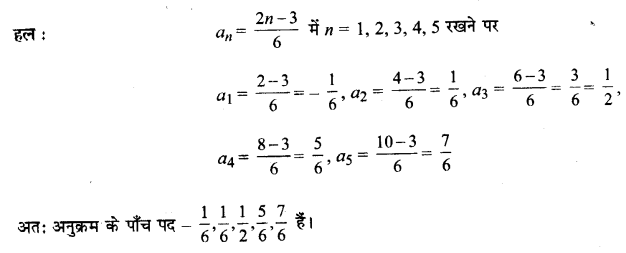
UP Board Solutions for Class 11 Maths Chapter 9 Sequences and Series 9.1 4

UP Board Solutions

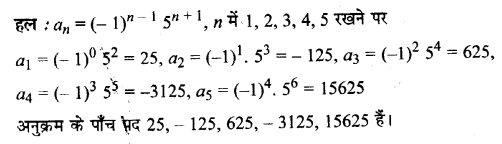
प्रश्न 5.
an = (-1)n-1 5n+1.
UP Board Solutions for Class 11 Maths Chapter 9 Sequences and Series 9.1 5

UP Board Solutions for Class 11 Maths Chapter 9 Sequences and Series 9.1 6

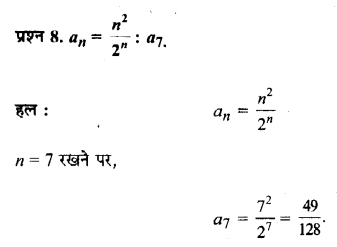
निम्नलिखित प्रश्न 7 से 10 तक के अनुक्रमों में प्रत्येक का वांछित पद ज्ञात कीजिए, जिनका शव पद दिया गया है:

UP Board Solutions

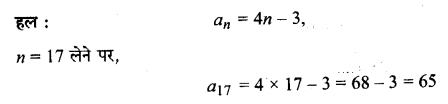
प्रश्न 7.
an = 4n -3, a17, a24
UP Board Solutions for Class 11 Maths Chapter 9 Sequences and Series 9.1 7
UP Board Solutions for Class 11 Maths Chapter 9 Sequences and Series 9.1 7.1

UP Board Solutions for Class 11 Maths Chapter 9 Sequences and Series 9.1 8

UP Board Solutions for Class 11 Maths Chapter 9 Sequences and Series 9.1 9

UP Board Solutions for Class 11 Maths Chapter 9 Sequences and Series 9.1 10

UP Board Solutions

प्रश्न 11 से 13 तक प्रत्येक अनुक्रम के पाँच पद लिखिए तथा संगत श्रेणी ज्ञात कीजिए:

प्रश्न 11.
a1 = 3, an = 3an-1 + 2 सभी n > 1 के लिए।
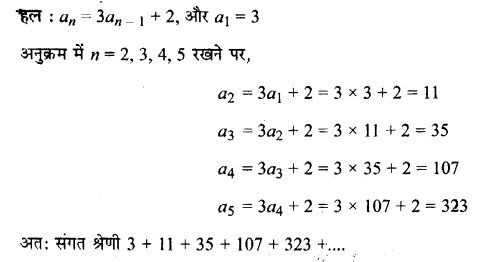
UP Board Solutions for Class 11 Maths Chapter 9 Sequences and Series 9.1 11

UP Board Solutions for Class 11 Maths Chapter 9 Sequences and Series 9.1 12

UP Board Solutions

प्रश्न 13.
a1 = a2 = 2, an = an-1 – 1, जहाँ n > 2.
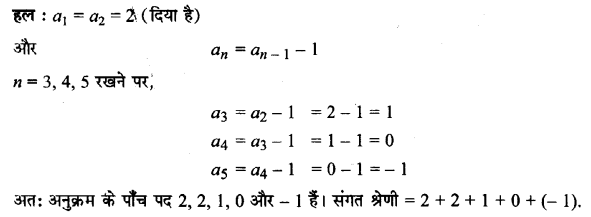
UP Board Solutions for Class 11 Maths Chapter 9 Sequences and Series 9.1 13

प्रश्न 14.
Fibonacci अनुक्रम निम्नलिखित रूप में परिभाषित है :
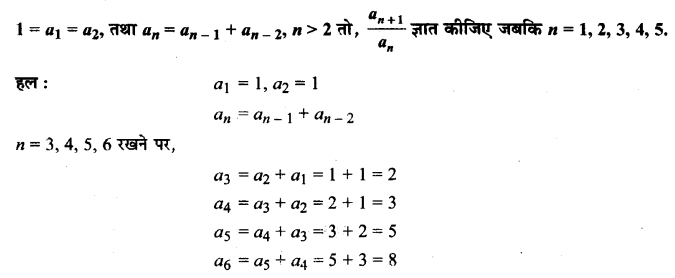
UP Board Solutions for Class 11 Maths Chapter 9 Sequences and Series 9.1 14
UP Board Solutions for Class 11 Maths Chapter 9 Sequences and Series 9.1 14.1

UP Board Solutions

प्रश्नावली 9.2

प्रश्न 1.
1 से 2001 तक के विषम पूर्णाकों का योग ज्ञात कीजिए।
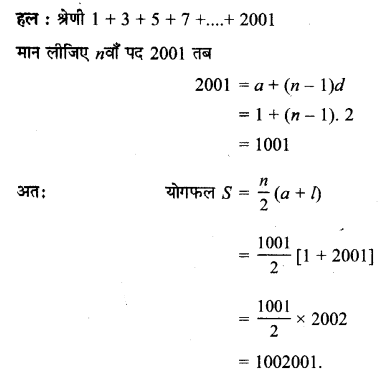
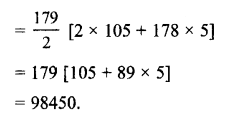
UP Board Solutions for Class 11 Maths Chapter 9 Sequences and Series 9.2 1

प्रश्न 2.
100 तथा 1000 के मध्य उन सभी प्राकृत संख्याओं का योगफल ज्ञात कीजिए जो 5 के गुणज हों।
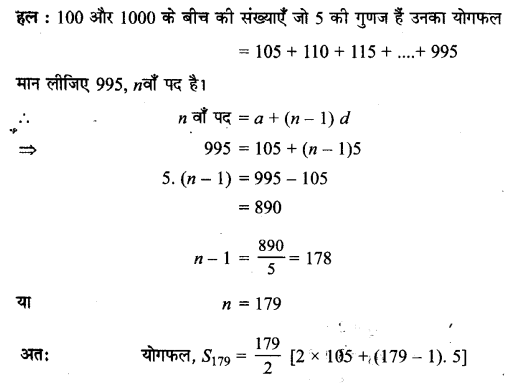
UP Board Solutions for Class 11 Maths Chapter 9 Sequences and Series 9.2 2
UP Board Solutions for Class 11 Maths Chapter 9 Sequences and Series 9.2 2.1

UP Board Solutions

प्रश्न 3.
किसी समांतर श्रेणी में प्रथम पद 2 है तथा प्रथम पांच पदों का भागफल, अगले पांच पदों के योगफल का एक चौथाई है। दर्शाइए कि 20वाँ पद -112 है।
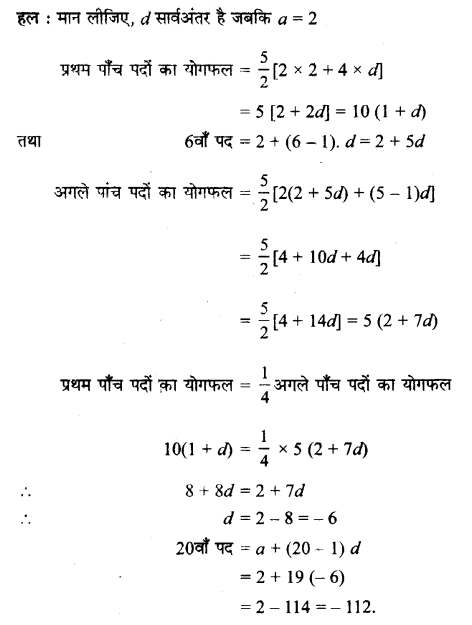
UP Board Solutions for Class 11 Maths Chapter 9 Sequences and Series 9.2 3

UP Board Solutions

प्रश्न 4.
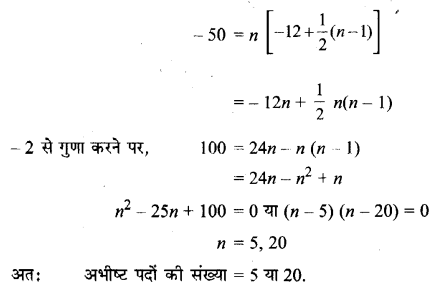
समांतर श्रेढी – 6, [latex]\frac { -11 }{ 2 }[/latex] , 5 …… के कितने पदों का योगफल – 25 है?
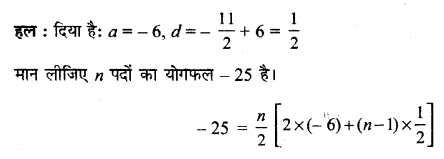
UP Board Solutions for Class 11 Maths Chapter 9 Sequences and Series 9.2 4
UP Board Solutions for Class 11 Maths Chapter 9 Sequences and Series 9.2 4.1

UP Board Solutions

प्रश्न 5.
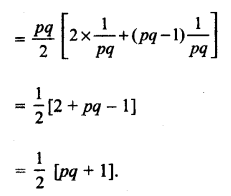
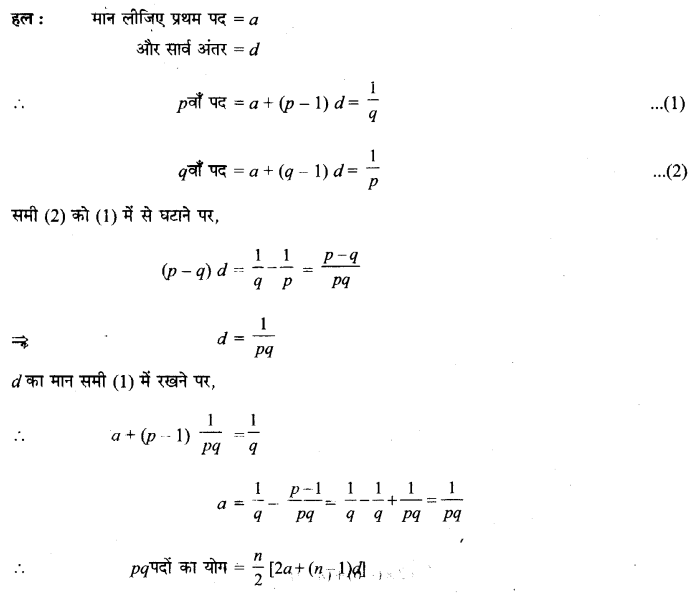
किसी समांतर श्रेढ़ी का p वाँ पद [latex]\frac { 1 }{ q }[/latex] तथा p वा पद [latex]\frac { 1 }{ p }[/latex] हो, तो सिद्ध कीजिए कि प्रथम pq पदों का योग [latex]\frac { 1 }{ 2 }[/latex] (pq + 1) होगा, जहाँ p ≠ q.
UP Board Solutions for Class 11 Maths Chapter 9 Sequences and Series 9.2 5
UP Board Solutions for Class 11 Maths Chapter 9 Sequences and Series 9.2 5.1

प्रश्न 6.
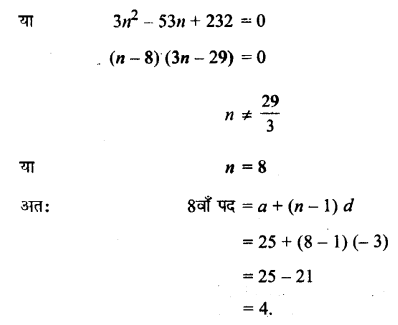
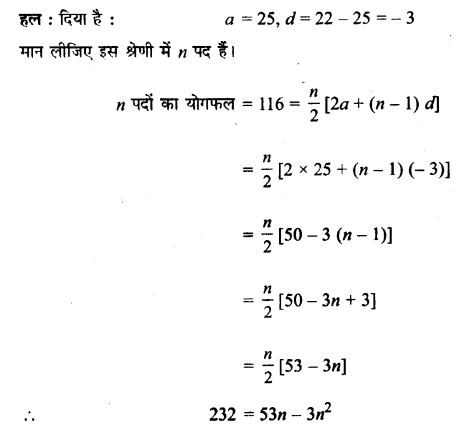
यदि किसी समांतर श्रेणी 25, 22, 19, ……. के कुछ पदों का योगफल 116 है तो अंतिम पद ज्ञात कीजिए।
UP Board Solutions for Class 11 Maths Chapter 9 Sequences and Series 9.2 6
UP Board Solutions for Class 11 Maths Chapter 9 Sequences and Series 9.2 6.1

UP Board Solutions

प्रश्न 7.
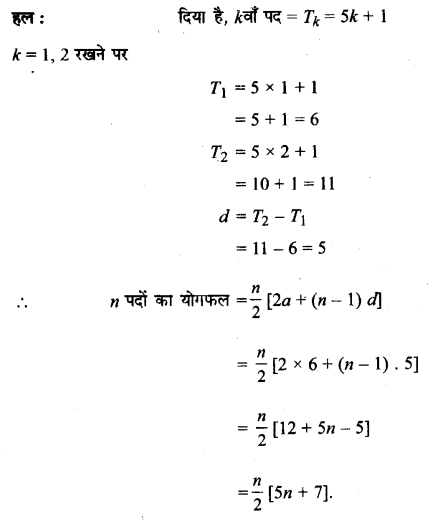
उस समांतर श्रेणी के n पदों को योगफल ज्ञात कीजिए जिसका वाँ पद 5k + 1 हैं।
UP Board Solutions for Class 11 Maths Chapter 9 Sequences and Series 9.2 7

UP Board Solutions

प्रश्न 8.
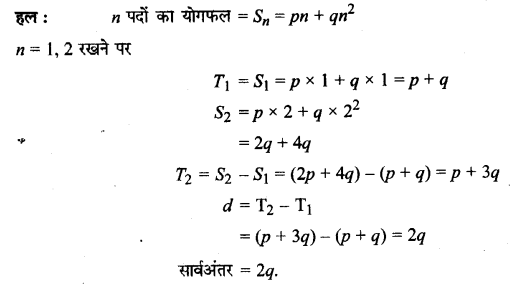
यदि किसी समांतर श्रेणी के n पदों का योगफले pn + qn² है, जहाँ p तथा q अचर हों तो सार्वअंतर ज्ञात कीजिए।
UP Board Solutions for Class 11 Maths Chapter 9 Sequences and Series 9.2 8

UP Board Solutions

प्रश्न 9.
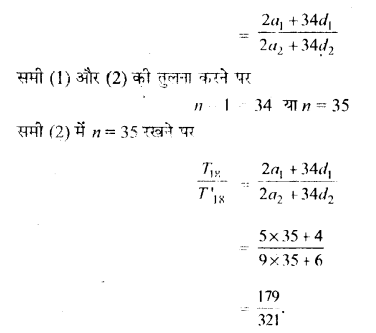
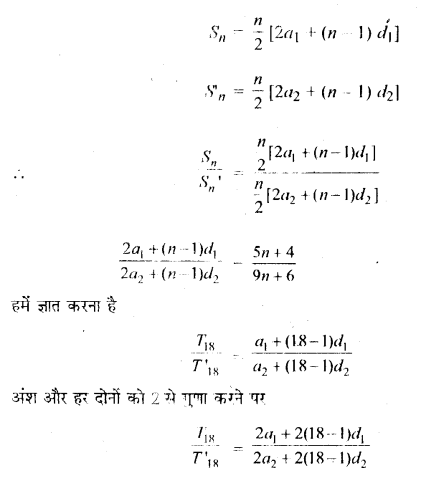
दो समांतर श्रेणियों के n पदों के योगफल का अनुपात 5n + 4 : 9n + 6 हो, तो उनके 18 वें पदों का अनुपात ज्ञात करो।
हल:
मान लीजिए समातर श्रेणियों के प्रथम पद a1, a2, तथा सार्वअंतर d1 और d2 हैं। यदि Sn, S’n उनके संगत योगफल हैं। T18 और T’18 उनके संगत 18वें पद हैं।
UP Board Solutions for Class 11 Maths Chapter 9 Sequences and Series 9.2 9
UP Board Solutions for Class 11 Maths Chapter 9 Sequences and Series 9.2 9.1

UP Board Solutions

प्रश्न 10.
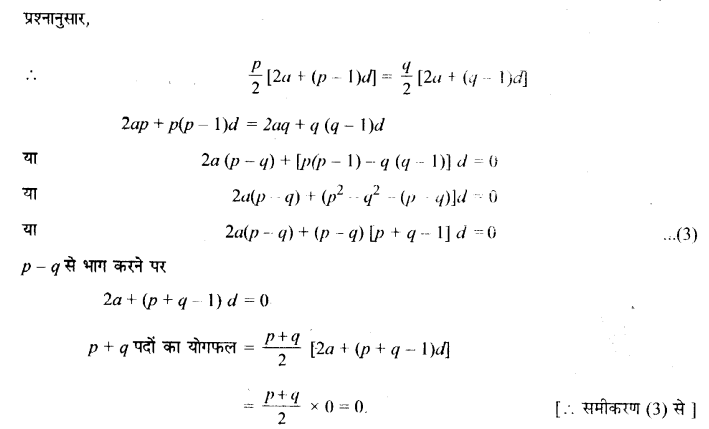
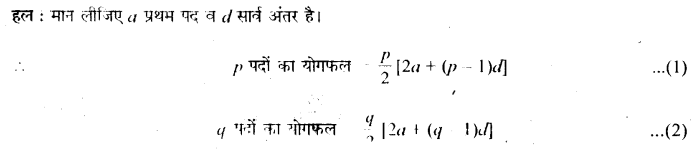
यदि किसी समांतर श्रेणी के प्रथम p पदों का योग, प्रथम q पदों के योगफल के बराबर हो, तो प्रथम (p + q) पदों का योगफल ज्ञात कीजिए।
UP Board Solutions for Class 11 Maths Chapter 9 Sequences and Series 9.2 10
UP Board Solutions for Class 11 Maths Chapter 9 Sequences and Series 9.2 10.1

प्रश्न 11.
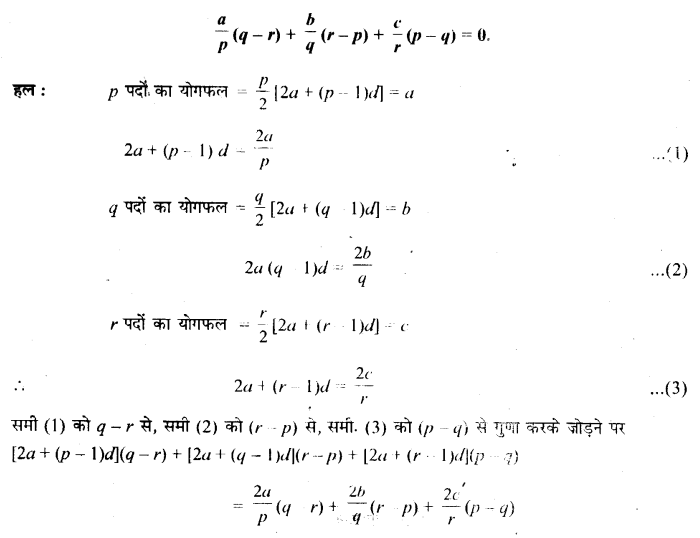
यदि किसी समांतर श्रेणी के प्रथम p, q, r पदों का योगफल क्रमशः a, b, c, हो तो सिद्ध कीजिए कि:
UP Board Solutions for Class 11 Maths Chapter 9 Sequences and Series 9.2 11
UP Board Solutions for Class 11 Maths Chapter 9 Sequences and Series 9.2 11.1

UP Board Solutions

प्रश्न 12.
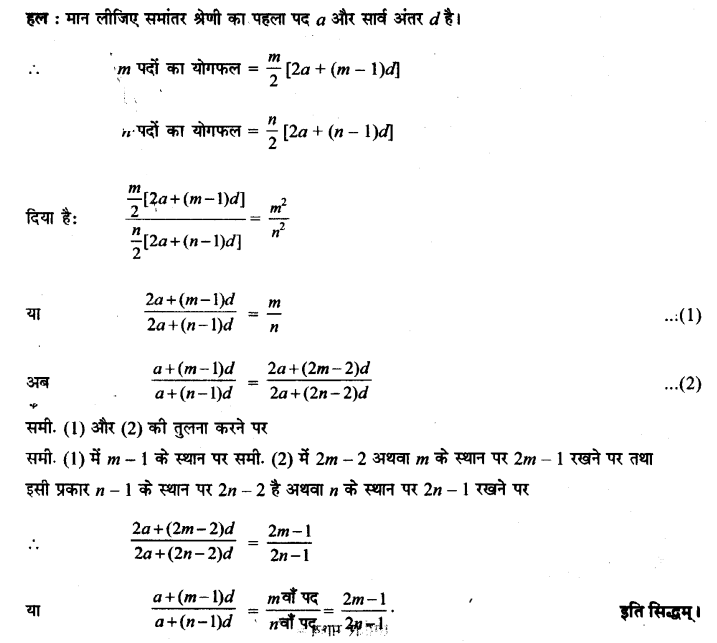
किसी समांतर श्रेणी के m तथा n पदों के योगफलों का अनुपात m² : n² है तो दर्शाइए कि वे m तथा n वें पदों का अनुपात (2m – 1) : (2n -1) है।
UP Board Solutions for Class 11 Maths Chapter 9 Sequences and Series 9.2 12

UP Board Solutions

प्रश्न 13.
यदि किसी समांतर श्रेणी के पदों का योगफल 3n² + 5n है तथा इसका m वाँ पद 164 है तो m का मान ज्ञात करो।
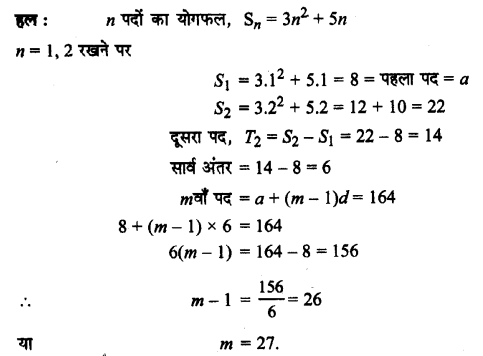
UP Board Solutions for Class 11 Maths Chapter 9 Sequences and Series 9.2 13

प्रश्न 14.
8 और 26 के बीच ऐसी 5 संख्याएँ डालिए ताकि प्राप्त अनुक्रम एक समांतर श्रेणी बन जाए।
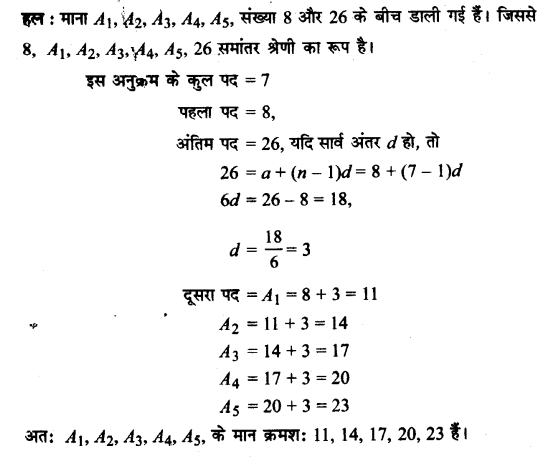
UP Board Solutions for Class 11 Maths Chapter 9 Sequences and Series 9.2 14

UP Board Solutions

UP Board Solutions for Class 11 Maths Chapter 9 Sequences and Series 9.2 15
UP Board Solutions for Class 11 Maths Chapter 9 Sequences and Series 9.2 15.1

प्रश्न 16.
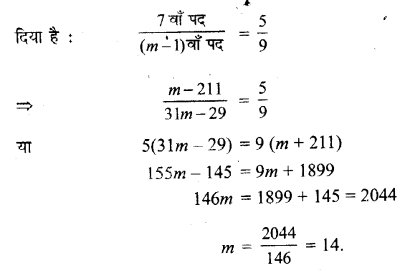
m संख्याओं को 1 तथा 31 के बीच रखने पर प्राप्त अनुक्रम एक समांतर श्रेणी है। और 7 वीं एवं (m – 1) वीं संख्याओं का अनुपात 5 : 9 है, तो m का मान ज्ञात कीजिए।
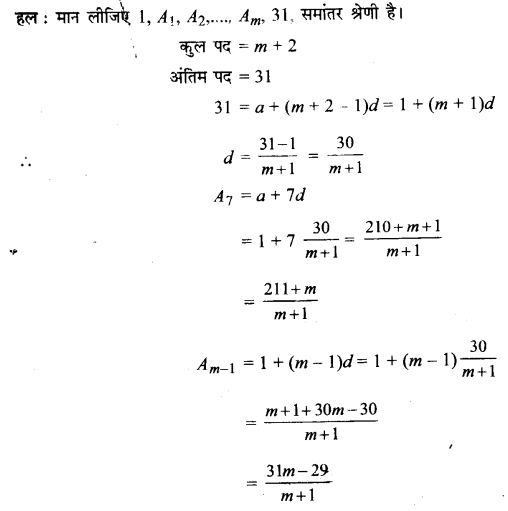
UP Board Solutions for Class 11 Maths Chapter 9 Sequences and Series 9.2 16
UP Board Solutions for Class 11 Maths Chapter 9 Sequences and Series 9.2 16.1

UP Board Solutions

प्रश्न 17.
एक व्यक्ति ऋण का भुगतान 100 रुपए की प्रथम किश्त से शुरू करता है। यदि वह प्रत्येक किश्त में 5 रुपए प्रति माह बढ़ाता है, तो 30 वीं किश्त की राशि क्या होगी?
हुल:
पहली किश्त a = 100 रु.
हर माह किश्त में बढ़ोत्तरी = सार्व अंतर = 5 रु.
30वीं किश्त = समांतर श्रेणी का 30वाँ पद = a + (n – 1)d
= 100 + (30 – 1) 5 = 100 + 29 x 5 = 100 + 145 = 245 रु.

प्रश्न 18.
एक बहुभुज के दो क्रमिक अंतः कोणों का अंतर 5° है। यदि सबसे छोटा कोण 120° हो, तो बहुभुज की भुजाओं की संख्या ज्ञात कीजिए।
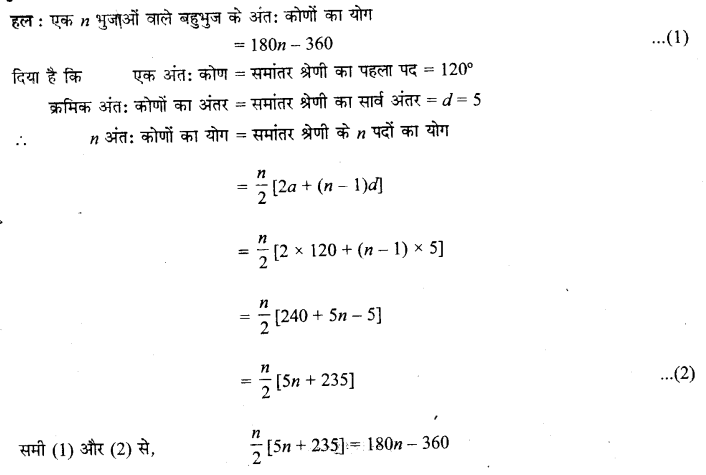
UP Board Solutions for Class 11 Maths Chapter 9 Sequences and Series 9.2 18
UP Board Solutions for Class 11 Maths Chapter 9 Sequences and Series 9.2 18.1

UP Board Solutions

प्रश्नावली 9.3

प्रश्न 1.
गुणोत्तर श्रेणी [latex]\frac { 5 }{ 2 }[/latex] , [latex]\frac { 5 }{ 4 }[/latex] , [latex]\frac { 5 }{ 8 }[/latex] ……. का 20 वाँ तथा n वाँ पद ज्ञात कीजिए।
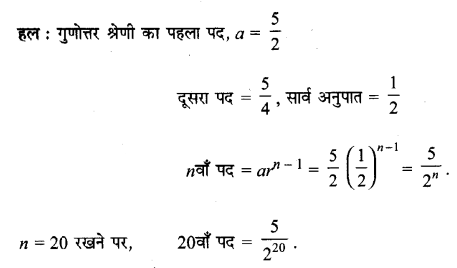
UP Board Solutions for Class 11 Maths Chapter 9 Sequences and Series 9.3 1

प्रश्न 2.
उस गुणोत्तर श्रेणी का 12 वाँ पद ज्ञात कीजिए, जिसका 8वाँ पद 192 तथा सार्व अनुपात 2 है।
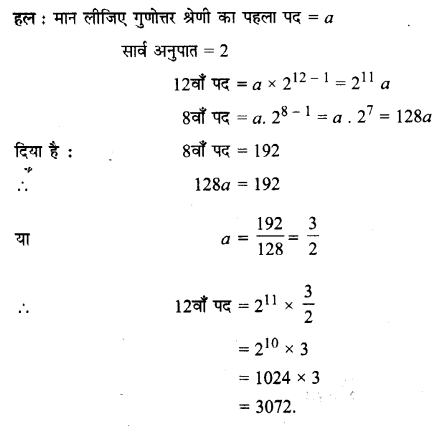
UP Board Solutions for Class 11 Maths Chapter 9 Sequences and Series 9.3 2

प्रश्न 3.
किसी गुणोत्तर श्रेणी का 5 वाँ, 8 वाँ तथा 11 वाँ पदक्रमशः p, q तथा s हैं, तो दिखाइए कि q² = ps.
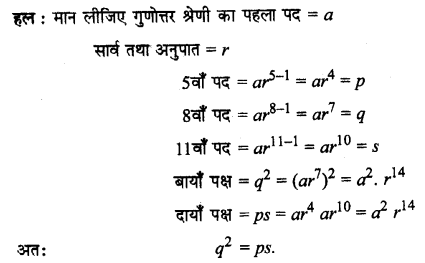
UP Board Solutions for Class 11 Maths Chapter 9 Sequences and Series 9.3 3

प्रश्न 4.
किसी गुणोत्तर श्रेणी का चौथा पद उसके दूसरे पद का वर्ग है तथा प्रथम पद -3 है, तो 7वाँ पद ज्ञात कीजिए।
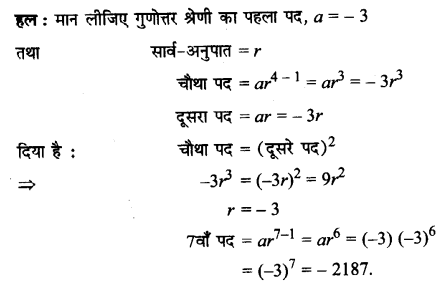
UP Board Solutions for Class 11 Maths Chapter 9 Sequences and Series 9.3 4

प्रश्न 5.
अनुक्रमों को कौन सा पद:
UP Board Solutions for Class 11 Maths Chapter 9 Sequences and Series 9.3 5
UP Board Solutions for Class 11 Maths Chapter 9 Sequences and Series 9.3 5.1
UP Board Solutions for Class 11 Maths Chapter 9 Sequences and Series 9.3 5.2

UP Board Solutions

प्रश्न 6.
x के किस मान के लिए संख्याएँ [latex]\frac { -2 }{ 7 }[/latex], x , [latex]\frac { -7 }{ 2 }[/latex] गुणोत्तर श्रेणी में हैं?
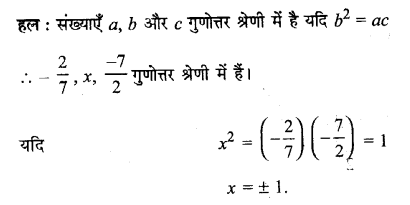
UP Board Solutions for Class 11 Maths Chapter 9 Sequences and Series 9.3 6

प्रश्न 7 से 10 तक प्रत्येक गुणोत्तर श्रेणी का योगफल निर्दिष्ट पदों तक ज्ञात कीजिए।

प्रश्न 7.
0.15, 0.015, 0.0015, ….. 20 पदों तक।
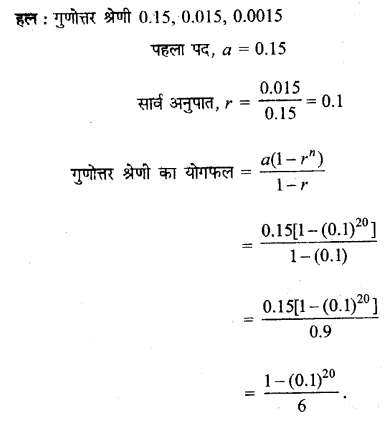
UP Board Solutions for Class 11 Maths Chapter 9 Sequences and Series 9.3 7

UP Board Solutions

प्रश्न 8.
√7, √21, 3√7, …. n पदों तक।
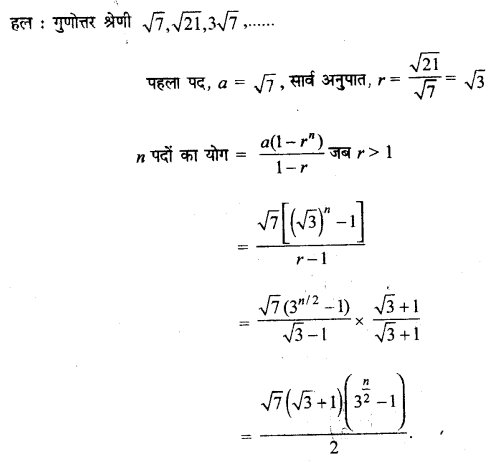
UP Board Solutions for Class 11 Maths Chapter 9 Sequences and Series 9.3 8

प्रश्न 9.
1, -a, -a2, -a3 …. n पदों तक (यदि a ≠ -1).
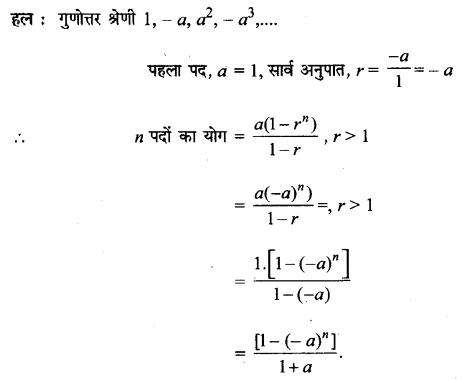
UP Board Solutions for Class 11 Maths Chapter 9 Sequences and Series 9.3 9

प्रश्न 10.
x3 , x5, x7 … n पदों तक (यदि x ≠ ±1).
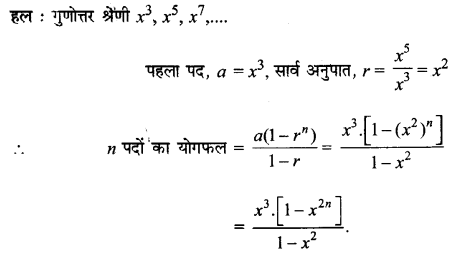
UP Board Solutions for Class 11 Maths Chapter 9 Sequences and Series 9.3 10

UP Board Solutions for Class 11 Maths Chapter 9 Sequences and Series 9.3 11

UP Board Solutions

प्रश्न 12.
एक गुणोत्तर श्रेणी के तीन पदों का योगफल [latex]\frac { 39 }{ 10 }[/latex] है तथा उनका गुणनफल 1 है। सार्व अनुपात तथा पदों को ज्ञात कीजिए।
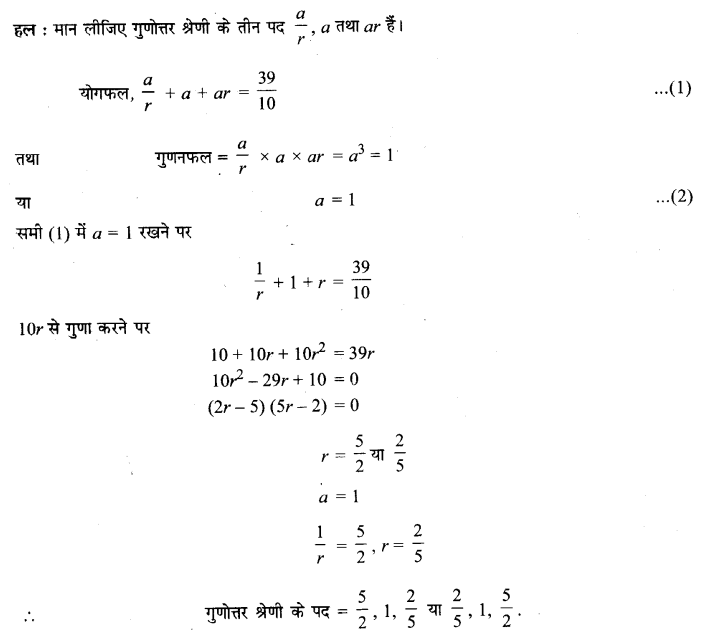
UP Board Solutions for Class 11 Maths Chapter 9 Sequences and Series 9.3 12

प्रश्न 13.
मुणोत्तर श्रेणी 3, 32, 33, …… के कितने पद आवश्यक हैं ताकि उनका योगफल 120 हो जाए।
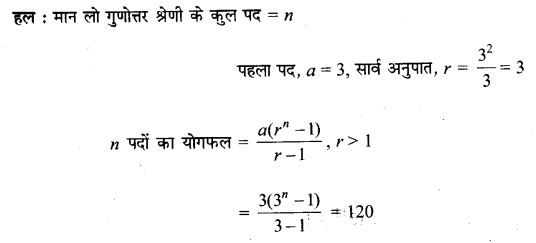
UP Board Solutions for Class 11 Maths Chapter 9 Sequences and Series 9.3 13
UP Board Solutions for Class 11 Maths Chapter 9 Sequences and Series 9.3 13.1

प्रश्न 14.
किसी गुणोत्तर श्रेणी के प्रथम तीन पदों का योगफल 16 है तथा अगले 3 पदों का योग 128 है तो गुणोत्तर श्रेणी का प्रथम पद, सार्व अनुपात तथा n पदों का योगफल ज्ञात कीजिए।
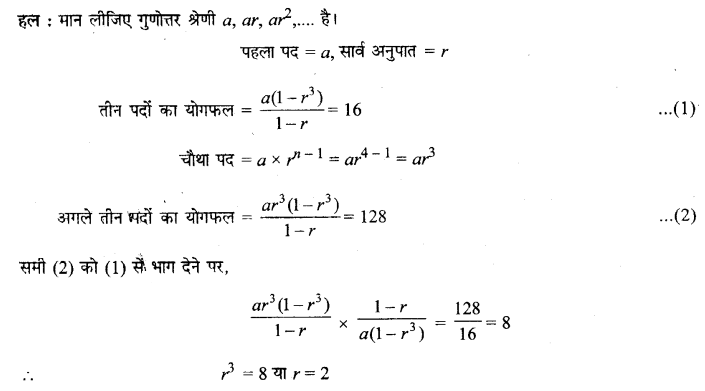
UP Board Solutions for Class 11 Maths Chapter 9 Sequences and Series 9.3 14
UP Board Solutions for Class 11 Maths Chapter 9 Sequences and Series 9.3 14.1

UP Board Solutions

प्रश्न 15.
एक गुणोत्तर श्रेणी का प्रथम पद a = 729 तथा 7वाँ पद 64 है, तो S7 ज्ञात कीजिए।
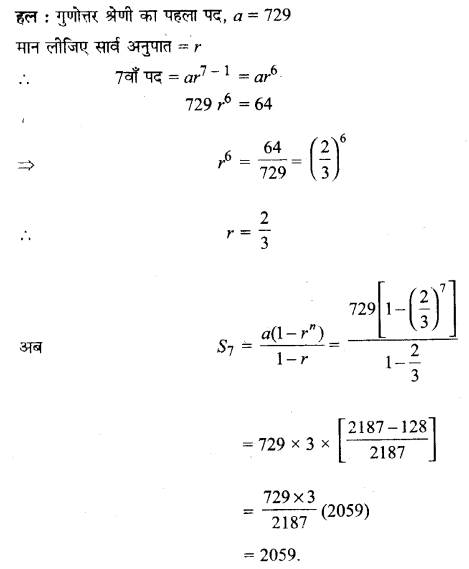
UP Board Solutions for Class 11 Maths Chapter 9 Sequences and Series 9.3 15

प्रश्न 16.
एक गुणोत्तर श्रेणी को ज्ञात कीजिए, जिसके प्रथम दो पदों का योगफल -4 है तथा 5वाँ पद तृतीय पद को 4 गुना है।
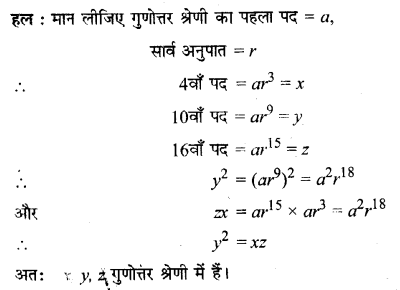
UP Board Solutions for Class 11 Maths Chapter 9 Sequences and Series 9.3 17
UP Board Solutions for Class 11 Maths Chapter 9 Sequences and Series 9.3 16.1

UP Board Solutions

प्रश्न 17.
यदि किसी गुणोत्तर का 4 वाँ, 10 वाँ तथा 16 वाँ पद क्रमशः x, y तथा z हैं, तो सिद्ध कीजिए कि x, y, z गुणोत्तर श्रेणी में हैं।
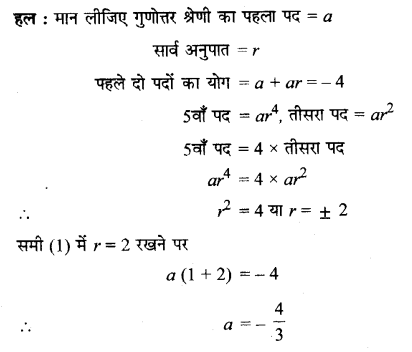
UP Board Solutions for Class 11 Maths Chapter 9 Sequences and Series 9.3 16

प्रश्न 18.
अनुक्रम 8, 88, 888, ……. के n पदों का योग ज्ञात कीजिए।
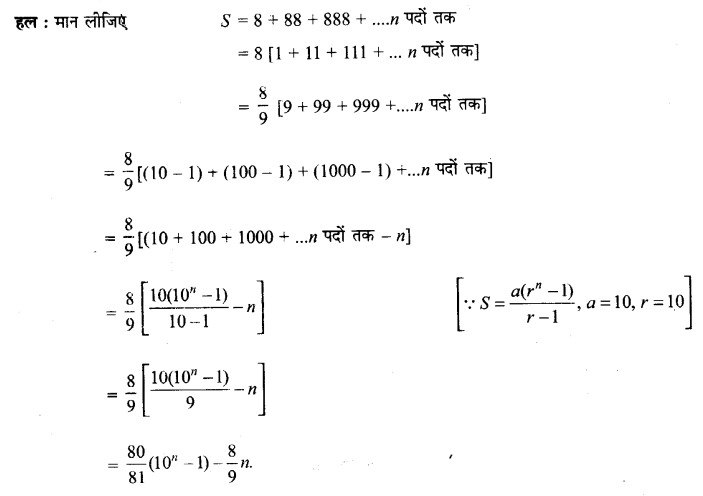
UP Board Solutions for Class 11 Maths Chapter 9 Sequences and Series 9.3 18

प्रश्न 19.
अनुक्रम 2, 4, 8, 16, 32, तथा 128, 32, 8, 2, [latex]\frac { 1 }{ 2 }[/latex] के संगत पेदीं के गुणनफल से बने अनुक्रम का योगफल ज्ञात कीजिए।
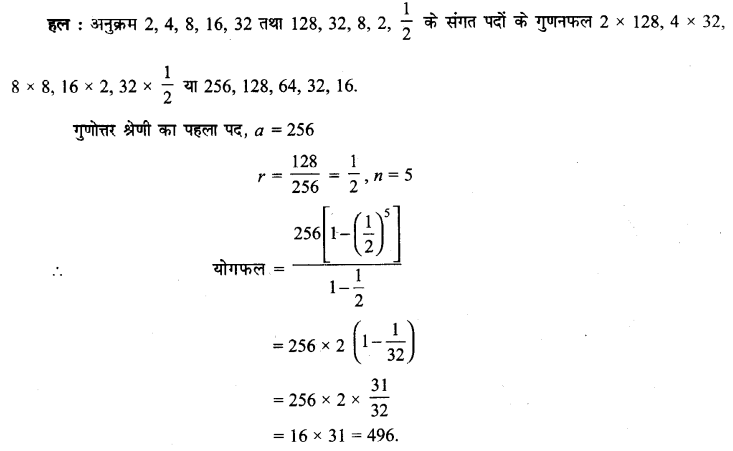
UP Board Solutions for Class 11 Maths Chapter 9 Sequences and Series 9.3 19

UP Board Solutions

प्रश्न 20.
दिखाइए कि अनुक्रम a, ar, ar2,….arn-1 तथा A, AR, AR2, … ARn-1 के संगत पदों के गुणनफल से बना अनुक्रमे गुणोत्तर श्रेणी होती है तथा सार्व अनुपात ज्ञात कीजिए।
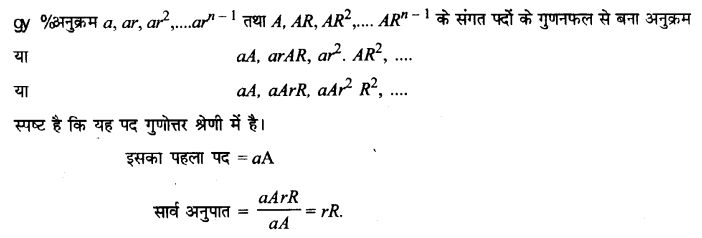
UP Board Solutions for Class 11 Maths Chapter 9 Sequences and Series 9.3 20

प्रश्न 21.
ऐसे चार पद ज्ञात कीजिए जो गुणोत्तर श्रेणी में हो, जिसका तीसरा पद प्रथम पद से 9 अधिक हो, तथा दूसरा पद चौथे पद से 18 अधिक हो।
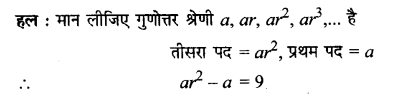
UP Board Solutions for Class 11 Maths Chapter 9 Sequences and Series 9.3 21
UP Board Solutions for Class 11 Maths Chapter 9 Sequences and Series 9.3 21.1

UP Board Solutions

प्रश्न 22.
यदि किसी गुणोत्तर श्रेणी का p वाँ, q वाँ तथा r वाँ पद क्रमशः a, b, तथा c हो, तो सिद्ध कीजिए कि aq-r . br-p – cp-q = 1.
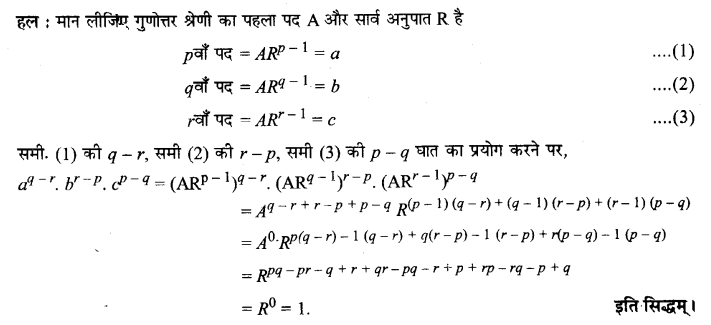
UP Board Solutions for Class 11 Maths Chapter 9 Sequences and Series 9.3 22

प्रश्न 23.
यदि किसी गुणोत्तर श्रेणी का प्रथम तथा n वाँ पद a तथा b हैं, एवं P, n पदों का गुणनफल हो, तो सिद्ध कीजिए कि P2 = (ab)n.
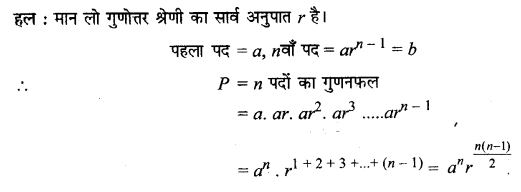
UP Board Solutions for Class 11 Maths Chapter 9 Sequences and Series 9.3 23
UP Board Solutions for Class 11 Maths Chapter 9 Sequences and Series 9.3 23.1

प्रश्न 24.
दिखाइए कि एक गुणोत्तर श्रेणी के प्रथम n पदों का योगफल तथा (n + 1)वें पद से (2n) वें पद तक के पदों के योगफल का अनुपात [latex]\frac { 1 }{ { r }^{ n } }[/latex] हैं।
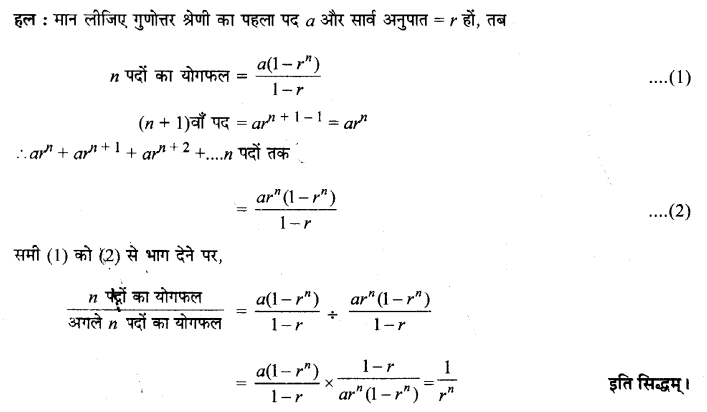
UP Board Solutions for Class 11 Maths Chapter 9 Sequences and Series 9.3 24

UP Board Solutions

प्रश्न 25.
यदि a, b, c तथा d गुणोत्तर श्रेणी में हैं तो दिखाइए कि (a² + b² + c²) (b² + c² + d²) = (ab + bc + cd)².
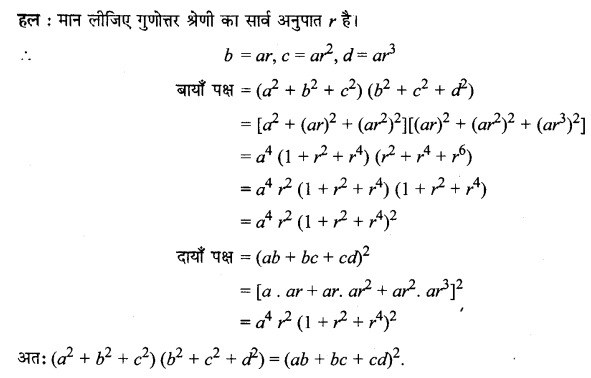
UP Board Solutions for Class 11 Maths Chapter 9 Sequences and Series 9.3 25

प्रश्न 26.
ऐसी दो संख्याएँ ज्ञात कीजिए जिनको 3 और 81 के बीच रखने पर प्राप्त अनुक्रमः एक गुणोत्तर श्रेणी बन जाए।
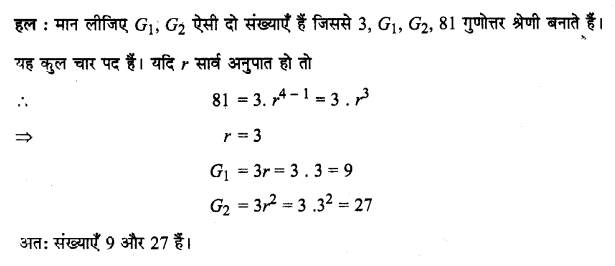
UP Board Solutions for Class 11 Maths Chapter 9 Sequences and Series 9.3 26

UP Board Solutions for Class 11 Maths Chapter 9 Sequences and Series 9.3 27
UP Board Solutions for Class 11 Maths Chapter 9 Sequences and Series 9.3 27.1

UP Board Solutions

प्रश्न 28.
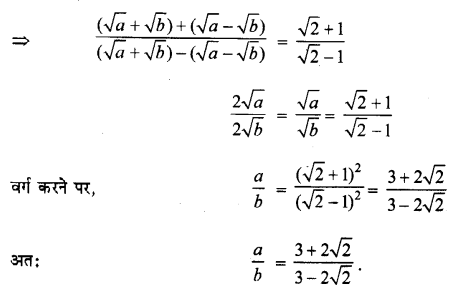
दो संख्याओं का योगफल उनके गुणोत्तर माध्य का 6 गुना है तो दिखाइए कि संख्याएँ (3 + 2√2) : (3 – 2√2) के अनुपात में हैं।
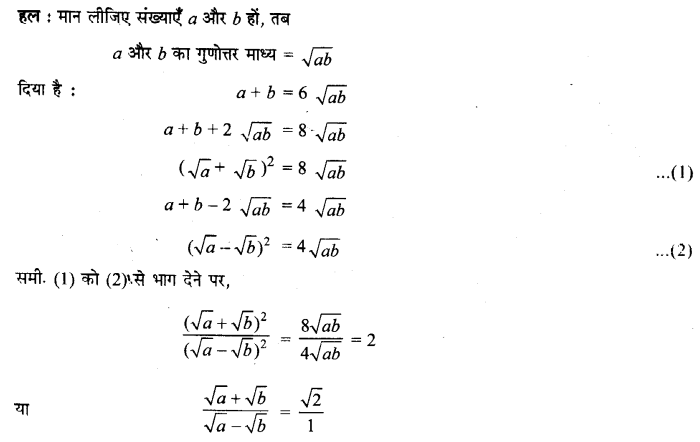
UP Board Solutions for Class 11 Maths Chapter 9 Sequences and Series 9.3 28
UP Board Solutions for Class 11 Maths Chapter 9 Sequences and Series 9.3 28.1

UP Board Solutions

प्रश्न 29.
यदि A तथा G दो धनात्मक संख्याओं के बीच क्रमशः समांतर तथा गुणोत्तर माध्य हों, तो सिद्ध करो कि संख्याएँ A ≠ √{(A + G)(A – G)} हैं।
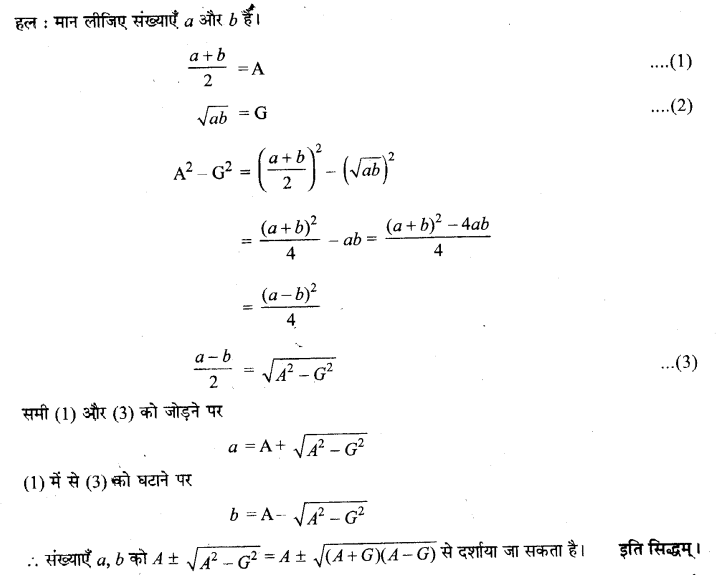
UP Board Solutions for Class 11 Maths Chapter 9 Sequences and Series 9.3 29

UP Board Solutions

प्रश्न 30.
किसी कल्चर में बैक्टीरिया की संख्या प्रत्येक घण्टे के पश्चात् दुगुनी हो जाती है। यदि प्रारंभ में उसमें 30 बैक्टीरिया उपस्थित थे, तो बैक्टीरिया की संख्या दूसरे, चौथे तथा n वें घण्टों बाद क्या होगी ?
हल:
प्रारम्भ में बैक्टीरिया की संख्या a = 30
प्रत्येक घण्टे बाद बैक्टीरिया की संख्या दुगुनी हो जाती है।
सार्व अनुपात = 2
दूसरे घण्टे बाद बैक्टीरिया संख्या = ar2 = 30 x 22 = 120
चौथे घण्टे बाद बैक्टीरिया संख्या = ar4 = 30 x 24 = 480
n वें घण्टे बाद बैक्टीरिया संख्या = arn = 30 x 2n

प्रश्न 31.
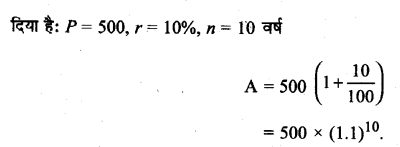
500 रुपए धनराशि 10% वार्षिक चक्रवृद्धि ब्याज पर 10 वर्षों बाद क्या हो जाएगी, ज्ञात कीजिए ?

UP Board Solutions for Class 11 Maths Chapter 9 Sequences and Series 9.3 31
UP Board Solutions for Class 11 Maths Chapter 9 Sequences and Series 9.3 31.1

प्रश्न 32.
यदि किसी द्विघात समीकरण के मूलों के समांतर माध्य एवं गुणोत्तर माध्य क्रमशः 8 तथा 5 हैं, तो द्विधातीय समीकरण ज्ञात कीजिए।
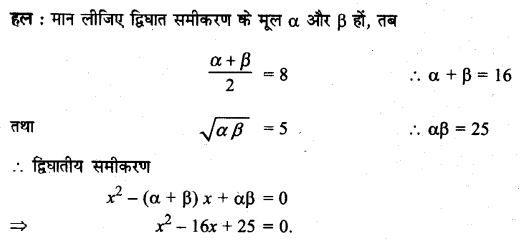
UP Board Solutions for Class 11 Maths Chapter 9 Sequences and Series 9.3 32

प्रश्नावली 9.4

प्रश्न 1 से 7 तक प्रत्येक श्रेणी के n पदों का योग ज्ञात कीजिए:

प्रश्न 1.
1 x 2 + 2 x 3 + 3 x 4 + 4 x 5 +….
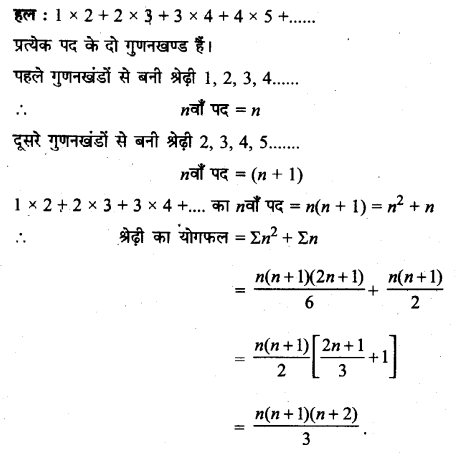
UP Board Solutions for Class 11 Maths Chapter 9 Sequences and Series 9.4 1

UP Board Solutions

प्रश्न 2.
1 x 2 x 3 + 2 x 3 x 4 + 3 x 4 x 5 + …….
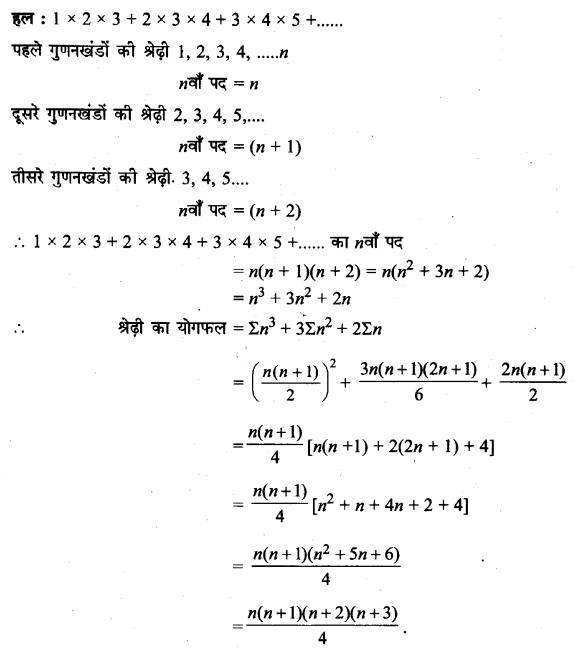
UP Board Solutions for Class 11 Maths Chapter 9 Sequences and Series 9.4 2

प्रश्न 3.
3 x 1² + 5 x 2² + 7 x 3² + …….
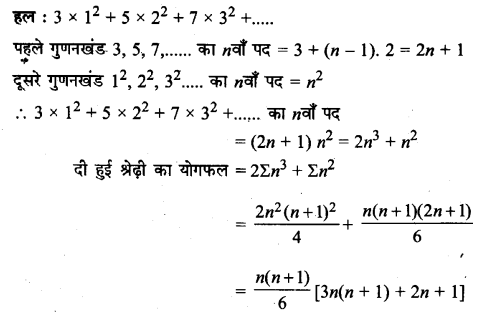
UP Board Solutions for Class 11 Maths Chapter 9 Sequences and Series 9.4 3
UP Board Solutions for Class 11 Maths Chapter 9 Sequences and Series 9.4 3.1

UP Board Solutions

UP Board Solutions for Class 11 Maths Chapter 9 Sequences and Series 9.4 4

प्रश्न 5.
5² + 6² + 7² +… 20².
UP Board Solutions for Class 11 Maths Chapter 9 Sequences and Series 9.4 5
UP Board Solutions for Class 11 Maths Chapter 9 Sequences and Series 9.4 5.1

UP Board Solutions

प्रश्न 6.
3 x 8 + 6 x 11 + 9 x 14+…..
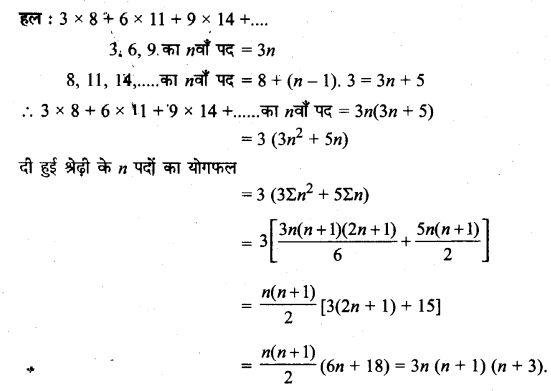
UP Board Solutions for Class 11 Maths Chapter 9 Sequences and Series 9.4 6

प्रश्न 7.
1² + (1² + 2²) + (1² + 2² + 3²) + ….
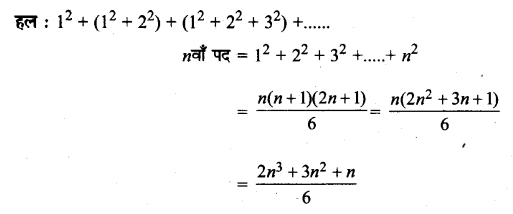
UP Board Solutions for Class 11 Maths Chapter 9 Sequences and Series 9.4 7
UP Board Solutions for Class 11 Maths Chapter 9 Sequences and Series 9.4 7.1

UP Board Solutions

प्रश्न 8 से 10 तक प्रत्येक श्रेणी के n पदों का योग ज्ञात कीजिए जिसका वाँ पद दिया है।

प्रश्न 8.
n (n + 1) (n + 4).
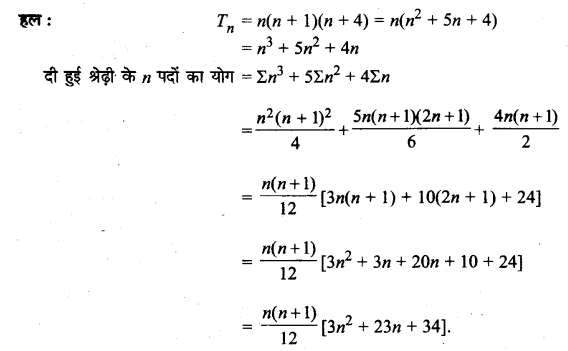
UP Board Solutions for Class 11 Maths Chapter 9 Sequences and Series 9.4 8

प्रश्न 9.
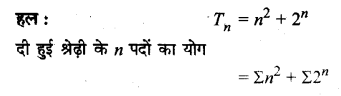
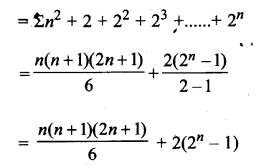
n² + 2n
UP Board Solutions for Class 11 Maths Chapter 9 Sequences and Series 9.4 9
UP Board Solutions for Class 11 Maths Chapter 9 Sequences and Series 9.4 9.1

प्रश्न 10.
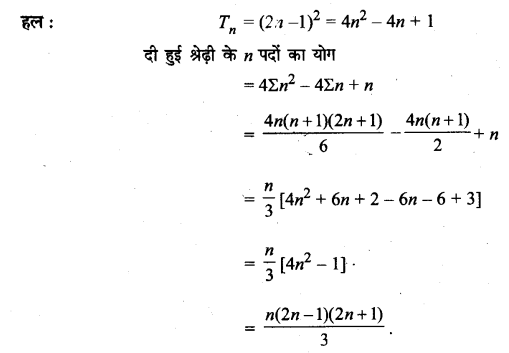
(2n – 1)²
UP Board Solutions for Class 11 Maths Chapter 9 Sequences and Series 9.4 10

UP Board Solutions

अध्याय 9 पर विविध प्रश्नावली

प्रश्न 1.
दर्शाइए कि किसी समांतर श्रेढ़ी के (m + n) वें तथा (m – n) वें पदों का योग m वें पद को दुगुना है।
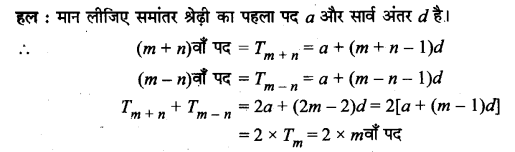
UP Board Solutions for Class 11 Maths Chapter 9 Sequences and Series 1

प्रश्न 2.
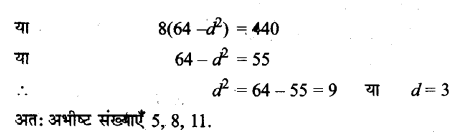
यदि किसी समांतर श्रेढ़ी की तीन संख्याओं का योग 24 है तथा उनका गुणनफल 440 है तो संख्याएँ ज्ञात कीजिए।
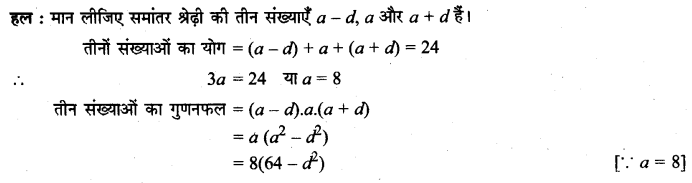
UP Board Solutions for Class 11 Maths Chapter 9 Sequences and Series 2
UP Board Solutions for Class 11 Maths Chapter 9 Sequences and Series 2.1

प्रश्न 3.
माना कि किसी समांतर श्रेढ़ी के n, 2n तथा 3n पदों का योगफल क्रमशः S1, S2 तथा S3 हैं, तो दिखाइए कि S3 = 3(S2 – S1).
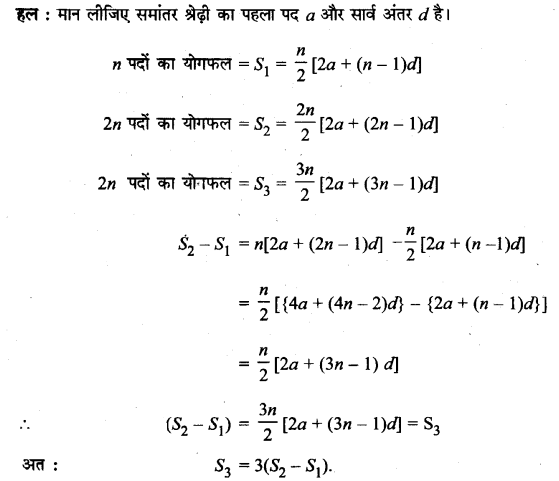
UP Board Solutions for Class 11 Maths Chapter 9 Sequences and Series 3

UP Board Solutions

प्रश्न 4.
200 और 400 के मध्य आने वाली ने सभी संख्याओं का योगफल ज्ञात कीजिए जो 7 से विभाजित है।
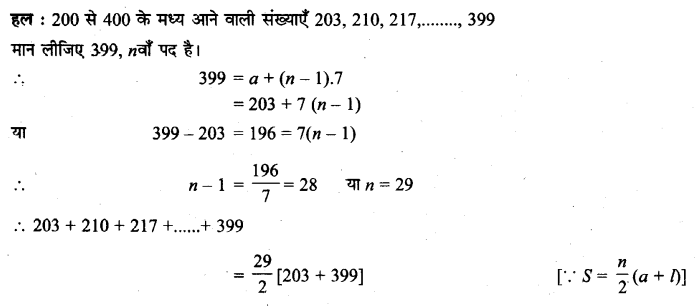
UP Board Solutions for Class 11 Maths Chapter 9 Sequences and Series 4
UP Board Solutions for Class 11 Maths Chapter 9 Sequences and Series 4.1

प्रश्न 5.
1 से 100 तक आने वाले ने सभी पूर्णाकों का योगफल ज्ञात कीजिए जो 2 या 5 से विभाजित हों।
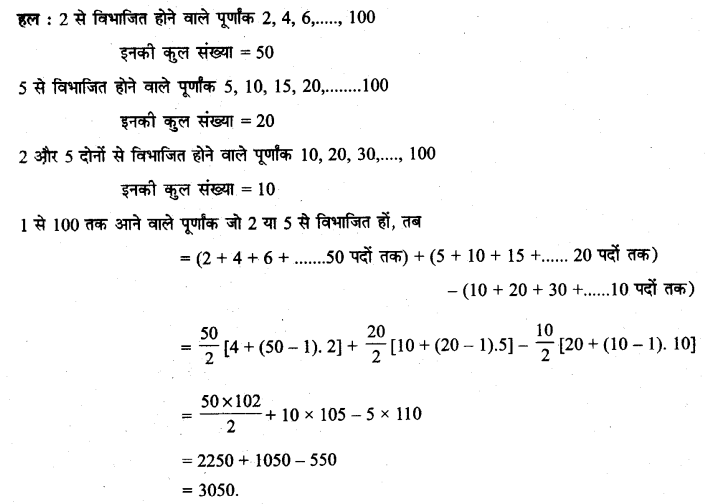
UP Board Solutions for Class 11 Maths Chapter 9 Sequences and Series 5

UP Board Solutions

प्रश्न 6.
दो अंकों की उन सभी संख्याओं का योगफल ज्ञात कीजिए, जिनको 4 से विभाजित करने पर शेषफल 1 हो।
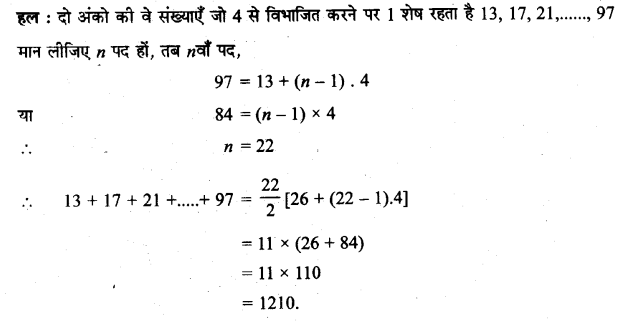
UP Board Solutions for Class 11 Maths Chapter 9 Sequences and Series 6

UP Board Solutions for Class 11 Maths Chapter 9 Sequences and Series 7

प्रश्न 8.
गुणोचर श्रेढ़ी के कुछ पदों का योग 315 है, उसका प्रथम पद तथा सार्व अनुपात क्रमशः 5 और 2 हैं। अंतिम पद तथा पदों की संख्या ज्ञात करो।
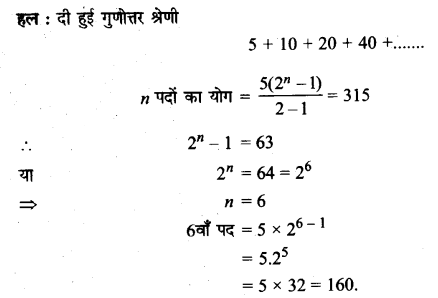
UP Board Solutions for Class 11 Maths Chapter 9 Sequences and Series 8

प्रश्न 9.
किसी गुणोत्तर श्रेढ़ी का प्रथम पद 1 है। तीसरे एवं पाँचवें पदों का योग 90 हो, तो गुणोत्तर श्रेढ़ी को सार्व अनुपात ज्ञात कीजिए।
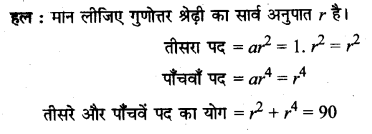
UP Board Solutions for Class 11 Maths Chapter 9 Sequences and Series 9
UP Board Solutions for Class 11 Maths Chapter 9 Sequences and Series 9.1

UP Board Solutions

प्रश्न 10.
किसी गुणोत्तर श्रेढ़ी के तीन पदों का योग 56 है। यदि हम क्रम से इन संख्याओं में से 1, 7, 21 घटाएँ तो हमें एक समांतर श्रेढी प्राप्त होती है। संख्याएँ ज्ञात कीजिए।
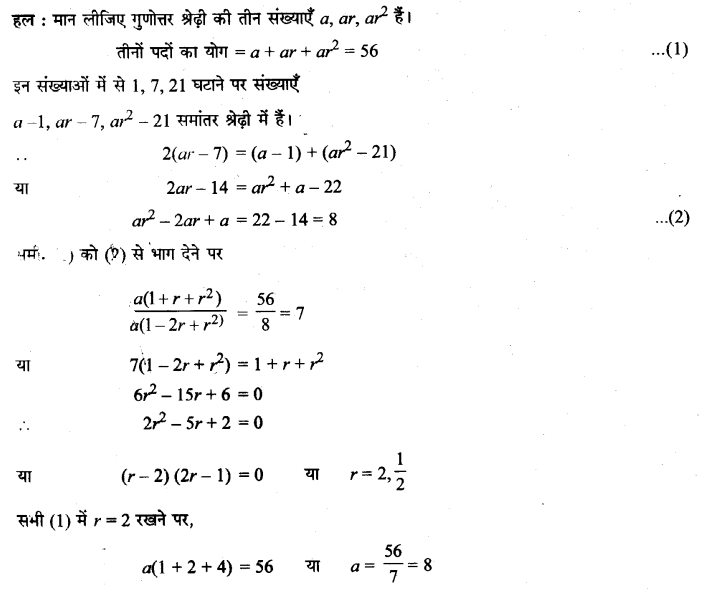
UP Board Solutions for Class 11 Maths Chapter 9 Sequences and Series 10
UP Board Solutions for Class 11 Maths Chapter 9 Sequences and Series 10.1
UP Board Solutions for Class 11 Maths Chapter 9 Sequences and Series 10.2

UP Board Solutions

प्रश्न 11.
किसी गुणोत्तर श्रेढ़ी के पदों की संख्या सम है। यदि उसके सभी पदों का योगफल, विषम स्थान पर रखे पदों के योगफल को 5 गुना है, तो सार्व अनुपात ज्ञात कीजिए।
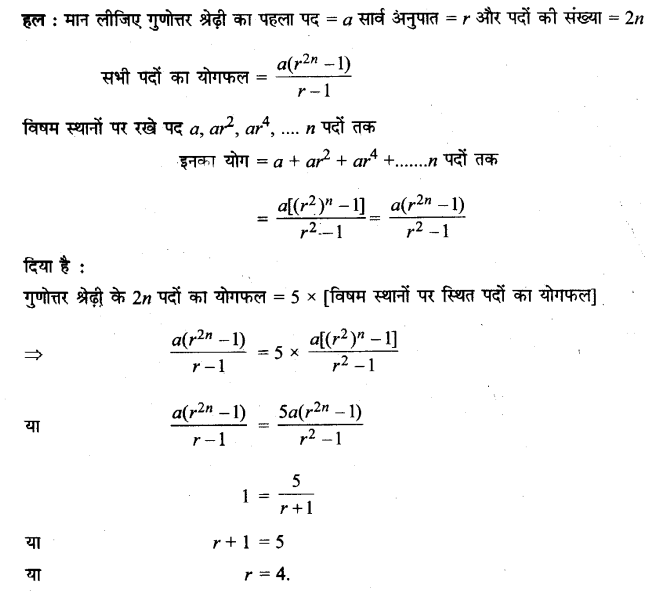
UP Board Solutions for Class 11 Maths Chapter 9 Sequences and Series 11

प्रश्न 12.
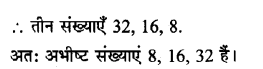
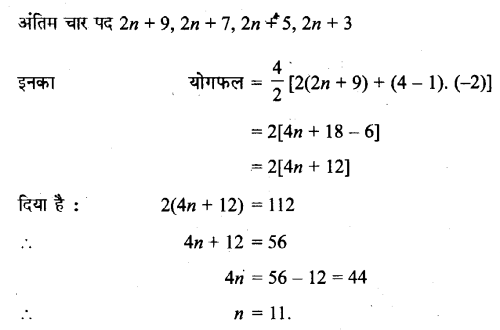
एक समांतर श्रेढ़ी के प्रथम चार पदों का योगफल 56 है। अंतिम चार पदों का योगफल 112 है। यदि इसका प्रथम पद 11 है, तो पदों की संख्या ज्ञात कीजिए।
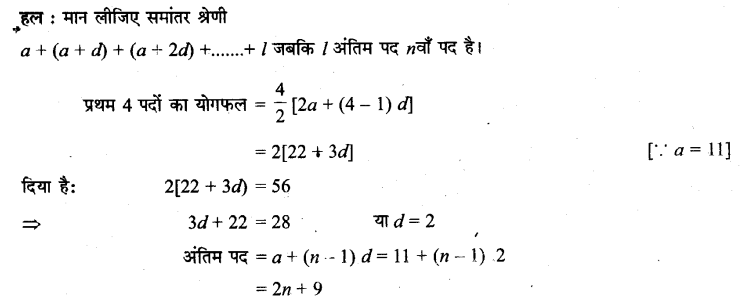
UP Board Solutions for Class 11 Maths Chapter 9 Sequences and Series 12
UP Board Solutions for Class 11 Maths Chapter 9 Sequences and Series 12.1

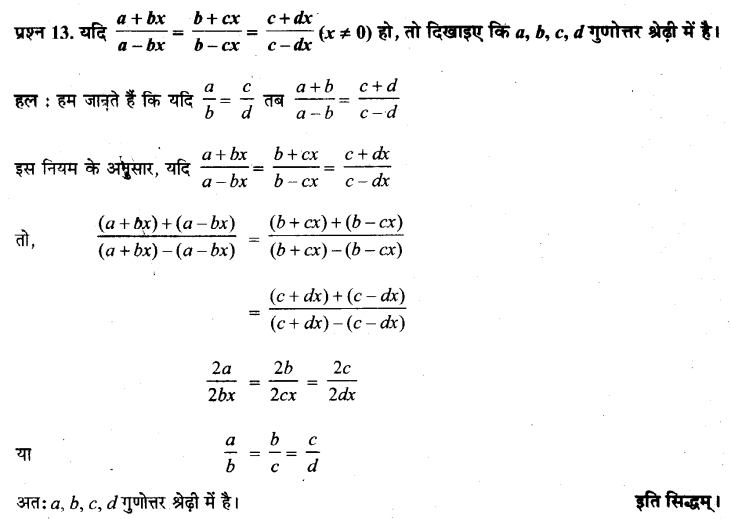
UP Board Solutions for Class 11 Maths Chapter 9 Sequences and Series 13

UP Board Solutions

प्रश्न 14.
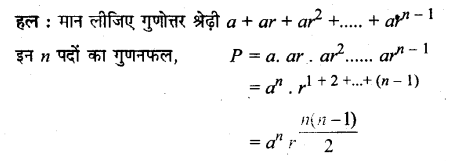
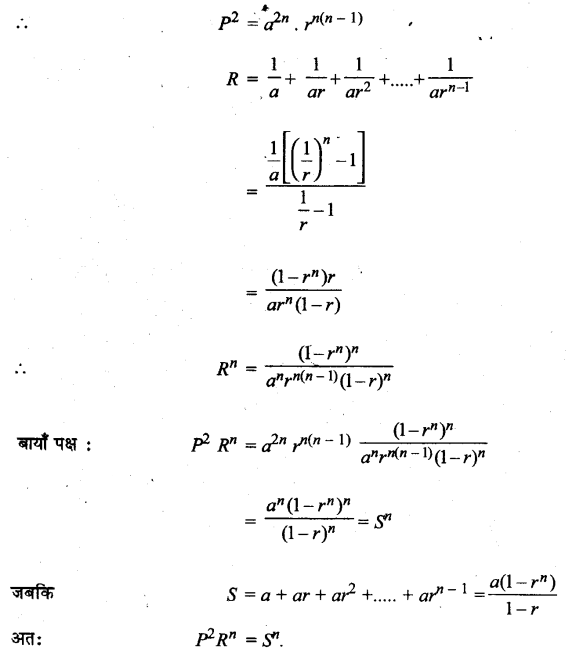
किसी गुणोत्तर श्रेढ़ी में S, n पदों का योग, P उनका गुणनफल तथा R उनके व्युत्क्रमों का योग हो तो सिद्ध कीजिए कि PRn = Sn
UP Board Solutions for Class 11 Maths Chapter 9 Sequences and Series 14
UP Board Solutions for Class 11 Maths Chapter 9 Sequences and Series 14.1

प्रश्न 15.
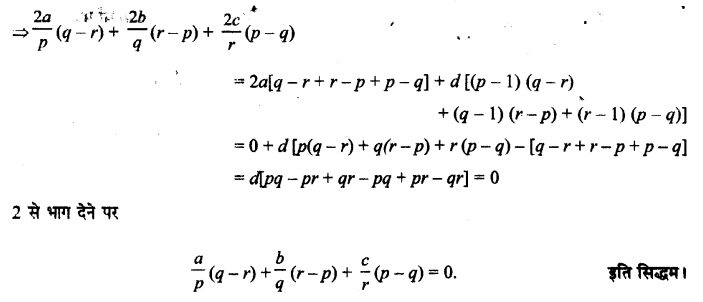
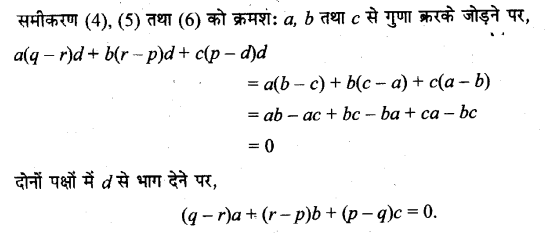
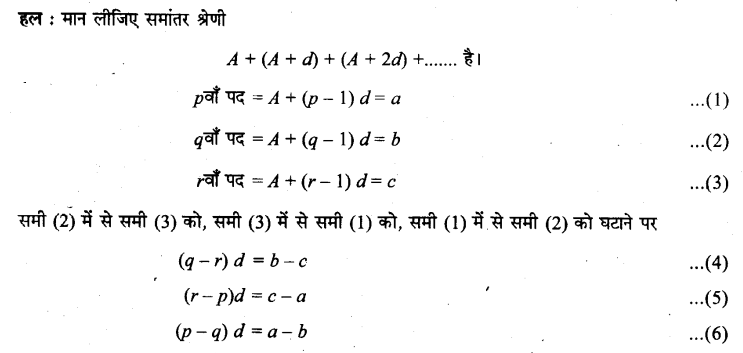
किसी समांतर श्रेढ़ी का p वाँ, q वाँ, r वाँ पद क्रमशः a, b, c हैं, तो सिद्ध कीजिए : (q – r) a + (r – p) b + (p – q) c = 0.
UP Board Solutions for Class 11 Maths Chapter 9 Sequences and Series 15
UP Board Solutions for Class 11 Maths Chapter 9 Sequences and Series 15.1

UP Board Solutions for Class 11 Maths Chapter 9 Sequences and Series 16

UP Board Solutions

प्रश्न 17.
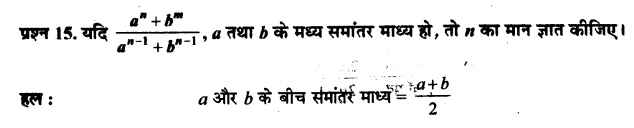
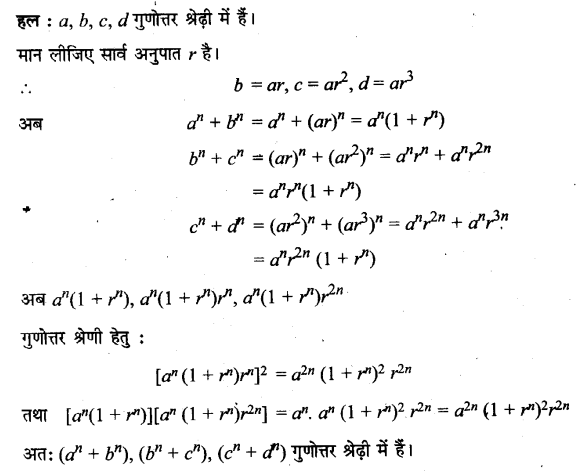
यदि a, b, c, d गुणोत्तर श्रेढ़ी में हैं, तो सिद्ध कीजिए कि (an + bn), (bn + cn), (cn + dn) गुणोत्तर श्रेढ़ी में हैं।
UP Board Solutions for Class 11 Maths Chapter 9 Sequences and Series 17

प्रश्न 18.
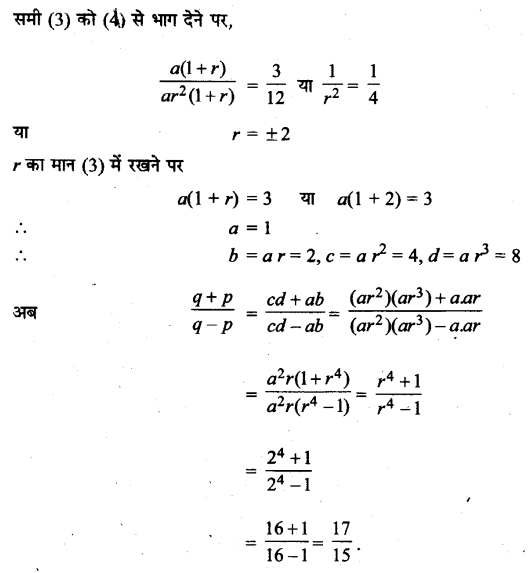
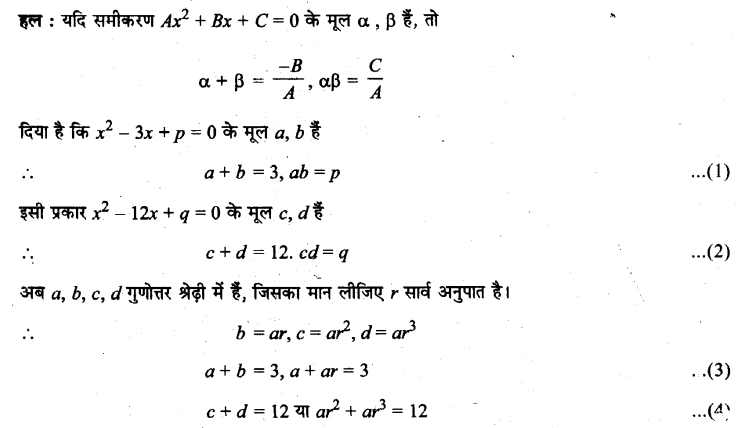
यदि x² – 3x + p = 0 के मूल a तथा b हैं तथा? x² – 12x + q = 0 के मूल c तथा d हैं, जहाँ a, b, c, d गुणोत्तर श्रेढ़ी के रूप में हैं। सिद्ध कीजिए कि (q + p) : (q – p) = 17 : 15.
UP Board Solutions for Class 11 Maths Chapter 9 Sequences and Series 18
UP Board Solutions for Class 11 Maths Chapter 9 Sequences and Series 18.1

UP Board Solutions

प्रश्न 19.
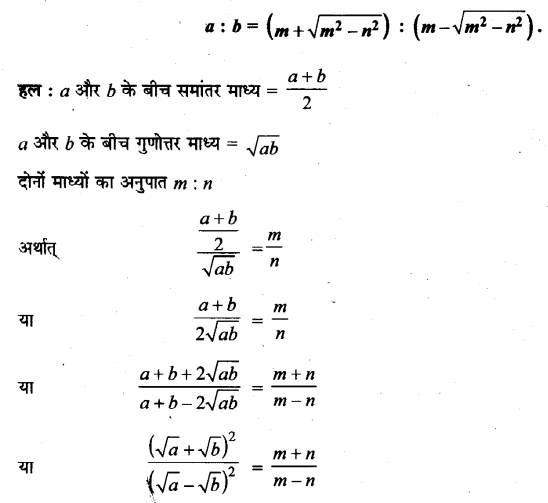
दो धनात्मक संख्याओं a और 6 के बीच समांतर माध्य तथा गुणोत्तर मध्य का अनुफ्त m : n है। दर्शाइए कि
UP Board Solutions for Class 11 Maths Chapter 9 Sequences and Series 19
UP Board Solutions for Class 11 Maths Chapter 9 Sequences and Series 19.1

प्रश्न 20.
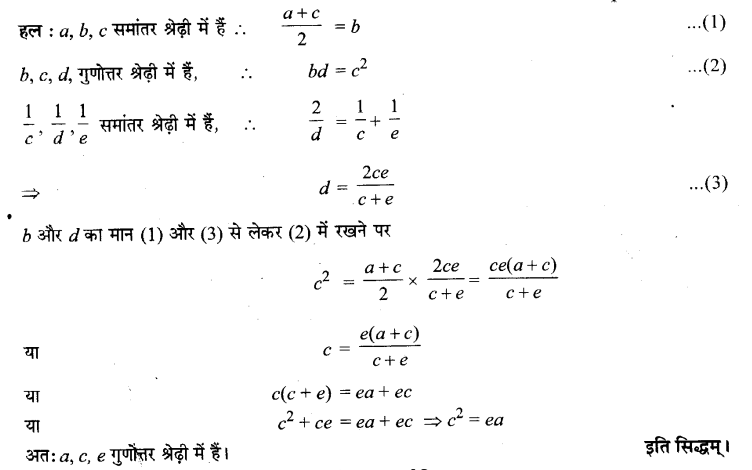
यदि a, b, c समांतर श्रेढ़ी में हैं; b, c, d गुणोत्तर श्रेढ़ी में हैं तथा [latex]\frac { 1 }{ c }[/latex] , [latex]\frac { 1 }{ d }[/latex] , [latex]\frac { 1 }{ e }[/latex] समांतर श्रेढ़ी में हैं, तो सिद्ध कीजिए कि a, c, e गुणोत्तर श्रेढ़ी में हैं।
UP Board Solutions for Class 11 Maths Chapter 9 Sequences and Series 20

प्रश्न 21.
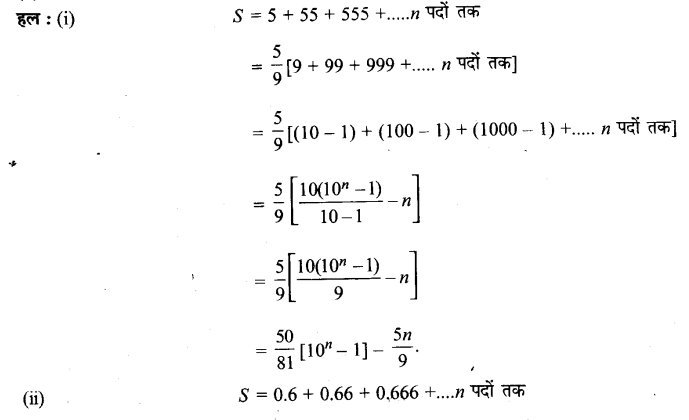
निम्नलिखित श्रेढ़ियों के n पदों का योग ज्ञात कीजिए:
(i) 5 + 55 + 555 + ……
(ii) 0.6 + 0.66 + 0.666 + …..
UP Board Solutions for Class 11 Maths Chapter 9 Sequences and Series 21
UP Board Solutions for Class 11 Maths Chapter 9 Sequences and Series 21.1

UP Board Solutions

प्रश्न 22.
श्रेढ़ी का 20वाँ पद ज्ञात कीजिए : 2 x 4 + 4 x 6 + 6 x 8 + ….. + n पदों तक
हल:
2, 4, 6, ….. का 20 वाँ पद = 2n = 2 x 20 = 40
4, 6, 8…… का 20 वाँ पद = 4 + 19 x 2 = 4 + 38 = 42
2 x 4 + 4 x 6 + 6 x 8 +…… का 20 वाँ पद = 40 x 42 = 1680.

प्रश्न 23.
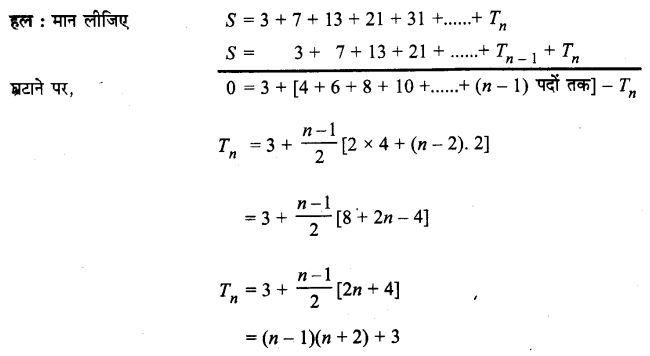
श्रेणी 3 + 7 + 13 + 21 + 31 + ….. के n पदों का योगफल ज्ञात कीजिए।
UP Board Solutions for Class 11 Maths Chapter 9 Sequences and Series 23
UP Board Solutions for Class 11 Maths Chapter 9 Sequences and Series 23.1

UP Board Solutions

UP Board Solutions for Class 11 Maths Chapter 9 Sequences and Series 24
UP Board Solutions for Class 11 Maths Chapter 9 Sequences and Series 24.1

प्रश्न 25.
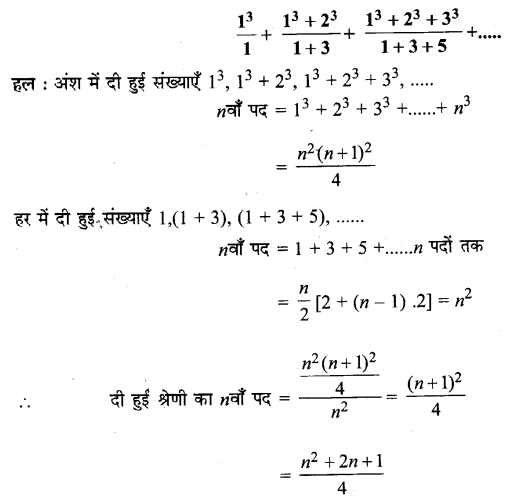
निम्नलिखित श्रेणियों के n पदों का योग ज्ञात कीजिए:
UP Board Solutions for Class 11 Maths Chapter 9 Sequences and Series 25
UP Board Solutions for Class 11 Maths Chapter 9 Sequences and Series 25.1

UP Board Solutions

UP Board Solutions for Class 11 Maths Chapter 9 Sequences and Series 26
UP Board Solutions for Class 11 Maths Chapter 9 Sequences and Series 26.1

प्रश्न 27.
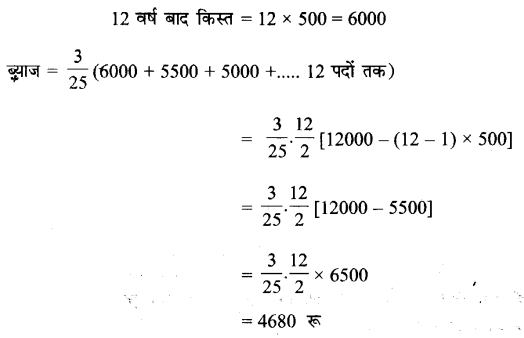
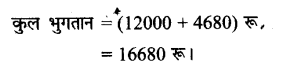
कोई किसान एक पुराने ट्रैक्टर को 12000 रु. में खरीदता है। वह 6000 रू. नकद भुगतान करता है। और शेष राशि को 500 रू की वार्षिक किस्त के अतिरिक्त उस धन पर जिसका भुगतान न किया गया हो 12% वार्षिक ब्याज भी देता है। किसान को ट्रैक्टर की कुल कितनी कीमत देनी पड़ेगी?
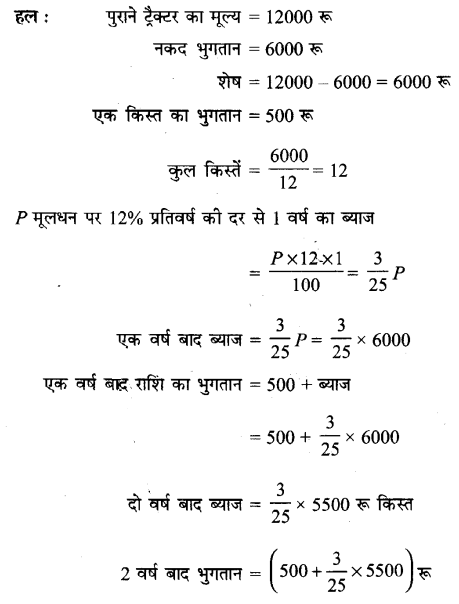
UP Board Solutions for Class 11 Maths Chapter 9 Sequences and Series 27
UP Board Solutions for Class 11 Maths Chapter 9 Sequences and Series 27.1
UP Board Solutions for Class 11 Maths Chapter 9 Sequences and Series 27.2

UP Board Solutions

प्रश्न 28.
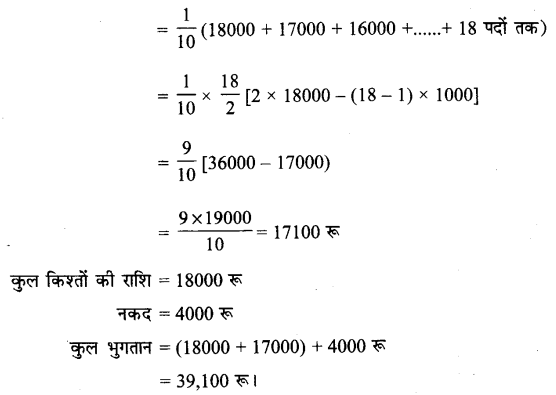
शमशाद अली 22000 रू में एक स्कूटर खरीदता है। वह 4000 रू नकद देता है और शेष राशि को 1000 रू वार्षिक किस्त के अतिरिक्त उस धन पर जिसका भुगतान न किया गया हो 10% वार्षिक ब्याज भी देता है। उसे स्कूटर के लिए कुल कितनी राशि चुकानी पड़ेगी?
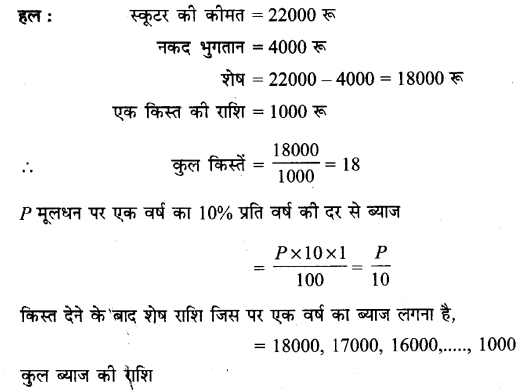
UP Board Solutions for Class 11 Maths Chapter 9 Sequences and Series 28
UP Board Solutions for Class 11 Maths Chapter 9 Sequences and Series 28.1

प्रश्न 29.
एक व्यक्ति अपने चार मित्रों को पत्र लिखता है। वह प्रत्येक को उसकी नकल करके चार दूसरे व्यक्तियों को भेजने का निर्देश देता है, तथा जिनसे यह भी करने को कहता है कि प्रत्येक पत्र प्राप्त करने वाला व्यक्ति इस श्रृंखला को जारी रखे। यह कल्पना करके कि श्रृंखला न टूटे तो 8वें पत्रों के समूह भेजे जाने तक कितना डाक खर्च होगा जबकि एक पत्र का डाक खर्च 50 पैसे है।
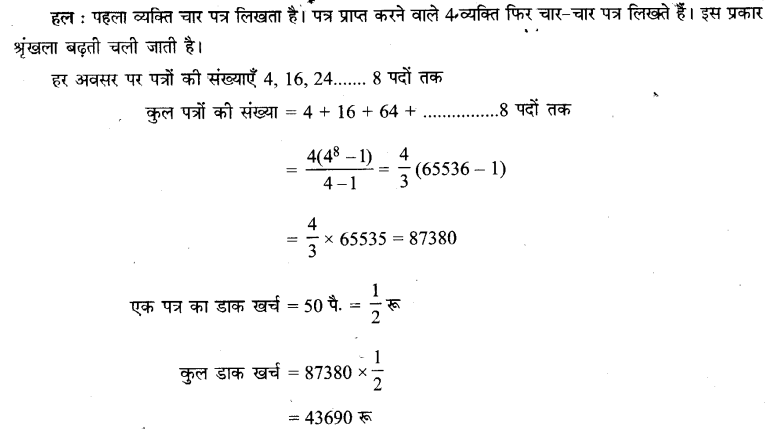
UP Board Solutions for Class 11 Maths Chapter 9 Sequences and Series 29

UP Board Solutions

प्रश्न 30.
एक आदमी ने एक बैंक में 10000 रूपये 5% वार्षिक साधारण ब्याज पर जमा किया। जब से रकम बैंक में जमा की गई तब से, 15वें वर्ष में उसके खाते में कितनी रकम हो गई तथा 20 वर्षों बाद कुल कितनी रकम हो गयी, ज्ञात कीजिए।
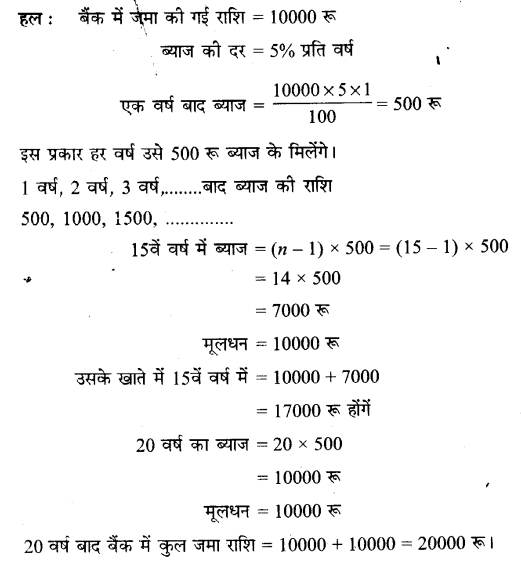
UP Board Solutions for Class 11 Maths Chapter 9 Sequences and Series 30

प्रश्न 31.
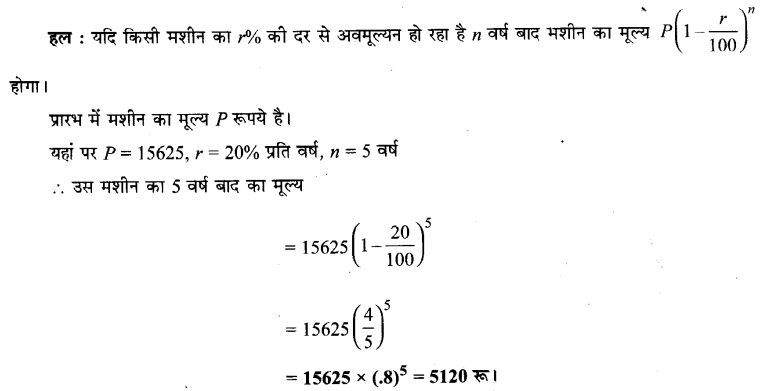
एक निर्माता घोषित करता है कि उसे की मशीन जिसका मूल्य 15625 रूपये है, हर वर्ष 20% की दर से उसका अवमूल्यन होता है। 5 वर्ष के बाद मशीन का अनुमानित मूल्य ज्ञात कीजिए।
UP Board Solutions for Class 11 Maths Chapter 9 Sequences and Series 31

UP Board Solutions

प्रश्न 32.
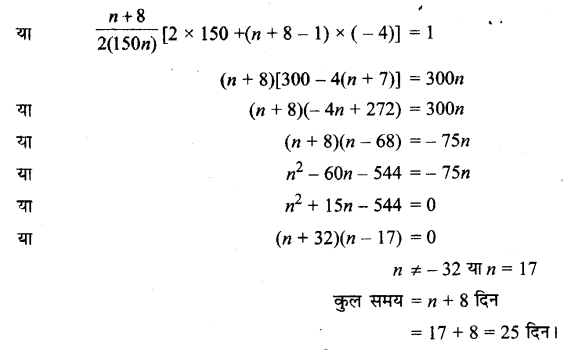
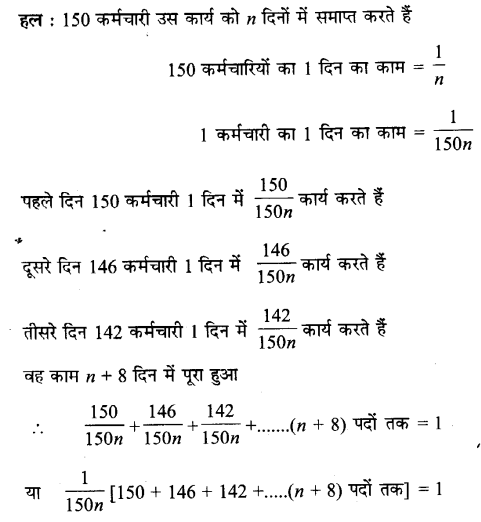
किसी कार्य को कुछ दिनों में पूरा करने के लिए 150 कर्मचारी लगाए गए। दूसरे दिन 4 कर्मचारियों ने काम छोड़ दिया, तीसरे दिन चार और कर्मचारियों ने काम छोड़ दिया तथा इस प्रकार अन्य। अब कार्य पूरा करने में 8 दिन अधिक लगते हैं, तो दिनों की संख्या ज्ञात कीजिए, जिनमें कार्य पूरा किया गया।
UP Board Solutions for Class 11 Maths Chapter 9 Sequences and Series 32
UP Board Solutions for Class 11 Maths Chapter 9 Sequences and Series 32.1

We hope the UP Board Solutions for Class 11 Maths Chapter 9 Sequences and Series (अनुक्रम तथा श्रेणी) help you. If you have any query regarding UP Board Solutions for Class 11 Maths Chapter 9 Sequences and Series (अनुक्रम तथा श्रेणी), drop a comment below and we will get back to you at the earliest.
UP Board Solutions for Class 11 Biology Chapter 17 Breathing and Exchange of Gases

UP Board Solutions for Class 11 Biology Chapter 17 Breathing and Exchange of Gases (श्वसन और गैसों का विनिमय)

These Solutions are part of UP Board Solutions for Class 11 Biology . Here we  given UP Board Solutions for Class 11 Biology Chapter 17 Breathing and Exchange of Gases (श्वसन और गैसों का विनिमय)

अभ्यास के अन्तर्गत दिए गए प्रश्नोत्तर

प्रश्न 1.
जैव क्षमता की परिभाषा दीजिए और इसका महत्त्व बताइए।
उत्तर :
जैव क्षमता। अन्त:श्वास आरक्षित वायु (Inspiratory Reserve Air Volume, IRV), प्रवाही वायु (Tidal Air Volume, TV) तथा उच्छ्वास आरक्षित वायु (Expiratory Reserve Air Volume, ERV) का योग (IRV + TV + ERV- 3000 + 500 + 1100 = 4600 मिली) फेफड़ों की जैव क्षमता होती है। यह वायु की वह कुल मात्रा होती है जिसे हम पहले पूरी चेष्टा द्वारा फेफड़ों में भरकर पूरी चेष्टा द्वारा शरीर से बाहर निकाल सकते हैं। जिस व्यक्ति की जैव क्षमता जितनी अधिक होती है, (UPBoardSolutions.com) उसे शरीर की जैविक क्रियाओं के लिए उतनी ही अधिक ऊर्जा प्राप्त होती है। खिलाड़ियों, पर्वतारोही, तैराक आदि की जैव क्षमता अधिक होती है। युवक की जैव क्षमता प्रौढ़ की अपेक्षा अधिक होती है। पुरुषों की जैव क्षमता स्त्रियों की अपेक्षा अधिक होती है। यह उनकी कार्य क्षमता को प्रभावित करती है।

प्रश्न 2.
सामान्य निःश्वसन के उपरान्त फेफड़ों में शेष वायु के आयतन को बताएँ।
उत्तर :
वायु की वह मात्रा जो सामान्य नि:श्वसन (उच्छ्वास) के उपरान्त फेफड़ों में शेष रहती है, कार्यात्मक अवशेष सामर्थ्य (Functional Residual Capacity, FRC) कहलाती है। यह उच्छ्वास आरक्षित वायु (Expiratory Reserve Air Volume, ERV) तथा अवशेष वायु (Residual Air Volume, RV) के योग के बराबर होती है। इसकी सामान्यतया मात्रा 2300 मिली होती है।

UP Board Solutions

FRC = ERV + RV
= 1100 + 1200 मिली
= 2300 मिली।

प्रश्न 3
गैसों का विसरण केवल कूपकीय क्षेत्र में होता है, श्वसन तन्त्र के किसी अन्य भाग में नहीं, क्यों?
उत्तर :
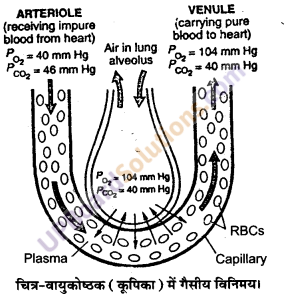
गैसीय विनिमय मनुष्य के फेफड़ों में लगभग 30 करोड़ वायु कोष्ठक या कूपिकाएँ (alveoli) होते हैं। इनकी पतली भित्ति में रक्त केशिकाओं को घना जाल फैला होता है। श्वासनाल (trachea), श्वसनी (bronchus), श्वसनिका (bronchiole), कूपिका नलिकाओं (alveolar duct) आदि में रक्त केशिकाओं का जाल फैला हुआ नहीं होता। इनकी भित्ति मोटी होती है। अत: कूपिकाओं (alveoli) को छोड़कर अन्य श्वसन भागों में गैसीय विनिमय नहीं होता। सामान्यतया ग्रहण की गई 500 मिली प्रवाही वायु में से लगभग 350 मिली कूपिकाओं में पहुँचती है, शेष श्वास मार्ग में ही रह जाती है। वायु कोष्ठकों की भित्ति तथा रक्त केशिकाओं की भित्ति (UPBoardSolutions.com) मिलकर श्वसन कला (respiratory membrane) बनाती हैं। इससे O2 तथा C का विनिमय सुगमता से हो जाता है। गैसीय विनिमय सामान्य विसरण द्वारा होता है। इसमें गैसें उच्च आंशिक दबाव से कम आंशिक दबाव की ओर विसरित होती हैं। वायुकोष्ठकों में O2 का आंशिक दबाव 100 -104 mm Hg और CO2) को आंशिक दबाव 40 mm Hg होता है। फेफड़ों में रक्त केशिकाओं में आए अशुद्ध रुधिर में 0 का आंशिक दबाव 40 mm Hg और CO2) का आंशिक दबाव 45-46 mm Hg होता है।
UP Board Solutions for Class 11 Biology Chapter 17 Breathing and Exchange of Gases image 1

ऑक्सीजन वायुकोष्ठकों की वायु से विसरित होकर रक्त में जाती है और रक्त से CO2 विसरित होकर वायुकोष्ठकों की वायु में जाती है। इस प्रकार वायुकोष्ठकों से रक्त ले जाने वाली रक्त केशिकाओं में रक्त ऑक्सीजनयुक्त (Oxygenated) होता है। फेफड़ों से निष्कासित वायु में O2 लगभग 15.7% और CO2 लगभग 3.6% होती है।

प्रश्न 4.
CO2 के परिवहन (ट्रांसपोर्ट) की मुख्य क्रियाविधि क्या है? व्याख्या कीजिए।
उत्तर :
कार्बन डाइऑक्साइड का रुधिर द्वारा परिवहन ऊतकों में संचित खाद्य पदार्थों के ऑक्सीकरण से उत्पन्न कार्बन डाइऑक्साइड विसरण द्वारा रुधिर केशिकाओं में चली जाती है। रुधिर केशिकाओं द्वारा इसकापरिवहन श्वसनांगों तक निम्नलिखित तीन प्रकार से होता है
(1) प्लाज्मा में घुलकर (Dissolved in Plasma) :
लगभग 7% कार्बन डाइऑक्साइड का परिवहन प्लाज्मा में घुलकर कार्बोनिक अम्ल के रूप में होता है।

UP Board Solutions

(2) बाइकार्बोनेट्स के रूप में (In the form of Bicarbonates) :
लगभग 70% कार्बन डाइऑक्साइड का परिवहन बाइकार्बोनेट्स के रूप में होता है। प्लाज्मा के अन्दर कार्बोनिक अम्ल का निर्माण धीमी गति से होता है। अत: कार्बन डाइऑक्साइड का अधिकांश भाग (93%) लाल रुधिराणुओं में विसरित हो जाता है। इसमें से 70% कार्बन डाइऑक्साइड से (UPBoardSolutions.com) कार्बोनिक अम्ल व अन्त में बाइकार्बोनेट्स का निर्माण हो जाता है। लाल रुधिराणुओं में कार्बोनिक एनहाइड्रेज एन्जाइम की उपस्थिति में कार्बोनिक अम्ल का निर्माण होता है।
UP Board Solutions for Class 11 Biology Chapter 17 Breathing and Exchange of Gases image 2
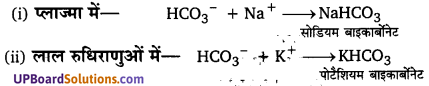
प्लाज्मा में, कार्बोनिक एनहाइड्रेज एन्जाइम अनुपस्थित होता है; अत: प्लाज्मा में बाइकार्बोनेट कम मात्रा में बनता है। बाइकार्बोनेट आयन UP Board Solutions for Class 11 Biology Chapter 17 Breathing and Exchange of Gases image 3 लाल रुधिराणुओं के पोटैशियम आयन (K+) तथा प्लाज्मा के सोडियम आयन (Na+) से क्रिया करके क्रमशः पोटैशियम तथा सोडियम बाइकार्बोनेट बनाता है।
UP Board Solutions for Class 11 Biology Chapter 17 Breathing and Exchange of Gases image 4

क्लोराइड शिफ्ट या हैम्बर्गर परिघटना (Chloride Shift or Hambergur Phenomenon) सामान्य pH तथा विद्युत तटस्थता (electric neutrality) बनाए रखने के लिए जितने बाइकार्बोनेट आयन रुधिर कणिकाओं से प्लाज्मा में आते हैं, उतने ही क्लोराइड आयन (Cl) रुधिर कणिकाओं में जाकर उसकी पूर्ति करते हैं। इस क्रिया के फलस्वरूप प्लाज्मा में बाइकार्बोनेट तथा लाल रुधिरे कणिकाओं में क्लोराइड आयनों का जमाव हो जाता है। इस क्रिया को क्लोराइड शिफ्ट (chloride shift) कहते हैं। श्वसन तल पर प्रक्रियाएँ विपरीत दिशा में होती हैं जिससे CO2 मुक्त होकर वायुमण्डल में चली जाती है।

(3) कार्बोक्सीहीमोग्लोबिन के रूप में (In the form of Carboxyhaemoglobin) :
कार्बन डाइऑक्साइड का लगभग 23% भाग लाल रुधिर कणिकाओं के हीमोग्लोबिन से मिलकर अस्थायी यौगिक बनाता है
UP Board Solutions for Class 11 Biology Chapter 17 Breathing and Exchange of Gases image 4
सोडियम तथा पोटैशियम के बाइकार्बोनेट्स तथा कार्बोक्सीहीमोग्लोबिन आदि पदार्थों से युक्त रुधिर अशुद्ध होता है। यह रुधिर ऊतकों और अंगों से शिराओं द्वारा हृदय में पहुँचता है। हृदय से यह रुधिर फुफ्फुस धमनियों द्वारा फेफड़ों में शुद्ध होने के लिए जाता है। फेफड़ों में ऑक्सीजन की अधिक मात्रा होने के कारण रुधिर की हीमोग्लोबिन ऑक्सीजन से मिलकर ऑक्सीहीमोग्लोबिन बनाती है। ऑक्सीहीमोग्लोबिन, हीमोग्लोबिन की अपेक्षा अधिक अम्लीय होता है। (UPBoardSolutions.com) ऑक्सीहीमोग्लोबिन के अम्लीय होने के कारण श्वसन सतह पर कार्बोनेट्स तथा कार्बोनिक अम्ल का विखण्डन (decomposition) होता है
UP Board Solutions for Class 11 Biology Chapter 17 Breathing and Exchange of Gases image 5

कार्बोक्सीहीमोग्लोबिन तथा प्लाज्मा प्रोटीन के रूप में बने अस्थायी यौगिक भी ऑक्सीजन से संयोजित होकर कार्बन डाइऑक्साइड को मुक्त कर देते है
UP Board Solutions for Class 11 Biology Chapter 17 Breathing and Exchange of Gases image 6
उपर्युक्त प्रकार से मुक्त हुई कार्बन डाइऑक्साइड रुधिर केशिकाओं तथा फेफड़ों की पतली दीवारों से विसरित होकर फेफड़ों में पहुँचती है जहाँ से यह उच्छ्वास द्वारा बाहर निकाल दी जाती है।

प्रश्न 5.
कूपिका वायु की तुलना में वायुमण्डलीय वायु में pO2 तथा pCO2 कितनी होगी? मिलान कीजिए।
(i) pO2 न्यून, pCO2 उच्च
(ii) pO2 उच्च, pCO2 न्यून
(iii) pO2 उच्च, pCO2 उच्च
(iv) pO2 न्यून, pCO2 न्यून
उत्तर :
(ii) pO2 उच्च, pCO2 न्यून। (वायुमण्डलीय वायु में O2 का आंशिक दाब 159 तथा CO2 का आंशिक दाब 0.3 होता है, जबकि कूपिका वायु में O2 का आंशिक दाब 104 तथा CO2 का आंशिक दाब 40 होता है।)

UP Board Solutions

प्रश्न 6.
सामान्य स्थिति में अन्तःश्वसन प्रक्रिया की व्याख्या कीजिए।
उत्तर :
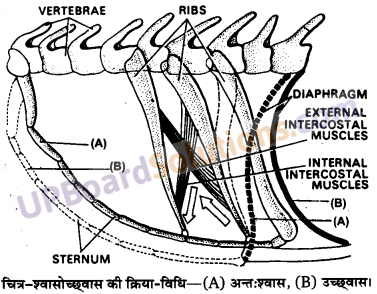
सामान्य श्वासोच्छ्वास (breathing) या श्वासन अनैच्छिक होता है। इसमें पसलियों की गति की भूमिका 25% और डायफ्राम की भूमिका 75% होती है।

अन्तःश्वास या प्रश्वसन (Inspiration) :
सामान्य स्थिति में अन्त:श्वास में गुम्बदनुमा डायफ्राम पेशियों में संकुचन के कारण चपटा सा हो जाता है। डायफ्राम की गति के साथ बाह्य अन्तरापर्शक पेशियों (external intercostal muscles) में संकुचने से पसलियाँ सीधी होकर ग्रीवा की तथा बाहर की तरफ खिंचती है। इससे उरोस्थि (sternum) ऊपर और आगे की ओर उठ जाती है। इन गतियों के कारण वक्षगुहा का आयतन बढ़ जाता है और फेफड़े फूल जाते हैं। वक्ष गुहा और फेफड़ों में वृद्धि के कारण वायुकोष्ठकों या कूपिकाओं (alveoli) में वायुदाब लगभग 1 से 3mm Hg कम हो जाता है। इसकी पूर्ति के लिए वायुमण्डलीय वायु श्वास मार्ग से कूपिकाओं में पहुँच जाती है। इस क्रिया को (UPBoardSolutions.com) अन्तःश्वास कहते हैं। इसके द्वारा मनुष्य (अन्य स्तनी) वायु ग्रहण करते हैं।

UP Board Solutions for Class 11 Biology Chapter 17 Breathing and Exchange of Gases image 7

प्रश्न 7.
श्वसन का नियमन कैसे होता है?
उत्तर :
श्वसन का नियमन मस्तिष्क के मेड्यूला (medulla) एवं पोन्स वैरोलाइ (Pons varolii) में स्थित श्वास केन्द्र (respiratory centre) पसलियों तथा डायफ्राम से सम्बन्धित पेशियों की क्रिया का नियमन करके श्वासोच्छ्वास (breathing) या श्वसन (respiration) का नियमन करता है। श्वास क्रिया तन्त्रिकीय नियन्त्रण में होती है। यही कारण है कि हम अधिक देर तक श्वास नहीं रोक पाते हैं। फेफड़ों की भित्ति में ‘स्ट्रेच संवेदांग’ (stretch receptors) होते हैं। फेफड़ों के आवश्यकता से अधिक फूल जाने पर ये संवेदांग पुनर्निवेशन नियन्त्रण (feedback control) के अन्तर्गत नि:श्वसन को तुरन्त रोकने के लिए हेरिंग बुएर रिफ्लेक्स चाप (Hering-Bruer Reflex Arch) की स्थापना करके श्वास केन्द्र को उद्दीपित करते हैं, जिससे श्वास दर बढ़ जाती है। यह नियन्त्रण प्रतिवर्ती क्रिया के अन्तर्गत होता है।

UP Board Solutions

शरीर के अन्त:वातावरण में CO2 की सान्द्रता के कम या अधिक हो जाने से श्वास केन्द्र स्वतः उद्दीपित होकर श्वास दर को बढ़ाता या घटाता है। O2 की अधिकता कैरोटिको सिस्टैमिक चाप (Carotico systemic arch) में उपस्थित सूक्ष्म रासायनिक संवेदांगों को प्रभावित करती है। ये संवेदांग श्वास केन्द्र को प्रेरित करके श्वास दर को घटा या बढ़ा देते हैं।

प्रश्न 8.
pCO2 का ऑक्सीजन के परिवहन पर क्या प्रभाव पड़ता है?
उत्तर :
कूपिकाओं में जहाँ pO2 उच्च तथा pCO2 न्यून होता है H+ सांद्रता कम तथा ताप कम होने पर ऑक्सीहीमोग्लोबिन बनता है। ऊतकों में जहाँ pO2 न्यून तथा pCO2 उच्च होता है H+ सांद्रता अधिक तथा ताप अधिक होता है। ऑक्सीहीमोग्लोबिन का विघटन होता है तथा 0, मुक्त हो जाती है। (UPBoardSolutions.com) इसका अर्थ है O2 फेफड़े की सतह पर हीमोग्लोबिन के साथ मिलती है तथा ऊतकों में अलग हो जाती है। सामान्य परिस्थिति में 5 मिली O2 ऊतकों को प्रति 100 मिली ऑक्सीजनित रक्त से मिलता है।

प्रश्न 9.
पहाड़ पर चढ़ने वाले व्यक्ति की श्वसन प्रक्रिया में क्या प्रभाव पड़ता है?
उत्तर :
पहाड़ पर ऊँचाई बढ़ने के साथ-साथ वायु में O2 का आंशिक दाब कम हो जाता है; अत: मैदान की अपेक्षा ऊँचाई पर श्वासोच्छ्वास क्रिया अधिक तीव्र गति से होगी। इसके निम्नलिखित कारण होते हैं

  1.  रुधिर में घुली हुई ऑक्सीजन का आंशिक दाब कम हो जाता है। O2 रक्त में सुगमता से विसरित होती है। अतः शरीर में ऑक्सीजन परिसंचरण कम हो जाता है। इसके फलस्वरूप सिरदर्द तथा उल्टी (वमन) का आभास होता है।
  2. अधिक ऊँचाई पर वायु में ऑक्सीजन की मात्रा अपेक्षाकृत कम होती है; अत: वायु से अधिक O2 प्राप्त करने के लिए श्वासोच्छ्वास क्रिया तीव्र हो जाती है।
  3. कुछ दिनों तक ऊँचाई पर रहने से रुधिर में लाल रुधिराणुओं की संख्या बढ़ जाती है और श्वास क्रिया सामान्य हो जाती है।

UP Board Solutions

प्रश्न 10.
कीटों में श्वास क्रियाविधि कैसे होती है?
उत्तर :

कीटों में श्वास क्रियाविधि

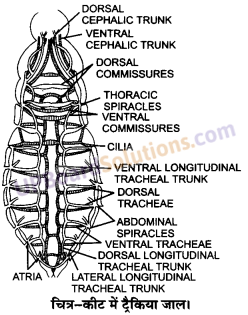
कीटों में श्वसन हेतु ट्रैकिंया (trachea) पाए जाते हैं। कीटों के शरीर में ट्रैकिया का जाल फैला होता है। ट्रैकियो पारदर्शी, शाखामय, चमकीली नलिकाएँ होती हैं। ये श्वास रन्ध्रों (spiracles) द्वारा वायुमण्डल से सम्बन्धित रहती हैं। श्वास रन्ध्र छोटे वेश्म (atrium) में खुलते हैं। (UPBoardSolutions.com) श्वास रन्ध्रों पर रोमाभ सदृश शूक तथा कपाट पाए जाते हैं। कुछ श्वास रन्ध्र सदैव खुले रहते हैं। शेष अन्तःश्वसन (inspiration) के समय खुलते हैं और उच्छ्व सन (expiration) के समय बन्द रहते हैं।
UP Board Solutions for Class 11 Biology Chapter 17 Breathing and Exchange of Gases image 8

ट्रैकियल वेश्म (atrium) से शाखाएँ निकलकर एक पृष्ठ तथा अधर तल पर ‘ट्रैकिया का जाल बना लेती हैं। ट्रैकिया से निकलने वाली ट्रैकिओल्स (tracheoles) ऊतक या कोशिकाओं तक पहुँचती हैं। कीटों में गैसों का विनिमय बहुत ही प्रभावशाली होता है और O2 सीधे कोशिकाओं तक पहुँचती है। इसी कारण कीट सर्वाधिक क्रियाशील होते हैं।

UP Board Solutions

The partial pressure formula of one gas in a mixture of gases is equal to the amount of pressure that would of the other gases were removed.

प्रश्न 11.
ऑक्सीजन वियोजन वक्र की परिभाषा दीजिए। क्या आप इसकी सिग्माभ आकृति का कोई कारण बता सकते हैं?
उत्तर :

ऑक्सीजन वियोजन वक्र

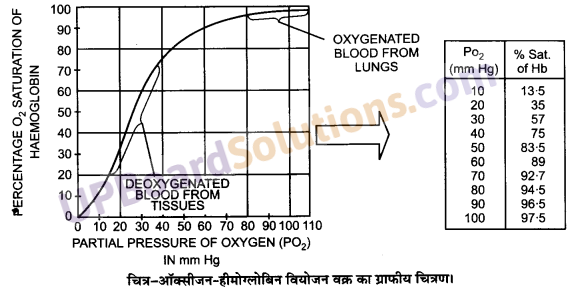
हीमोग्लोबिन द्वारा ऑक्सीजन ग्रहण करने की क्षमला ऑक्सीजन के आंशिक दबाव (partial pressure) अर्थात् pO2 पर निर्भर करती है। हीमोग्लोबिन-क़ी वह प्रतिशत मात्रा जो ऑक्सीजन ग्रहण करती है, इसकी प्रतिशत संतृप्ति (percentage saturation of haemoglobin) कहलाती है; जैसेफेफड़ों में रक्त के ऑक्सीजनीकृत होने पर O2 का आंशिक दबाव pO2) लगभग 97 mm Hg होता है। इस pO2 पर हीमोग्लोबिन की प्रतिशत संतृप्ति लगभग 98% होती है।

ऊतकों से वापस आने वाले रक्त में O2 का आंशिक दबाव pO2 लगभग 40 mm Hg होता है, इस pOपर हीमोग्लोबिन की प्रतिशत संतृप्ति लगभग 75% होती है। pO2 तथा हीमोग्लोबिन की प्रतिशत संतृप्ति के सम्बन्ध को ग्राफ पर अंकित करने पर एक सिग्माभ वक्र (sigmoid curve) प्राप्त होता है।  इसे ऑक्सीजन वियोजन वक्र कहते हैं। ऑक्सीजन हीमोग्लोबिन वियोजन वक्र पर शरीर ताप एवं रक्त के pH का प्रभाव पड़ता है। ताप के बढ़ने या pH के कम होने (UPBoardSolutions.com) पर यह वक्र दाहिनी ओर खिसकता है। इसके विपरीत ताप के कम होने या pH के अधिक होने से ऑक्सीजन हीमोग्लोबिन वक्र बाईं ओर खिसकता है। रक्त में CO2 की मात्रा बढ़ने या इसका pH घटने (H’ आयन की संख्या बढ़ने से) पर O2 के प्रति हीमोग्लोबिन की आकर्षण शक्ति कम हो जाती है। इसी को बोहर प्रभाव (Bohr effect) कहते हैं। यह क्रिया ऊतकों में होती है। इस प्रकार बोहर प्रभाव का योगदान हीमोग्लोबिन को फेफड़ों से ऊतकों तक ऑक्सीजन के परिवहन को प्रोत्साहित करता है।
UP Board Solutions for Class 11 Biology Chapter 17 Breathing and Exchange of Gases image 9

UP Board Solutions

फेफड़ों में हीमोग्लोबिन को O2 मिलते ही CO2 के प्रति इसका आकर्षण कम हो जाता है और कार्बोमिनोहीमोग्लोबिन COत्यागकर सामान्य हीमोग्लोबिन बन जाता है। अम्लीय हीमोग्लोबिन H+ आयन मुक्त करता है जो बाइकार्बोनेट (HCO3) से मिलकर कार्बोनिक अम्ल बनाते हैं। यह शीघ्र ही CO2) तथा H2Oमें टूटकर CO2 को मुक्त कर देता है। इसे हैल्डेन प्रभाव (Haldane effect) कहते हैं। हैल्डेन प्रभाव फेफड़ों में CO2 के बहिष्कार को और ऊतकों में O2 के बहिष्कार को प्रेरित करता है।

प्रश्न 12.
क्या आपने अव-ऑक्सीयता (हाइपोक्सिया) (न्यून ऑक्सीजन) के बारे में सुना है। इस सम्बन्ध में जानकारी प्राप्त करने की कोशिश कीजिए व साथियों के बीच चर्चा कीजिए।
उत्तर :
अव-ऑक्सीयता (Hypoxia) :
इस स्थिति का सम्बन्ध शरीर की कोशिकाओं/ऊतकों में ऑक्सीजन के आंशिक दबाव में कमी से होता है। यह ऑक्सीजन की कम आपूर्ति के कारण होता है। वायुमण्डल में पहाड़ों पर 8000 फुट से अधिक ऊँचाई पर वायु में O2 का दबाव कम हो जाता है। इससे सिरदर्द, वमन, चक्कर आना, मानसिक थकान, श्वास लेने में कठिनाई आदि लक्षण प्रदर्शित होते हैं। इसे कृत्रिम हाइपोक्सिया (artificial hypoxia) कहते हैं। यह रोग प्रायः पर्वतारोहियों को हो। जाता है। शरीर में (UPBoardSolutions.com) हीमोग्लोबिन की कमी के कारण रक्त की ऑक्सीजन ग्रहण करने की क्षमता प्रभावित होती है। इसे एनीमिया हाइपोक्सिया (anaemia hypoxia) कहते हैं।

प्रश्न 13.
निम्न के बीच अन्तर करें
(क) IRV, ERV
(ख) अन्तः श्वसन क्षमता और निःश्वसन क्षमता
(ग) जैव क्षमता तथा फेफड़ों की कुल धारिता
उत्तर :

(क)
IRV व ERV में अन्तर

1. IRV :
अन्त:श्वसन सुरक्षित आयतन (inspiratory reserve volume) वायु आयतन की वह अतिरिक्त मात्रा है जो एक व्यक्ति बलपूर्वक अन्त:श्वासित कर सकता है। यह औसतन 2500 मिली से 3000 मिली होती है।

2. ERV :
नि:श्वसन सुरक्षित आयतन (expiratory reserve volume) वायु आयतन की वह अतिरिक्त मात्रा है जो एक व्यक्ति बलपूर्वक नि:श्वासित कर सकता है। यह औसतन 1000 मिली से 1100 मिली होता है।

(ख)
अन्तःश्वसन क्षमता व निःश्वसन क्षमता में अन्तर

1. अन्तःश्वसन क्षमता (Inspiratory Capacity, IC) :
सामान्यतः नि:श्वसन उपरान्त वायु की कुल मात्रा (आयतन) जिसे एक व्यक्ति अन्त:श्वासित कर सकता है। इसमें ज्वारीय आयतन तथा अन्तः श्वसन सुरक्षित आयतन सम्मिलत होते हैं (TV + IRV)।

2. निःश्वसन क्षमता (Expiratory Capacity, EC) :
सामान्यतः अन्तः श्वसन उपरान्त वायु की कुल मात्रा (आयतन) जिसे एक व्यक्ति नि:श्वासित कर सकता है। इसमें ज्वारीय आयतन और नि:श्वसन सुरक्षित आयतन सम्मिलित होते हैं (TV + ERV)।

UP Board Solutions

(ग)
जैव क्षमता तथा फेफड़ों की कुल धारिता में अन्तर

1. जैव क्षमता (Vital Capacity) :
बलपूर्वक नि:श्वसन के बाद वायु की वह अधिकतम मात्रा जो एक व्यक्ति अन्त:श्वासित कर सकता है अथवा वायु की वह अधिकतम मात्रा जो एक व्यक्ति बलपूर्वक अन्त:श्वसन के पश्चात् नि:श्वासित कर सकता है।

2. फेफड़ों की कुल धारिता (Total Lung Capacity) :
बलपूर्वक नि:श्वसन के पश्चात् । फेफड़ों में समायोजित (उपस्थित) वायु की कुल मात्रा। इसमें RV, ERV, TV  तथा IRV सम्मिलित हैं। यानि जैव क्षमता + अवशिष्ट आयतन (VC + RV)।

प्रश्न 14.
ज्वारीय आयतन क्या है? एक स्वस्थ मनुष्य के लिए एक घण्टे के ज्वारीय आयतन (लगभग मात्रा) को आकलित करें।
उत्तर :

1. ज्वारीय आयतन (Tidal Volume, TV) :
सामान्य श्वसन क्रिया के समय प्रति अन्त:श्वासित या नि:श्वासित वायु का आयतन ज्वारीय आयतन कहलाता है। (UPBoardSolutions.com) यह लगभग 500 मिली होता है अर्थात् स्वस्थ मनुष्य लगभग 6000 से 8000 मिली वायु प्रति मिनट की दर से अन्त:श्वासित/ नि:श्वासित कर सकता है।

परीक्षोपयोगी प्रश्नोत्तर

बहुविकल्पीय प्रश्न

प्रश्न 1.
श्वसन भागफल का अर्थ है।
(क) ऑक्सीजन की प्रति मिनट ग्रहण (व्यय) मात्रा
(ख) कार्बन डाइऑक्साइड के उत्पादन एवं ऑक्सीजन के ग्रहण का अनुपात
(ग) प्रति मिनट कार्बन डाइऑक्साइड का ग्रहणे
(घ) ताप एवं ऑक्सीजन ग्रहण का अनुपात
उत्तर :
(ख) कार्बन डाइऑक्साइड के उत्पादन एवं ऑक्सीजन के ग्रहण का अनुपात

UP Board Solutions

अतिलघु उत्तरीय प्रश्न

प्रश्न 1.
ब्रोंकाई को एक वाक्य में परिभाषित कीजिए।
उत्तर :
ब्रोंकाई (bronchi) श्वसन नली (trachea) की वक्ष गुहा में पाई जाने वाली दो शाखाएँ हैं।

प्रश्न 2.
एपिग्लॉटिस का क्या कार्य है?
उत्तर :
एपिग्लॉटिस कण्ठद्वार को ढक्कन की भाँति बन्द करने का कार्य करता है।

प्रश्न 3.
“आणविक ऑक्सीजन जीवन हेतु नितान्त आवश्यक है।” कैसे? अति संक्षेप में समझाइए।
उत्तर :
आणविक ऑक्सीजन के द्वारा ही कोशिकाओं में आवश्यक ऊर्जा उत्पादन के लिए (UPBoardSolutions.com) ऑक्सी श्वसन होता है जो बिना ऑक्सीजन के नहीं हो सकता। अतः जीवन को चलाये रखने के लिए आणविक ऑक्सीजन अत्यन्त आवश्यक है।

UP Board Solutions

प्रश्न 4.
ग्लाइकोलाइसिस क्रिया के अन्त में ग्लूकोज के प्रत्येक अणु से पाइरुविक अम्ल के कितने अणु बनते हैं? इस क्रिया में O2 की क्या उपयोगिता है?
उत्तर :
ग्लाइकोलाइसिस क्रिया के अन्त में ग्लूकोज के प्रत्येक अणु से दो पाइरुविक अम्ल (pyruvic acid) अणु बनते हैं। इस क्रिया में O2 की कोई आवश्यकता नहीं होती है।

प्रश्न 5.
ATP तथा NADP का पूरा नाम लिखिए।
उत्तर :

  1. ATP–एडीनोसीन ट्राइफॉस्फेट।
  2. NADP-निकोटिनामाइड ऐडीनीन डाइन्यूक्लियोटाइड फॉस्फेट।

प्रश्न 6.
श्वसन क्रिया में हीमोग्लोबिन के महत्त्व पर प्रकाश डालिए। या मानव रुधिर में पाये जाने वाले श्वसन रंजक (वर्णक) का नाम तथा रासायनिक संघटन बताइए। या हीमोग्लोबिन के महत्त्वपूर्ण कार्यों का उल्लेख कीजिए।
उत्तर :
मनुष्य सहित सभी कशेरुकियों (vertebrates) के तरल संयोजी ऊतक रुधिर (blood) की विशेष कोशिकाओं, जिन्हें लाल रुधिर कणिकाएँ (red blood corpuscles = RBCs) कहते हैं, में एक लोहयुक्त रंगा पदार्थ (pigment) पाया जाता है। यह हीमोग्लोबिन (haemoglobin) कहलाता है। हीमोग्लोबिन में लगभग 5% लोहा (Fe++) तथा शेष ग्लोबिन नामक प्रोटीन (protein) होती है।

हीमोग्लोबिन नामक इस पदार्थ में ऑक्सीजन (O2) तथा कार्बन डाइऑक्साइड (CO2) के संयोजन की अत्यधिक क्षमता होती है। इसीलिए श्वसन की क्रिया में यह इन गैसों के परिवहन में महत्त्वपूर्ण भूमिका निभाता है।

UP Board Solutions

प्रश्न 7.
प्राणियों में पाये जाने वाले दो श्वसनी वर्णकों के नाम लिखिए।
उत्तर :

  1. हीमोग्लोबिन
  2. हीमोसायनिन

प्रश्न 8.
वयस्क मनुष्य सामान्यतः एक मिनट में कितनी बार श्वसन करता है? वायु संचालन कौन-सी क्रिया है?
उत्तर :
सामान्य वयस्क मनुष्य एक मिनट में लगभग 12-20 बार श्वसन करता है। श्वसन एक भौतिक क्रिया है।

प्रश्न 9.
श्वास रोध और श्वास क्षिप्रता को स्पष्ट कीजिए।
उत्तर :
(i) श्वास रोध :
इस रोग के अन्तर्गत श्वसन क्रिया में मांसपेशियाँ सुचारु रूप से कार्य नहीं कर पाती हैं तथा फेफड़ों का आयतन भी लगभग अपरिवर्तित रहता है।

(ii) श्वास क्षिप्रता :
इस रोग में श्वास दर तीव्र हो जाती है। एक सामान्य वयस्क मनुष्य की आराम की अवस्था में श्वास दर लगभग 12-20 है, परन्तु श्वास क्षिप्रता से ग्रस्त व्यक्ति की श्वास दर 20 से ऊपर होती है।

प्रश्न 10.
श्वसन तन्त्र के निम्नलिखित विकारों के कारण लिखिए
(i) एम्फिसीमा
(ii) अस्थमा
उत्तर :

(i) एम्फिसीमा :
इस रोग में कूपिका भित्ति क्षतिग्रस्त हो जाती है जिससे गैस विनिमय की सतह घट जाती है। वायु प्रदूषण, धूम्रपान आदि इसके प्रमुख कारण हैं।

(ii) अस्थमा :
इस रोग में श्वसनी और श्वसनिकाओं की शोथ के कारण श्वसन के समय घरघराहट होती (UPBoardSolutions.com) है तथा श्वास लेने में कठिनाई होती है। वायु प्रदूषण, धूलयुक्त वायु, धूम्रपान आदि इसके प्रमुख कारण हैं।

UP Board Solutions

लघु उत्तरीय प्रश्न

प्रश्न 1.
ATP का पूरा नाम लिखिए तथा इसके कार्य बताइए। या कोशिकीय श्वसन में माइटोकॉण्डूिया की क्या भूमिका है?
उत्तर :
कोशिकीय श्वसन के अन्तर्गत क्रेब्स चक्र माइटोकॉण्ड्रिया में सम्पन्न होता है। इसके फलस्वरूप हाइड्रोजन परमाणु (2H) मुक्त होते हैं। इन्हें हाइड्रोजनग्राही NAD, NADP या FAD ग्रहण करके अपचयित हो जाते हैं। इन्हें पुनः ऑक्सीकृत स्थिति में लाने का कार्य इलेक्ट्रॉन परिवहन तन्त्र करता है। (UPBoardSolutions.com) इसमें उच्च ऊर्जा इलेक्ट्रॉन मुक्त होता है। मुक्त इलेक्ट्रॉन जब एक इलेक्ट्रॉनग्राही से दूसरे इलेक्ट्रॉनग्राही पर ट्रान्सफर होता है तो ऊर्जा मुक्त होती है। मुक्त ऊर्जा की कुछ मात्रा ATP के रुप में संचित हो जाती है। यह क्रिया माइटोकॉण्ड्रिया के क्रिस्टी पर स्थित ऑक्सीसोम्स या F, कण पर होती है।

ATP (एडीनोसीन ट्राइफॉस्फेट) में संचित ऊर्जा पेशीय गति, अपेशीय क्रियाओं, सक्रिय गमन, ऊष्मा। उत्पादन, जैव-संश्लेषण, जैव-विद्युत, जैव-प्रकाश उत्पादन आदि क्रियाओं में प्रयुक्त होती है। माइटोकॉण्ड्रिया को कोशिका का विद्युत गृह तथा ATP को उपापचय जगत का सिक्का कहते हैं।

प्रश्न 2.
ए०टी०पी० क्या है? यह ए०डी०पी० से किस प्रकार भिन्न है?
उत्तर :
ए०टी०पी० (ATP) :
कोशिकीय श्वसन के फलस्वरूप मुक्त गतिज ऊर्जा ATP में संचित हो जाती है। यह ट्राइफॉस्फेट न्यूक्लिओटाइड (एडीनोसीन ट्राइफॉस्फेट) है।
UP Board Solutions for Class 11 Biology Chapter 17 Breathing and Exchange of Gases image 10

UP Board Solutions

प्रश्न 3.
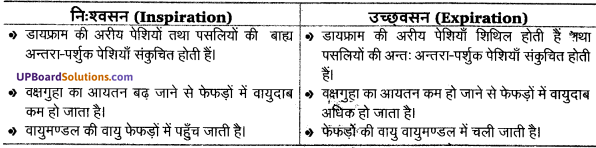
निःश्वसन तथा उच्छ्वसन में अन्तर लिखिए।
उत्तर :
निःश्वसन तथा उच्छ्वसन में अन्तर
UP Board Solutions for Class 11 Biology Chapter 17 Breathing and Exchange of Gases image 11

प्रश्न 4.
रुधिर में ऑक्सीजन गैस के संवहन का वर्णन कीजिए।
उत्तर :

ऑक्सीजन का परिवहन

हीमोग्लोबिन लाल रक्त कणिकाओं में स्थित एक लाल रंग को लौहयुक्त वर्णक है। हीमोग्लोबिन के साथ उत्क्रमणीय (reversible) ढंग से बँधकर ऑक्सीजन ऑक्सीहीमोग्लोबिन (oxyhaemoglobin) का गठन कर सकता है। प्रत्येक हीमोग्लोबिन अणु अधिकतम चार O2 अणुओं को वहन कर सकते हैं। हीमोग्लोबिन के साथ ऑक्सीजन का बँधना प्राथमिक तौर पर O2 के आंशिक दाब से सम्बन्धित है। CO2 का आंशिक दाब, हाइड्रोजन आयन सांद्रता और तापक्रम कुछ अन्य कारक हैं जो इस बन्धन को बाधित कर सकते हैं। हीमोग्लोबिन की ऑक्सीजन से प्रतिशत संतृप्ति को pO2 के सापेक्ष आलेखित ।

UP Board Solutions

करने पर सिग्माभ वक्र (sigmoid curve) प्राप्त होता है। इस वक्र को वियोजन वक्र (dissociation curve) कहते हैं जो हीमोग्लोबिन से 0, बंधन को प्रभावित करने वाले pCO2; H+ आयन सांद्रता आदि घटकों के अध्ययन में अत्यधिक सहायक होता है। कूपिकाओं में जहाँ उच्च pO2, निम्न pCO2; कम H+सांद्रता और निम्न तापक्रम होता है, वहाँ ऑक्सीहीमोग्लोबिन बनाने के लिए ये सभी घटक अनुकूल साबित होते हैं जबकि ऊतकों में निम्न pO2 उच्च pCO2 उच्च H+ सांद्रता और उच्च तापक्रम की स्थितियाँ ऑक्सीहीमोग्लोबिन से ऑक्सीजन के वियोजन के लिए अनुकूल होती हैं। इससे स्पष्ट है कि O2 हीमोग्लोबिन से फेफड़ों की सतह पर बँधती है और ऊतकों में वियोजित हो जाती है। प्रत्येक 100 मिली ऑक्सीजनित रक्त सामान्य शरीर की क्रियात्मक स्थितियों में ऊतकों को लगभग 5 मिली O2 प्रदान करता है।

प्रश्न 5.
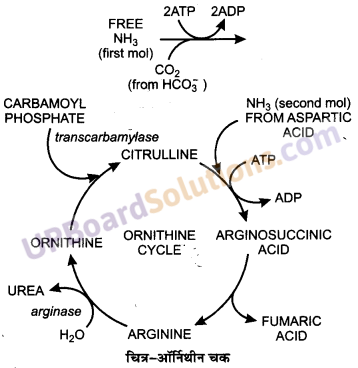
ऑर्निथीन चक्र को रेखाचित्र की सहायता से समझाइए। या ऑर्निथीन-आर्जिनीन चक्र को रेखीय चित्र द्वारा प्रदर्शित कीजिए।
उत्तर :

यूरिया का निर्माण या ऑर्निथीन चक्र

विभिन्न जैव-रासायनिक (bio-chemical) क्रियाओं के अन्तर्गत यकृत कोशिकाओं में अमोनिया को कार्बन डाइऑक्साइड के साथ मिलाकर यूरिया (urea) का निर्माण किया जाता है। ये क्रियाएँ एक चक्र के रूप में होती हैं जिसे ऑर्निथीन चक्र (ormithine cycle) अथवा क्रेब-हेन्सलीट चक्र (Kreb-Henseleit cycle) कहते हैं। इस चक्र में डीएमीनेशन से प्राप्त अमोनिया का एक अणु कार्बन डाइऑक्साइड के एक अणु से मिलकर कार्बमोइल फॉस्फेट (UPBoardSolutions.com) (carbamoyl phosphate) बनाता है। इसमें दो ATP अणुओं का भी उपयोग होता है। काबेंमोइल फॉस्फेट उपलब्ध ऑर्निथीन के साथ ट्रान्सकाबेंमिलेज एन्जाइम की उपस्थिति में संयोग कर लेता है, इससे साइट्रलिन (citrulline) बनता है। साइट्रलिन ए०टी०पी० (ATP) की उपस्थिति में एस्पार्टिक अम्ल (aspartic acid) के साथ संयोग कर आर्जिनोसक्सीनिक अम्ल (arginosuccinic acid) बनाता है। आर्जिनोसक्सीनिक अम्ल का एन्जाइम की उपस्थिति में आर्जिनीन (arginine) तथा फ्यूमैरिक अम्ल (fumaric acid) में विघटन हो जाता है। अब एन्जाइम आर्जिनेज (arginase) की उपस्थिति में आर्जिनीन का विघटन होता है और यूरिया (urea) तथा ऑर्निथीन (ornithine) का निर्माण होता है। इस प्रकार ऑर्निथीन अगले चक्र के लिए वापस मिल जाती है। ऑर्निथीन की इस प्रकार की उपस्थिति के कारण ही इसको ऑर्निथीन चक्र (ornithine cycle) कहते हैं।

UP Board Solutions for Class 11 Biology Chapter 17 Breathing and Exchange of Gases image 12

UP Board Solutions

दीर्घ उत्तरीय प्रश्न

प्रश्न 1.
कोशिकीय श्वसन से आप क्या समझते हैं? इससे सम्बन्धित विभिन्न पदों (steps) का उल्लेख कीजिए। या निम्नलिखित पर टिप्पणी लिखिए
(क) ग्लाइकोलिसिस (glycolysis)
(ख) कोशिकीय श्वसन (cellular respiration) या कोशिकीय श्वसन क्या है? ग्लाइकोलिसिस को अनॉक्सी श्वसन क्यों कहा जाता है? ग्लाइकोलिसिस प्रक्रम का वर्णन कीजिए।
उत्तर :

कोशिकीय श्वसन

भोज्य पदार्थों को विखण्डित कर उनसे रासायनिक ऊर्जा को, उपयोग के लिए, विमुक्त करने वाली अपंचयिक (catabolic) व पूर्णतः नियन्त्रित (controlled) क्रिया श्वसन (respiration) कहलाती है।”

सामान्यत: सभी जन्तुओं में भोज्य पदार्थों में उपस्थित, रासायनिक ऊर्जा धीरे-धीरे एक श्रृंखला में होने वाली अभिक्रियाओं (reactions) के द्वारा स्वतन्त्र की जाती है। अत्यन्त महत्त्वपूर्ण पदार्थ, ऐडीनोसीन डाइफॉस्फेट या ए०डी०पी० (adenosine diphosphate or ADP) स्वतन्त्र की गयी इस ऊर्जा को अपने साथ जोड़कर एक अस्थायी यौगिक ऐडीनोसीन ट्राइफॉस्फेट या ए०टी०पी० (adenosine triphosphate or ATP) का निर्माण कर लेता है। ए०टी०पी० (UPBoardSolutions.com) को किसी भी स्थान या उसी या अन्य किसी कोशिका में ऊर्जा के लिए उपयोग में लाया जा सकता है और फिर से ए०डी०पी० प्राप्त हो जाता है। जीवित कोशिका (living cell) में इस प्रकार की क्रिया अत्यन्त नियन्त्रित विधियों से विशेष व्यवस्था के अन्तर्गत, अनेक एन्जाइम, सहएन्जाइम एवं अन्य पदार्थों एवं तन्त्रों (systems) के अन्तर्गत की जाती है। यही नहीं, क्रियाओं के फलस्वरूप जो गतिज ऊर्जा (kinetic energy) निष्कासित होती है उसके अधिकांश भाग को विशेष पदार्थ ए०टी०पी० (ATP) में इस प्रकार संचित किया जाता है

कि उपयोग की आवश्यकता के समय यह तुरन्त अपघटित होकर ऊर्जा को उपलब्ध करा देता है और स्वयं ऊर्जा उत्पादन के स्थान पर ए०डी०पी० (ADP) के रूप में पहुँचकर नयी ऊर्जा ग्रहण करता है अर्थात् उसका कुछ बिगड़ता भी नहीं। बस, यही समस्त क्रियाएँ अर्थात् खाद्य पदार्थ के ऑक्सीकरण से लेकर उपभोग के लिए ऊर्जा उपलब्ध कराने की नियन्त्रित क्रियाओं को हम श्वसन (respiration) कहते हैं।

UP Board Solutions

कोशिकीय श्वसन से सम्बन्धित दो प्रमुख पद

(i) ग्लाइकोलिसिस (Glycolysis) :
श्वसन की यह सामान्य क्रिया प्रारम्भ में कोशिकाद्रव्य (cytoplasm) में होती है और इसमें ऑक्सीजन के बिना ही, केवल आन्तरिक परिवर्तनों के द्वारा, कार्बोहाइड्रेट को अपूर्ण रूप से ऑक्सीकृत करके थोड़ी-सी ऊर्जा निकाल ली जाती है। इस प्रकार के श्वसन को
जिसमें ऑक्सीजन अनुपस्थित होती है, अनॉक्सी या अवायवीय (anaerobic) श्वसन कहते हैं।

(ii) क्रेब्स चक्र (Kreb’s Cycle) :
अधिक दक्षश्वसन की यह क्रिया ऑक्सीजन की उपस्थिति में सामान्य कोशिका में माइटोकॉण्ड्रिया (mitochondria) पर होती है और ऑक्सीश्वसन या वायवीय श्वसन (aerobic respiration) कहलाती है।

ग्लाइकोलिसिस या ई०एम०पी० पथ

ग्लाइकोलिसिस की अभिक्रियाएँ कोशिका के कोशिकाद्रव्य (cytoplasm) में होती हैं जिसमें 6 C वाला ग्लूकोज का एक अणु विघटित होकर 3 C वाले दो पाइरुविक अम्ल (pyruvic acid) अणु बनाता है। क्रम से एन्जाइम (enzymes) तथा सह-एन्जाइम्स (co-enzymes) की सहायता से शृंखलाबद्ध रूप में, ये क्रियाएँ इस प्रकार घटित होती हैं

पद I :
ग्लूकोज के अणु का फॉस्फोराइलेशन
इस क्रिया के अन्त में फ्रक्टोज 1, 6-डाइफॉस्फेट (fructose 1, 6-diphosphate) का निर्माण होता है। इस क्रिया में पहले ग्लूकोज अणु एक ATP अणु से ऊर्जा तथा एक फॉस्फेट गुट्ट (PO4 ) प्राप्त करता है तथा ग्लूकोज 6-फॉस्फेट (glucose 6-phosphate) बनाता है। ग्लूकोज 6-फॉस्फेट समावयवीकरण (isomerization) के द्वारा फ्रक्टोज 6-फॉस्फेट (fructose 6-phosphate) में बदल जाता है। फ्रक्टोज 6-फॉस्फेट का अणु अब एक ATP अणु से एक फॉस्फेट गुट्ट ऊर्जा की उपस्थिति में प्राप्त करता है और इससे फ्रक्टोज 1, 6-डाइफॉस्फेट बनता है।

पद II :
फॉस्फोराइलेटेड शर्करा का विदलन
इस पद में फ्रक्टोज 1, 6-डाइफॉस्फेट का विदलन (splitting) होता है जिससे दो ट्रायोज (trioses) बनते हैं-एक, 3-फॉस्फोग्लिसरैल्डिहाइड (3-phosphoglyceraldehyde) तथा दूसरा डाइहाइड्रॉक्सी-एसीटोन फॉस्फेट (dihydroxyacetone phosphate)। बाद में, दूसरा ट्रायोज भी एक आइसोमेरेज (isomerase) एन्जाइम की उपस्थिति में 3-फॉस्फोग्लिसरैल्डिहाइड में ही बदल जाता है। इस प्रकार, इस परिवर्तन के बाद, दो अणु (UPBoardSolutions.com) 3-फॉस्फोग्लिसरैल्डिहाइड के उपलब्ध होते हैं। 3- फॉस्फोग्लिसरैल्डिहाइड, अकार्बनिक फॉस्फेट (H3PO4 से) प्राप्त करके 1, 3-डाइफॉस्फोग्लिसरैल्डिहाइड का निर्माण करता है जो दो H+ आयन तथा इलेक्ट्रॉन देकर ऑक्सीकृत हो जाता है। यह क्रिया डिहाइड्रोजिनेज (dehydrogenase) एन्जाइम तथा NAD सह-एन्जाइम की उपस्थिति में होती है तथा 1, 3-डाइफॉस्फोग्लिसरिक अम्ल (1, 3-diphosphoglyceric acid) का निर्माण होता है।

UP Board Solutions

1, 3-डाइफॉस्फोग्लिसरिक अम्ल (1, 3-diphosphoglyceric acid) का डीफॉस्फोराइलेशन (dephosphorylation) होता है तथा एक फॉस्फेट गुंट्ट अलग होकर उपस्थित ADP के साथ संयुक्त होकर ATP का निर्माण करता है। इस प्रकार दो अणुओं से दो ATP अणु और दो अणु 3-फॉस्फोग्लिसरिक अम्ल (3-phosphoglyceric acid) बनते हैं। जिसमें एन्जाइम, फॉस्फोग्लिसरोम्यूटेज की सहायता से फॉस्फेट गुट्ट का फॉस्फोग्लिसरिक अम्ल में स्थान परिवर्तन हो जाने से फॉस्फेट अब 2 स्थिति में आ जाता है। अब,प्रत्येक अणु से एक अणु जल निकल जाने से 2-फॉस्फोइनॉल पाइरुविक अम्ल (2-phosphoenol pyruvic acid) का निर्माण होता है। 2-फॉस्फोइनॉल पाइरुविक अम्ल के डीफॉस्फोराइलेशन (dephosphorylation) के द्वारा पाइरुविक अम्ल (pyruvic acid) को निर्माण होता है। इस प्रकार प्राप्त फॉस्फेट गुट्ट 2ADP अणुओं के साथ मिलकर 2ATP अणुओं का निर्माण करते हैं।
UP Board Solutions for Class 11 Biology Chapter 17 Breathing and Exchange of Gases image 13

ग्लाइकोलिसिस की सम्पूर्ण क्रियाओं में जहाँ अम्ल बनते हैं; जैसे- फॉस्फोग्लिसरिक अम्ल, पाइरुविक अम्ल इत्यादि, ये सब लवणों के रूप में हो सकते हैं। अतः इन्हें फॉस्फोग्लिसरेट, पाइरुवेट (phosphoglycerate, pyruvate) इत्यादि भी लिखा जाता है। ग्लाइकोलिसिस (glycolysis) में ATP के कुल चार अणुओं का निर्माण होता है, किन्तु प्रारम्भिक अभिक्रियाओं में दो ATP अणु काम में आ जाते हैं। अतः शुद्ध लाभ केवल दो अणुओं का ही होता है

UP Board Solutions

(net gain) = 4 ATP – 2 ATP = 2 ATP
दो स्वतन्त्र H+ आयन (ions) भी प्राप्त होते हैं जो प्राय: NAD या NADP पर चले जाते हैं।

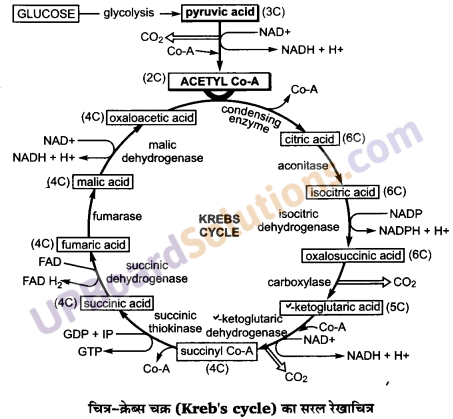
क्रेब्स चक्र या ट्राइकार्बोक्सिलिक अम्ल चक्र

पाइरुविक अम्ल का ऑक्सीकरण ऑक्सीजन की उपस्थिति में क्रमबद्ध तथा चक्र में होने वाली अभिक्रियाओं द्वारा होता है। यह चक्र ही क्रेब्स चक्र (Krebs cycle) कहलाता है। इसकी सम्पूर्ण अभिक्रियाएँ माइटोकॉण्ड्रिया (mitochondria) में होती हैं जहाँ सभी प्रकार के आवश्यक एन्जाइम्स (enzymes) व सह-एन्जाइम्स (co-enzymes) मिलते हैं। पाइरुविक अम्ल, एसीटिल को एन्जाइम-‘ए’ (acetyl co-enzyme-A) बनाने के बाद क्रेब्स चक्र में साइट्रिक अम्ल (UPBoardSolutions.com) (citric acid) के रूप में दिखायी पड़ता है; अत: इस चक्र को ट्राइकार्बोक्सिलिक अम्ल चक्र या साइट्रिक अम्ल चक्र (tricarboxylic acid cycle or citric acid cycle) कहते हैं। क्रेब्स चक्र में प्रवेश से पूर्व पाइरुविक अम्ल एक जटिल प्रक्रिया से निकलता है। इस क्रिया में कम-से-कम पाँच को-फैक्टर (co-factor) तथा एक एन्जाइम-समूह (enzyme-complex) की आवश्यकता होती है। क्रेब्स चक्र में तो एसीटिल को-एन्जाइम-‘ए’ (acetyl co-enzyme-A) ही प्रवेश करता है। ये क्रियाएँ निम्नलिखित पदों में सम्पन्न होती हैं

      1. ऑक्सीजन के सन्तोषप्रद मात्रा में उपलब्ध होने पर ही उपर्युक्त प्रक्रिया होती है और एसीटिल को-एन्जाइम-‘ए’ (acetyl co-enzyme-A) को निर्माण होता है। इस जटिल प्रक्रिया में पाइरुविक अम्ल के तीन कार्बन में से दो कार्बन परमाणु रह जाते हैं जो एसीटिल (acetyl) समूह के रूप में co-A (co-enzyme-A) के साथ जुड़े हुए हैं।
        UP Board Solutions for Class 11 Biology Chapter 17 Breathing and Exchange of Gases image 14
        pyruvic acid + co – A + NAD → CH3CO.co – A + CO2) + NAD. H2

        उपर्युक्त प्रक्रिया में H+ आयन प्राप्त होते हैं (NAD.H2 के रूप में)। NAD.H2 इलेक्ट्रॉन स्थानान्तरण तन्त्र (electron transport system = ETS) में पहुंचकर मुक्त ऊर्जा से तीन ATP अणुओं का निर्माण करते हैं। इस प्रकार, दो अणु पाइरुविक अम्ल से 6ATP अणु प्राप्त होते हैं।
      2. एसीटिल को-एन्जाइम-‘ए’ (acetyl co-A) क्रेब्स चक्र के अन्तिम उत्पाद, चार कार्बन यौगिक (C4), ऑक्सैलोएसीटिक अम्ल (oxaloacetic acid) के साथ मिलकर (condensation) साइट्रिक अम्ल (citric acid) बनाता है। साथ ही को-एन्जाइम-‘ए’ (co-A) स्वतन्त्र हो जाता है। यह क्रिया जल तथा एक कण्डेन्सिंग ऐन्जाइम की उपस्थिति में होती है
        UP Board Solutions for Class 11 Biology Chapter 17 Breathing and Exchange of Gases image 15
  1. इसके बाद की क्रियाएँ चार ऑक्सीकरण (Oxidation) पदों (steps) में सम्पन्न होती हैं जिनमें होकर साइट्रिक अम्ल (citric acid) से ऑक्सैलोएसीटिक अम्ल (Oxaloacetic acid) फिर से प्राप्त किया जाता है। इन क्रियाओं में चार जोड़ा H-आयन और चार जोड़ा इलेक्ट्रॉन्स (electrons) निकाले जाते हैं। इन पदों की अभिक्रियाएँ जटिल, श्रृंखलाबद्ध व चक्रिक (cyclic) होती हैं तथा विभिन्न एन्जाइम्स, सहएन्जाइम्स, को-फैक्टर्स (co-factors) के (UPBoardSolutions.com) सहयोग से सम्पन्न होती हैं इस प्रकार पाइरुविक अम्ल के दो अणुओं (ग्लूकोज के एक अणु से प्राप्त) से कार्बन डाइऑक्साइड के छह अणु (तीन + तीन) निकलते हैं। इस क्रिया में कुल 30 (तीस) ATP अणु भी बनते हैं। 6 (छह) ATP अणु ग्लाइकोलिसिस तथा क्रेब्स चक्र के मध्य बनते हैं। इस प्रकार सम्पूर्ण अणु से सम्पूर्ण वायवीय श्वसन के बाद एक ग्लूकोज अणु से 38 ATP अणु प्राप्त होते हैं।

We hope the UP Board Solutions for Class 11 Biology Chapter 17 Breathing and Exchange of Gases (श्वसन और गैसों का विनिमय) help you. If you have any query regarding UP Board Solutions for Class 11 Biology Chapter 17 Breathing and Exchange of Gases (श्वसन और गैसों का विनिमय), drop a comment below and we will get back to you at the earliest.

Syntax Exercises With Answers Class 11 English UP Board

Excellent General English Grammar Book Class 11 Solutions Syntax Exercises

These Solutions are part of UP Board Solutions for Class 11 English. Here we have given UP Board Solutions for Class 11 English Grammar Chapter 4 Syntax.

Exercise 1

1. Trouser = trousers,
2. month’s = month’s,
3. rupees = rupee,
4. was = were,
5. are = is,
6. spectacle = spectacles,
7. furnitures = pieces of furniture,
8. fishes = fish,
9. Sadhna = Sadhna’s
10. Mohan’s sister’s song = song of Mohan’s sister,
11. house is = houses are,
12. are = is,
13. dozens = dozen,
14. informations = information or items of information,
15. furnitures = pieces of furniture,
16. a black shoe = a pair of black shoes,
17. hundreds = hundred,
18. have = has,
19. sceneries = scenery, are = is,
20. table’s leg = leg of table.

Exercise 2

1. Their = his,
2. myself = I,
3. whom = who,
4. he = one,
5. either = any,
6. whom = who,
7. their = his,
8. I = me,
9. his = one’s,
10. were = was,
11. their = his/her, uniforms = uniform,
12. are = is, their = her,
13. that = whom,
14. absents = absents himself,
15. I = me,
16. other = another,
17. Everyone = Each,
18. are = is,
19. whom = who,
20. are = am.

Exercise 3

1. latest = last,
2. Remove ‘more’,
3. than = to,
4. any newspaper = all newspapers,
5. the best = better,
6. The great Ashoka = Ashoka the great,
7. last = latest,
8. than = to that,
9. Haldwani = than that of Haldwani,
10. than = to,
11. than = to,
12. much = very,
13. latter = later,
14. seven days = seventh day,
15. the two first = the first two,
16. a = the,
17. any = any other,
18. more = the most,
19. little = the little,
20. whole = the whole.

Exercise 4

1. will again = again
2. were = was,
3. are = is,
4. are = is,
5. has written = wrote,
6. If you will run = If you run,
7. is reading = has been reading,
8. has = have,
9. has = have,
10. has = have,
11. are = is,
12. shall = should,
13. tomorrow = the next day,
14. was = is
15. am = have been
16. have been = are,
17. have = has,
18. did = had done,
19. did he fail = he failed,
20. have = has, their = his,
21. are = is.

Exercise 5

1. has been not = has not been,
2. only wrote = wrote only,
3. not to copy = to copy,
4. too = very,
5. than = but.
6. enough low = low enough,
7. too = very,
8. too = extremely.
9. chiefly wrote = wrote = wrote chiefly,
10. than = but,
11. have taught = have not taught,
12. comes late often = often comes late,
13. golden always = always golden,
14. easily walks = walks easily,
15. too = extremely,
16. fainted = almost fainted,
17. earnestly to end में लिखे,
18. no any = no,
19. Firstly = first,

Exercise 6

1. on a violin = the violin,
2. Earth = The earth,
3. a = an,
4. Darkest = The darkest,
5. a = an,
6. is = is a,
7. The both = Both the
8. The gold = Gold,
9. Kalidas = The Kalidas,
10. Ganges = The Ganges,
11. The man = Man
12. an = a
13. White cat = a white cat,
14. The carriage = carriage,
15. a beautiful = beautiful.

Exercise 7

1. Moon = The moon,
2. map = a map,
3. Peacock = The peacock,
4. best = the best, is sold = are sold,
5. easy = an easy,
6. in = of,
7. such a = so,
8. at early = at an early,
9. The last = Last,
10. scholar = a scholar,
11. a valuable = valuable.

Exercise 8

1. does not come = comes
2. then = there,
3. then = at that time,
4. then = when
5. but = yet,
6. or = nor,
7. do not request = request,
8. then = when,
9. only I was not fined but punished also = I was not only fined but also punished.
10. Lions are both found in Asia and in Africa = Lions are found in both Asia and Africa.
11. then = when,
12. but = but also,
13. Both teachers as well as students = Teachers as well students both
14. Your are either a fool or a wicked.
15. My friend will give me either a book or some money.

Exercise 9

1. at = to,
2. in = for,
3. on = at,
4. behind = after,
5. with = beside,
6. from Monday = since Monday,
7. on upon,
8. I go on Sunday to temple.
9. with = to,
10. in = on,
11. before = to, of = for,
12. with = in.

Exercise 10

1. of,
2. at,
3. between,
4. till,
5. at,
6. since,
7. into,
8. of,
9. to,
10. to, for,
11. with,
12. with,
13. of
14. from, till.

Exercise 11

1. not to tell = not tell,
2. to weep = weep,
3. to invited = to be invited,
4. to pass = to have passed,
5. to break = to have broken,
6. ought obey = ought to obey,
7. to prosper and to progress = to prosper and progress,
8. to sleep = sleep,
9. to see = to have seen,
10. to have gone = to go,
11. to immediately go = to go immediately,
12. need not to come = need not come.

Exercise 12

1. to play = playing
2. to go = going,
3. to talk = from talking,
4. to walk = of walking ,
5. to win = in winning,
6. Reading of = The reading of,
7. friend = friend’s,
8. to get= of getting,
9. Hunting = The hunting,
10. Time = the time
11. at = to,
12. to go for to see = to see,
13. playing of = playing, studying of = studying.

Exercise 13

1. Being = He being,
2. retiring = ‘retired,
3. Being = It being
4. Eating = Having eaten,
5. Playing = While playing,
6. tiring = tired,
7. defeating = defeated,
8. Reading = While reading,
9. Being = It being
10. The information of murder having got, he was arrested.
11. Going = While going, 12. killed = Having killed.

Exercise 14

1. Have you not done your home task yet ?
2. Four and four make eight.
3. Mary has been working in this office for six years.
4. If she works hard, she will win.
5. The sun rises in the east.
6. No nook or corner was left unsecured.
7. He has bought costly furniture.
8. This washing powder is superior than that.
9. A university degree is no guarantee for a job.
10. One must do one’s duty.
11. I like the idea.
12. He wrote the best novel.
13. I wrote a letter to my father a month ago.
14. He is eligible for the post.
15. Bread and butter is his chief food.
16. You, he and I are good friends.
17. The sun rises in the east.
18. This question is easier of the two.
19. Milk is preferable to tea.
20. Of the two boys Ramesh was more brave.
21. The school will remain closed for a week.
22. You will fail unless you work hard.
23. Tulsidas is one of the greatest poets in Hindi.
24. Do not make a noise.
25. I have slept soundly.

We hope the UP Board Solutions for Class 11 English Grammar Chapter 4 Syntax help you. If you have any query regarding UP Board Solutions for Class 11 English Grammar Chapter 4 Syntax, drop a comment below and we will get back to you at the earliest.

Transformation of Sentences Exercises With Answers Class 11 English UP Board

Excellent General English Grammar Book Class 11 Solutions Transformation of Sentences Exercises

These Solutions are part of UP Board Solutions for Class 11 English. Here we have given UP Board Solutions for Class 11 English Grammar Chapter 3 Transformation of Sentences.

Exercise 1

1. The water is so hot that I cannot bathe in it.
2. He is so rich that he can buy a car.
3. The crowd was too large for the police to control.
4. My heart is too full for words.
5. He is extremely fond of wrestling.
6. They were too weak to solve the paper.
7. The class is too noisy.
8. The people of Delhi are so active that they cannot miss the bus.
9. He speaks too fast for us to follow him.
10. The fox is so cunning that he cannot be deceived.
11. The room is too dirty for us to sit in it.
12. He is so proud that he cannot accept any help.
13. This tree is too high to climb.
14. The tea is so hot that I can not drink it.
15. The book was too interesting for me to put it aside without finishing it.

Exercise 2

1. John is not as clever as your brother.
2. No other book is as interesting as this.
3. Pen is mightier than sword.
4. Cow is the most gentle animal.
5. No other song that I have heard is as sweet as this.
6. He does not like any other colour as. much as brown colour.
7. Gold is the costliest metal.
8. No other kind of government is as good as democracy.
9. Vikramaditya was the most famous ruler of India for his judgement.
10. The climate of plains is not as cool as that of hills.
11. No other animal is as faithful as the dog.
12. Everest is the highest mountain.
13. Most cities in India are not as big as Delhi.
14. Mohan is one of the most foolish students.
15. Very few girls of the town are as beautiful as she.

Exercise 3

1. No man can win the heart of everyone.
2. Does he not learn his lesson daily?
3. Who does not like to be happy?
4. Who can forget his parents ?
5. You are tired of doing work.
6. Who does not believe him to be honest ?
7. Does he not pay his licence fee every year?
8. Man cannot be immortal.
9. Who can see God ?
10. Can I ever forget your kindness ?
11. Who does not love his motherland ?
12. The leopard can not change his spots.
13. The labourers work upto 5 pm.
14. Every tree fades away.
15. We shall never forget Mahatma Gandhi.

Exercise 4

1. It is sad that she has lost her beauty.
2. How lovely your paintings are !
3. Alas! You are leaving us so soon.
4. It is joyful that the team of India has won.
5. It is a very shameful behaviour.
6. May God bless him with a son !.
7. It was a very fine catch.
8. How beautiful are the trees in this garden!.
9. His condition is very pitiable.
10. Were I in your office !.
11. Hurrah ! To travel by air.
12. I wish that the snow covered peaks of Himalayas were my dwelling place.
13. Oh ! Fear the dog.
14. It is joyful that my brother has won the first prize.
15. I have been very foolish.

Exercise 5

1. You are so kindhearted that you cannot be a good officer.
2. As soon as he started his speech, his opponents began to disturb him.
3. Only a miracle can save him.
4. Hari is not so intelligent as my brother.
5. The sun shines brighter than the moon.
6. She did not prove to be an unfaithful wife.
7. Gold is the costliest metal.
8. He never comes in improper uniform.
9. We should be honest.
10. Their glory will shine forever.
11. Sohan is not as tall as Karim.
12. It is an easy job for you.
13. No sooner did we come out than it started raining.
14. We should love the poor.
15. None but good boys are successful.

Exercise 6.

1. The roads are cleaned by the sweeper before sunrise.
2. The breads were distributed among the poor men by a kind man.
3. All plants have been destroyed by the monkeys.
4. The medicine had been take by me before the doctor came.
5. Their most will have been finished by them before the sunset.
6. The plants are being watered by the gardener.
7. Has the room been cleaned by the servant.
8. When will our exercise books be returned by the teacher.
9. My order must be obeyed by you.
10. Money is always put in his in her pocket by him.
11. You are requested to explain me this question again.
12. By whom will you application by forwarded.
13. You are requested to tell me time in your watch.
14. You are forbidden to use fast food every day.
15. Let all animals be loved by us.

Exercise 7

1. I have learnt all the lessons.
2. The tailor has sewn your shirt.
3. Mr.P.K. Jain teaches me English.
4. The people always admire the brave soldiers.
5. No one should spoil water.
6. Who has eaten my food?
7. My father has cleared all debts.
8. When did the child tear your books?
9. Should I send a servant?
10. Who looks after you th the absence of your mother?
11. Always reach school in time.
12. The police could not arrest the culprits.
13. Do your duty first.
14. The painter made is beautiful painting.
15. Please let me sleep now.

Exercise 8

1. The teacher made him the class monitor.
2. Bad boys are disliked by every one.
3. The servant did not break the pot.
4. He was found sleeping by me.
5. Last year we planted one thousand trees in our college.
6. The beauty of the scene charmed us.
7. Where was he seen by you ?
8. His work has been finished by him.
9. Why did the teacher punish him ?
10. Such behaviour was not expected by us.
11. The patient will be soon examined by the doctor.
12. The children should not tease the dogs.
13. BY whom were stones thrown at my window pane?
14. You are advised to take light exercise daily.
15. They have advised the students to sit quietly in their classes.

We hope the UP Board Solutions for Class 11 English Grammar Chapter 3 Transformation of Sentences help you. If you have any query regarding UP Board Solutions for Class 11 English Grammar Chapter 3 Transformation of Sentences, drop a comment below and we will get back to you at the earliest.

Synthesis Exercises With Answers Class 11 English UP Board

Excellent General English Grammar Book Class 11 Solutions Synthesis Exercises

These Solutions are part of UP Board Solutions for Class 11 English. Here we have given UP Board Solutions for Class 11 English Grammar Chapter 2  Synthesis.

Exercise 1

1. I saw a bėggar begging on the platform.
2. Nobody touched the rotten mangoes.
3. The tired traveller sat in the shade of a tree.
4. Having finished the book, I put in on the shelf.
5. Opening the cupboard, he took out his shirt.
6. Having failed in her attempt twice, she gave up the idea of trying once more.
7. It being cold, we stayed indoors.
8. Having relaxed for an hour, they started their journey again.
9. He was not willing to go out in torn clothes.
10. Having been caught by the police, the terrorist committed suicide.
11. Turning to the right you will reach my house.
12. Having taught the students, the teacher went home.
13. The boy is searching for his lost books.
14. The police arrested a thief running on the road.
15. I brought my mended fan home.

Exercise 2

1. He is too poor to build a house.
2. He works hard to earn money.
3. He is too truthful to tell a lie.
4. I shall admit myself in AIIMS to get good treatment.
5. I have a faithful dog to guard my house.
6. I gave my watch to the watchmaker to repair it.
7. The patient was too weak to go on foot.
8. I worked hard to pass in first division.
9. There is only one way for you to succeed.
10. I have nothing more to give you.
11. Many people come to that saint to get answers of their questions.
12. The police men fired in the air to control the crowd.

Exercise 3

1. On examining this answer book I found many mistakes in it.
2. After drinking milk he went to sleep.
3. Two students were caught red handed for copying in the examination hall
4. After explaining these questions to me you can go home.
5. The prayer had started before I reached the school.
6. I read all the books except novels.
7. Seeing me on the roof, a monkey ran away at once.
8. On the recovery of my father from his illness I became happy.
9. The principal fined few students.
10. The people were marching with pride with banners in their hands.

Exercise 4

1. Newton, a famous scientist, made many inventions.
2. The second show being over, the people have gone to their houses.
3. The people could not run fast.
4. I eat bread with butter.
5. Carelessly, he faild in the examination.
6. We have seen the Taj, one of the seven wonders of the world.
7. Certainly he was a great favourite of his teachers.
8. The sun having risen, the birds made a noise.
9. Tagore, the author of Gitanjali, was a famous poet of India.
10. I met my friend Harish.
11. The papers having been distributed, the students started writing.
12. He eats fruits and green vegetables daily.
13. His uncle, a great social worker is the richest man of the town.
14. Unfortunately this cow will die soon.
15. The fire having broken out, all the workers ran out of the factory.

Exercise 5

1. The report that he has been murdered is wrong.
2. Nobody knows where the Prime Minister is going?
3. You have admitted that you did a mistake.
4. The teacher asked me why I had been absent for two days?
5. That the Sun is hot is true.
6. Please tell me what your annual income is?.
7. That he will recover soon is possible.
8. That he must be Finance Minister is clear.
9. Who is knocking at the main gate that is closed?
10. Will you tell me why you failed in th examination?

Exercise 6

1. This is the boy who will stand first this year?
2. This house belongs to his uncle who has bought this?
3. He is such a man as cannot be forgotten easily.
4. Have you seen the place where Mahatma Gandhi was assassinated?
5. You should learn the answers of the questions that are important.
6. The train which is coming from Lucknow is late by one hour?
7. Where is the man who criticized you?
8. Return me the money which 9 had given you yesterday?
9. This is the flower that you like.
10. The people who are hard working are happy?

Exercise 7

1. I saw a mad dog in the street when I come out of the house?
2. All the students went into them classes when the bell rang?
3. I dreamt before I had taken sound sleep.
4. Shantanu stood first because he had worked very hard.
5. I could not go to office because it was raining heavily.
6. Although he is poor, he is honest.
7. I will go on the tour with you if my father allows me.
8. As soon as lion heard the noise, he ran into the forest.
9. I cannot leave my house because I am helpless.
10. My brother was married when he was the student of class X?

Exercise 8

1. The principal was pressing the bell but no peon came to him.
2. He got name as well as fame.
3. The wind blew and all the people became happy.
4. Man may come and man may go but I go on forever.
5. It is time to go so let us start.
6. You may eat fruits or green vegetables.
7. He is always busy in social work because he wants to be famous.
8. You should attend your class daily otherwise your name will be struck off.
9. I went to my uncle and he gave me a hundred rupee note.
10. He is hard working so all the teachers love him.

Exercise 9

1. I went to Mumbai where I stayed for one month and saw many things.
2. Seeing a bird, he took an aim and shot it at once.
3. He is poor and weak yet he does not beg.
4. The students who met the principal, not only put their demands but also challenged him.
5. He stole my bicycle but did not tell anybody.
6. The girls played volleyball but the boys did not.
7. The ponds became almost dry because the monsoon failed.
8. Mohan plays football and hockey but his brother does not play any game.
9. His friends made him spend a lot of money on themselves because he was a fool.
10. I do not know his age but he is certainly older than me.

We hope the UP Board Solutions for Class 11 English Grammar Chapter 2  Synthesis help you. If you have any query regarding UP Board Solutions for Class 11 English Grammar Chapter 2  Synthesis, drop a comment below and we will get back to you at the earliest.