UP Board Solutions for Class 10 Computer Science Chapter 11 File Operation

UP Board Solutions for Class 10 Computer Science Chapter 11 File Operation

File Operation Long Answer Type Questions (8 Marks)

Question 1.
What are the data files? Write about their different types. (UP 2011, 12)
Or
Write a short note on ‘Sequential files’. (UP 2007, 15)
Or
Write short notes on ‘Random files’ and their application. (UP 2008, 09)
Or
Explain the features of Sequential file. (UP 2016)
Answer:
Data File: Data file offers a convenient method of (UPBoardSolutions.com) storing data sets, since data files can be easily read and updated by program file (‘C’ program). Example of Data file is an employee file, which is a collection of related records.
UP Board Solutions for Class 10 Computer Science Chapter 11 File Operation
Data files can be categorized in many ways. But we will categorize them only on the basis of mode of accessing. According to this condition, there are following two types of data files:

  1. Sequential data files
  2. Random data files.

UP Board Solutions

1. Sequential Data Files: The main advantage of this type of file is that records (data) are stored sequentially, one after another, on the storage media which may be a magnetic tape or a disk. These individual data items may (UPBoardSolutions.com) be different records or single entities and may comprise numerics or strings or both. If a particular data is of string type, then it must be enclosed within quotation mark.

The main disadvantage of handling the sequential file is that any particular record can be accessed sequentially. For example, if the sixtieth record from the beginning of a sequential file is to accessed, then it has to pass over the preceding fifty-nine records. Thus, it becomes more time-consuming. But if we compare it with a random data file, it is easy to create and handle.

2. Random Data Files: The basic advantage of these files is that any particular record can be accessed directly. For example, if we want to access the sixtieth record, then it can be accessed directly without passing any preceding record. It can be stored on disks only. Thus, this method is quite faster as compared to sequential data files.
For this purpose, we use function fseek. This function sets the file position indicator associated with the stream according to the values of the offset and origin. The value of origin may be one of the following:

  • 0 – the beginning of a file
  • 1 – current position
  • 2 – end of the file.

Question 2.
Discuss different file operations of ‘C’.
Answer:
File Operation: Following are the compulsory steps to operate files:

  1. Create file.
  2. Merging file i.e., combine records of two or more files into one.
  3. Adding records.
  4. Deleting records.
  5. Update records.
  6. Generate reports.

UP Board Solutions

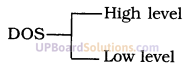
The ‘C’ language supports different level of file processing according to the environment used.
UP Board Solutions for Class 10 Computer Science Chapter 11 File Operation
The general functions which are supported by ‘C’ in the file processing are:

  • Input functions
  • Output functions

Input functions:
-getc()
-fgetc()
-fscanf()
-fread()

Output functions:
-putc()
-fputc()
-fprintf()
-fwrite()

fopen( ) is the main function to start the above given functions. To open a file, to create a file, to restart with existing file etc., are the main functions which are performed by it.
Syntax:
file pointer = fopen(filename, mode);
i.e., FILE *fp;
fp = fopen(TRY.C”, “r”);
fp is a pointer variable, which contains the address of the structure FILE which has been defined in the header file “stdio.h”.
fopen() will open a file TRY.C’ in ‘read* mode, which tells the (UPBoardSolutions.com) C compiler that we would be reading the contents of the file, “r” is a string and not a character. Hence, fopen() performs three important tasks when you open the file in “r” mode:

UP Board Solutions

  • It searches on the disk the file to be opened.
  • If the file is present, it loads that file from the disk into memory.
    If the file is absent, fopen() returns a NULL. This function opens one file at a time.
  • It sets up a character pointer which points to the first character of the memory where the file has been modified.

Question 3.
Write about different modes in which a file can be opened.
Answer:
File Opening Modes: The tasks performed by fopen() when a file is opened in each of these modes are also mentioned.
Character Used
for Mode → Meaning
w → Create for write
r → Open for reading
a → Open for append/create a new file
w+ → Create for read/write
r+ → Open for read/write
a+ → Open for read/write/create new file.

Question 4.
WAP to copy the contents of one file to another?
Answer:
Program:

UP Board Solutions

#include<stdio.h>
#include<conio.h>
void main()
{
FILE *fsrc, *ftgt;
char ch;
clrscr();
fsrc = fopen(“tiyl.c”, “r”);
if (fs = = NULL)
{
puts (“Cannot open source file”);
exit();
}
ftgt = fopen(“tiy2.c”, “w”);
if (ft = = NULL)
{
puts (“Cannot open target file”);
fclose(fs);
exit();
} .
while(1)
{ . ch = fgetc(fsrc);
if (ch = = EOF)
break;
else
fputc(ch, ftgt);
}
fclose(fsrc);
fclose(ftgt);
}

Question 5.
Explain fread () and fwrite () functions.
Answer:
fread( ): This function reads a specified number of equal-sized (UPBoardSolutions.com) data items from an input stream into a block, fread returns the number of items (not bytes) actually read on success.
Syntax:
fread (& name_of_structure, size_of_(structure name), l, file pointer);
e.g.,

struct employee
{
char nm[20]; /* 20 bytes */
int age; /* 2 bytes */
};
struct employee Emp;
fread (&Emp, size of (Emp), 1, fp);

Here, the fread function can read 22 bytes of information from the file pointed by file pointer fp.
fwrite( ): This function appends a specified number of equal-sized data items to an output file.
Syntax:
fwrite (& struct—name, size of (struct), 1, fp);
e.g.,

UP Board Solutions

street address
{
char city [30]; /* 30 bytes */
long in pin; /* 2 bytes */
char country [20]; /* 20 bytes */
};
struct address add;
FILE *fp;
fwrite (& add, size of (add), 1, fp);

Question 6.
Describe the main features of printf and getchar function. (UP 2014)
Answer:
printf ( ) → This function writes formatted data to screen. This function allows to supply the input in a fixed format and to obtain the output in the specified form. The printf () function interprets the contents (UPBoardSolutions.com) of the format string.
Syntax:
Printf (“formatted string”, variables); if needed
Example 1.
Printf (“Average = % d percentage = % of’, avg. per);
Here the %d and %f are conversion characters.
They tell printf () to print the value of avg as an integer and per as afloat.

getchar ( ): Using this function any single ASCII character can be inputted in any char type of a variable. This function is available in stdio.h header file so it must be included in the program, in the beginning, using # include declarative.
For example,

UP Board Solutions

#include<stdio.h>
#include<conio.h>
void main ()
{
char x;
x = getchar();
cout << “you entered” << x;
}

File Operation Short Answer Type Questions (4 Marks)

Question 1.
What is stdin and what is stdout?
Answer:
In ‘C’ language, whatever values are given or displayed on a monitor, it can be file handling first stored in a buffer area. The two buffer areas used for this are:

  • stdin: It stands for keyboard buffer as it stores the information sent by the keyboard.
  • stdout: It stands for standard output buffer, le., monitor of the computer.

UP Board Solutions

Question 2.
Differentiate fprintf() and fscanf(). (UP 2016)
Answer:
fprintf( ): This function sends formatted output to a stream. It accepts a series of arguments, apply to each argument a format specifier contained in the format string * format. This function applies the first format specifier to the first argument, the second specifier to the second argument… till the end of the format.

fscanf(): This function is similar to scanf() function. It scans a series of input fields one character at a time. Store the formatted input at an address passed as an argument following * format. This function might stop scanning (UPBoardSolutions.com) a particular field before it reaches the normal end-of-field (while space) character, or it might terminate entirely.

Question 3.
What is reading files? (UP 2008)
Answer:
Reading from files: To read from a file, ‘C’ provides the following functions:
To read data from file, it should exist.
fscanf (): This function is used to read data from a file. It is very similar to scanf () function. It scans a series of input fields (one at a time).
Syntax:
fscanf () file * stream, “format specifiers”, “Variables”).

UP Board Solutions

Question 4.
What is the closing of the file?
Answer:
Closing Files: During a write to a file, the data written is not put on the disk immediately. It is stored in a buffer. When the buffer is full, all its contents are actually written to the disk. The process of emptying the buffer (UPBoardSolutions.com) by writing its contents to disk is called flushing the buffer. Losing the file flushes the buffer and releases the space taken by the FILE structure which is returned by fopen. For this fclose () function is used.
Syntax:
fclose (File * stream (s);

File Operation Very Short Answer Type Questions (2 Marks)

Question 1.
In which type of file, accessing a particular record is faster?
Answer:
Random data file.

UP Board Solutions

Question 2.
Which statement is used to close a file?
Answer:
fclose() statement.

Question 3.
When data is to be written on a file, in which mode it should be opened? (UP 2016)
Answer:
‘w’ mode (for writing).

Question 4.
Which statement is used to read the data from a file?
Answer:
fread() statement is used to read the data from a file.

Question 5.
What do you know about ffiush() statement?
Answer:
If the given stream has buffered output, fflush writes the output for (UPBoardSolutions.com) a stream to the associated file.

UP Board Solutions

Question 6.
Which is function prints error message corresponding to the last Library routine that produced the error?
Answer:
perror ().

Question 7.
Which file pointer position of seeking function seeks from the beginning?
Answer:
SEEK SET.

File Operation Objective Type Questions (1 Marks)

There are four alternative answers for each part of the questions. Select the correct one and write in your answer book:

Question 1.
The last location of a file is:
(a) EOF
(b) END
(c) LAST
(d) CLOSE.
Answer:
(a) EOF

Question 2.
Which function is used to close a file? (UP 2015)
(a) CLOSE
(b) END
(c) EOF
(d) None of these.
Answer:
(b) END

UP Board Solutions

Question 3.
Which function is used to read a line from file:
(a) gets ()
(b) fgets ()
(c) readline ()
(d) gets ().
Answer:
(b) fgets ()

Question 4.
Which function sets the file pointer associated with a stream to a new position:
(a) fseek ()
(b) perror
(c) rename
(d) rewind.
Answer:
(a) fseek ()

UP Board Solutions for Class 10 Computer Science

UP Board Class 12 Geography Practical Work Chapter 2 Data Processing

UP Board Solutions for Class 12 Geography Practical Work Chapter 2 Data Processing (आंकड़ों का प्रक्रमण)

UP Board Class 12 Geography Chapter 2 Text Book Questions

UP Board Class 12 Geography Chapter 2 पाठ्यपुस्तक के अभ्यास प्रश्नोत्तर

प्रश्न 1.
निम्नांकित चार विकल्पों में से सही विकल्प चुनिए
(i) केन्द्रीय प्रवृत्ति का जो माप चरम मूल्यों से प्रभावित नहीं होता है, वह है
(क) माध्य
(ख) माध्य तथा बहुलक
(ग) बहुलक
(घ) माध्यिका।
उत्तर:
(क) माध्य।

(ii) केन्द्रीय प्रवृत्ति का वह माप जो किसी वितरण के उभरे भाग से हमेशा संपाती होगा, वह
(क) माध्यिका
(ख) माध्य तथा बहुलक
(ग) माध्य
(घ) बहुलक।
उत्तर:
(ग) माध्य।

(iii) ऋणात्मक सहसम्बन्ध वाले प्रकीर्ण अंकन में अंकित मानों के वितरण की दिशा होगी
(क) ऊपर बाएँ से नीचे दाएँ
(ख) नीचे बाएँ से ऊपर दाएँ
(ग) बाएँ से दाएँ
(घ) ऊपर दाएँ से नीचे बाएँ।
उत्तर:
(क) ऊपर बाएँ से नीचे दाएँ।

प्रश्न 2.
निम्नलिखित प्रश्नों के उत्तर लगभग 30 शब्दों में दीजिए
(i) माध्य को परिभाषित कीजिए।
उत्तर:
माध्य ऐसा मूल्य है जिसके निकट अन्य सभी मूल्य केन्द्रित होते हैं। माध्य से अधिक तथा कम सभी मूल्यों का योग शून्य होता है। अथवा किसी चर के विभिन्न मूल्यों का साधारण अंकगणितीय औसत माध्य कहलाता है। अथवा माध्य वह मान है जो सभी मूल्यों के योग को कुल प्रेक्षणों की संख्या में विभाजित करने पर प्राप्त होता है।

(ii) बहलक के उपयोग के क्या लाभ हैं? .
उत्तर:
बहुलक के प्रयोग से गणना आसान हो जाती है और इसे समझना आसान हो जाता है (इसे निरीक्षण द्वारा ही ज्ञात कर लिया जाता है)।

(iii) अपकिरण किसे कहते हैं?
उत्तर:
सरल भाषा में अपकिरण विभिन्न इकाइयों का माध्य मूल्य से विचलन को कहते हैं। अपकिरण माध्य मूल्य से प्रसार, बिखराव, प्रकीर्णन परिक्षेपण आदि हैं। कोनर के अनुसार, “जिस सीमा तक व्यक्तिगत पद-मूल्यों में भिन्नता होती है, उसके माप को अपकिरण कहते हैं।”

(iv) सहसम्बन्ध को परिभाषित कीजिए।
उत्तर:
चरों के बीच सम्बन्धों की तीव्रता और उसके स्वभाव की माप को ‘सहसम्बन्ध’ कहते हैं।

(v) पूर्ण सहसम्बन्ध किसे कहते हैं?
उत्तर:
सहसम्बन्ध पूरा 1 (एक) होने पर (चाहे धनात्मक हो या ऋणात्मक) इसे ‘पूर्ण सहसम्बन्ध’ कहते हैं।

(vi) सहसम्बन्ध की अधिकतम सीमाएँ क्या हैं?
उत्तर:
सहसम्बन्ध की अधिकतम विस्तार (सीमा) 1 (एक) है।

प्रश्न 3.
निम्नलिखित प्रश्नों के उत्तर लगभग 125 शब्दों में दीजिए
(i) आरेखों की सहायता से सामान्य तथा विषम वितरणों में माध्य, माध्यिका तथा बहुलक की सापेक्षिक स्थितियों की व्याख्या कीजिए।
उत्तर:
केन्द्रीय प्रवृत्ति के तीन माप माध्य, माध्यिका और बहुलक की तुलना सामान्य वितरण वक्र द्वारा की जा सकती है। सामान्य वक्र घंटाकार वक्र होता है, जिसमें माध्य की उच्चतम आवृत्ति के दोनों तरफ आवृत्तियों का वितरण एकसमान होता है। माध्य के दोनों तरफ किनारों की ओर जाने पर आवृत्तियों की संख्या क्रमशः कम होती जाती है। इस वक्र में.माध्य, माध्यिका तथा बहुलक का मान समान होता है।

परन्तु विषम वक्र होने पर माध्य, माध्यिका तथा बहुलक का मूल्य भिन्न हो जाता है। चित्र में धनात्मक विषमता वाला वक्र दिखाया गया है जिसमें निम्न मूल्यों की आवृत्तियाँ अधिक तथा अधिक मूल्यों की आवृत्तियाँ कम हैं। इस अवस्था में पहले बहुलक, फिर माध्यिका और अन्त में माध्य आता है।
UP Board Class 12 Geography Practical Work Chapter 2 Data Processing 1
UP Board Class 12 Geography Practical Work Chapter 2 Data Processing 2
UP Board Class 12 Geography Practical Work Chapter 2 Data Processing 3
अन्त में चित्र में ऋणात्मक विषमता वाला वक्र दिखाया गया है जिसमें कम मूल्य की आवृत्तियाँ कम तथा अधिक मूल्य की आवृत्तियाँ अधिक हैं। इस अवस्था में पहले माध्य, फिर माध्यिका और अन्त में बहुलक आता है।

(ii) माध्य, माध्यिका तथा बहुलक की उपयोगिता पर टिप्पणी कीजिए (संकेत : उनके गुण तथा दोषों से)।
उत्तर:
(I) माध्य

माध्य के गुण
माध्य के निम्नलिखित गुण हैं

  1. सरल-इसकी गणना करना तथा इसे समझना बहुत सरल है।
  2. प्रतिनिधि माध्य-यह श्रेणी की सभी इकाइयों पर आधारित होता है।
  3. निश्चित मूल्य-माध्य का मूल्य सदा निश्चित रहता है।
  4. स्थिर-यह स्थिर होता है।

माध्य के दोष
माध्य के निम्नलिखित दोष हैं

  1. चरम मूल्यों का प्रभाव-माध्य पर चरम मूल्यों का अधिक प्रभाव होता है।
  2. अप्रतिनिधि तथा अवास्तविक-माध्य वह मूल्य हो सकता है जो श्रेणी में उपस्थित न हो।
  3. हास्यास्पद परिणाम-माध्य द्वारा कभी-कभी भ्रमात्मक तथा असंगत निष्कर्ष निकल आते हैं जो हास्यास्पद होते हैं।

(II) माध्यिका
माध्यिका के गुण
माध्यिका के निम्नलिखित गुण हैं

  1. सरल-माध्यिका को समझना और ज्ञात करना सरल है।
  2. चरम मूल्यों का न्यूनतम प्रभाव-माध्यिका ज्ञात करने में श्रेणी के चरम मूल्यों का कोई प्रभाव नहीं पड़ता।
  3. आँकड़ों के अभाव में उपयुक्त-आँकड़ों का अभाव होने पर भी इसकी गणना की जा सकती है।
  4. बिन्दुरेखीय प्रदर्शन-माध्यिका मूल्य को ग्राफ की सहायता से ज्ञात किया जा सकता है।

माध्यिका के दोष
माध्यिका के निम्नलिखित दोष हैं.

  1. समंकों का क्रम-समंकों को क्रम में जमाने में अधिक समय लगता है।
  2. चरम मूल्यों की उपेक्षा-इसमें चरम मूल्यों की उपेक्षा की गई है।
  3. प्रतिनिधित्व का अभाव यह केवल संभावित माप होता है, वास्तविक नहीं।
  4. अनियमित आँकड़ों के लिए उपयुक्त नहीं-यह अनियमित आँकड़ों के लिए उपयुक्त विधि नहीं है।

(III) बहुलक
बहुलक के गुण
बहुलक के निम्नलिखित गुण हैं

  1. सरल गणना- इसकी गणना बड़ी सरल है।
  2. चरम मूल्यों का न्यूनतम प्रभाव- यह चरम मूल्यों से प्रभावित नहीं होता है।
  3. सर्वोत्तम प्रतिनिधित्व-यह श्रेणी का सर्वोत्तम प्रतिनिधित्व करता है।
  4. व्यावहारिक उपयोगिता- व्यवहार में बहुलक का काफी प्रयोग किया जाता है।

बहुलक के दोष
बहलक के निम्नलिखित दोष हैं

  1. अनिश्चित माध्य-बहुलक सबसे अधिक अनिश्चित व अस्पष्ट माध्य है।
  2. सभी मूल्यों पर आधारित नहीं-यह सभी मूल्यों पर आधारित नहीं होता है।
  3. चरम मूल्यों की उपेक्षा-यह चरम मूल्यों की उपेक्षा करता है।
  4. वर्ग विस्तार से प्रभावित-यह वर्ग विस्तार से प्रभावित होता है।

(iii) एक काल्पनिक उदाहरण की सहायता से मानक विचलन की गणना की प्रक्रिया समझाइए।
उत्तर:
मानक विचलन- मानक विचलन किसी श्रेणी के विभिन्न मूल्यों के समान्तर माध्य से निकाले गए विचलनों के वर्गों के माध्य का वर्गमूल होता है। मानक विचलन हमेशा समान्तर माध्य के लिए जाते हैं और विचलन लेते समय शुद्धि की दृष्टि से +’ तथा ‘-‘ चिह्नों का पूरा ध्यान रखा जाता है। उन्हें पुन: धनात्मक बनाने के लिए उनके वर्ग कर लिए जाते हैं और फिर उनका वर्गमूल ज्ञात करके मानक विचलन निकाल लिया जाता है। इसे व्यक्त करने के लिए ग्रीक भाषा का अक्षर (छोटा सिग्मा) प्रयुक्त किया जाता है। अवर्गीकृत आँकड़ों का मानक विचलन ज्ञात करने के लिए निम्नलिखित सूत्र का प्रयोग किया जाता है-~–
मानक विचलन (σ) = [latex]\sqrt{\frac{\Sigma(X-\bar{X})^{2}}{N}}[/latex]
जहाँ Σ(X – [latex]\bar{X}[/latex])2 = विचलनों के वर्गों का योग
N = बारम्बारता,
उपर्युक्त सूत्र कुछ कठिन प्रतीत होगा। यदि X का मान दशमलव अंकों में हो और प्रेक्षणों की संख्या बहुत अधिक हो। उस स्थिति में हम निम्नलिखित सूत्र का प्रयोग करेंगे
[latex]\sqrt{\frac{\Sigma X^{2}}{N}-\left(\frac{\Sigma X}{N}\right)^{2}}[/latex]
उदाहरण- निम्न तालिका में आगरा के 10 वर्षों की वर्षा के आँकड़े दिए गए हैं। मानक विचलन ज्ञात कीजिए।
UP Board Class 12 Geography Practical Work Chapter 2 Data Processing 4
UP Board Class 12 Geography Practical Work Chapter 2 Data Processing 5

(iv) प्रकीर्णन का कौन-सा माप सबसे अधिक अस्थिर है तथा क्यों?
उत्तर:
परिसर अथवा विस्तार किसी श्रृंखला में अधिकतम तथा न्यूनतम मानों के बीच अन्तर को परिसर (Range) कहते हैं। इसकी गणना निम्नलिखित सूत्र के द्वारा की जाती है, अर्थात्
R = L – S
यहाँ R= परिसर/विस्तार
L= अधिकतम मान
S = न्यूनतम मान प्रकीर्णन का परिसर (विस्तार) माप सबसे अधिक अस्थिर है, क्योंकि यह केवल अधिकतम तथा न्यूनतम मानों पर निर्भर करता है और अन्य मानों का प्रयोग नहीं करता जिससे इसका प्रयोग अधिक नहीं होता है। यद्यपि इसे ज्ञात करना अत्यन्त सरल है।
परिसर, परिवर्तनशीलता का अशोधित (crude) माप है और इसे सावधानी से केवल उसी परिस्थिति में प्रयोग करना चाहिए जहाँ आँकड़े लगातार तथा नियमित हों।

(v) सहसम्बन्ध की गहनता पर एक विस्तृत टिप्पणी लिखिए।
उत्तर:
सहसम्बन्ध की गहनता सहसम्बन्ध की ऋणात्मक अथवा धनात्मक सहसम्बन्ध के अलावा हमारे लिए दो चरों के बीच सहसम्बन्ध .. की गहनता के सम्बन्ध में जानना भी आवश्यक है। साहचर्य की गहनता अधिक 1 से लेकर न्यूनतम -1 तक होती है और इन दो चरम सीमाओं के बीच शून्य (0) होती है।
इस विस्तार का रैखिक वर्णन चित्र में दर्शाया गया है। सहसम्बन्ध पूरा 1 (एक) होने पर (चाहे धनात्मक हो या ऋणात्मक) इसे पूर्ण सहसम्बन्ध कहते हैं। इस तरह गहनतम सहसम्बन्ध के दो विपरीत सिरों के ठीक मध्य में शून्य (0) सहसम्बन्ध स्थित होता है, जिस बिन्दु पर चरों के मध्य सहसम्बन्ध का अभाव अथवा सहसम्बन्ध अनुपस्थित होता है।
UP Board Class 12 Geography Practical Work Chapter 2 Data Processing 6

(vi) कोटि सहसम्बन्ध की गणना के विभिन्न चरण कौन-से हैं?
उत्तर:
कोटि सहसम्बन्ध (स्पीयरमैन) कोटि संहसम्बन्ध को सन् 1904 में स्पीयरमैन ने प्रतिपादित किया था। इस विधि के अनुसार सहसम्बन्ध की गणना कोटियों के आधार पर की जाती है। सांख्यिकी के संकेताक्षर p (ग्रीक अक्षर जिसका उच्चारण है रो-rho) है। इसकी गणना विधि आसान होने के कारण स्पीयरमैन सहसम्बन्ध का उपयोग अधिक प्रचलित है।
कोटि सहसम्बन्ध की गणना के विभिन्न चरण

  1. X – Y चरों को सारणी के क्रमश: प्रथम एवं द्वितीय स्तम्भों में दिखाएँ।
  2. दोनों चर अलग कोटि के हैं। X के मान को तीसरे स्तम्भ में दिखाया गया है। इसी प्रकार Y के मान को चौथे स्तम्भ में दिखाया जाता है। सर्वाधिक मान को R1 तथा दूसरे सबसे अधिक मान को R2 दिखाते हैं।
  3. जब XR और YR प्राप्त कर लिए जाते हैं तो दोनों का अन्तर ज्ञात किया जाता है और पाँचवें स्तम्भ में रख दिया जाता है।
  4. इनमें प्रत्येक अन्तर का वर्ग ज्ञात किया जाता है और इनका जोड़ किया जाता है। इसे छठे स्तम्भ में रखते हैं।
  5. इस प्रकार कोटि सहसम्बन्ध का परिकलन निम्न सूत्र से किया जाता है
    ρ = 1 = [latex]\frac{6 \Sigma D^{2}}{N\left(N^{2}-1\right)}[/latex]
    जिसमें
    ρ = कोटि सहसम्बन्ध
    ΣD2 = दोनों कोटियों के अन्तर के वर्ग का योग
    N = X – Y युग्मों की संख्या

क्रियाकलाप

प्रश्न 1.
भौगोलिक विश्लेषण के लिए प्रयुक्त कोई काल्पनिक उदाहरण लीजिए तथा अवर्गीकृत आँकड़ों की गणना करने की प्रत्यक्ष व अप्रत्यक्ष विधियों को समझाइए।
उत्तर:
काल्पनिक उदाहरण
निम्नलिखित सारणी में लखनऊ के मासिक तापमान के आँकड़े दिए गए हैं। इससे लखनऊ का औसत तापमान ज्ञात कीजिए
UP Board Class 12 Geography Practical Work Chapter 2 Data Processing 7

प्रश्न 2.
विभिन्न प्रकार के पूर्ण सहसम्बन्ध दर्शाने के लिए प्रकीर्ण आरेख बनाइए।
उत्तर:
(नोट-छात्र स्वयं करें।).

UP Board Class 12 Geography Chapter 2 Other Important Questions

UP Board Class 12 Geography Chapter 2 अन्य महत्वपूर्ण प्रश्नोत्तर

विस्तृत उत्तरीय प्रश्नोत्तर

प्रश्न 1.
सहसम्बन्ध किसे कहते हैं? इसके प्रकारों को समझाइए।
उत्तर:
सहसम्बन्ध का अर्थ प्रकृति में प्रत्येक तथ्य एवं परिघटना किसी अन्य तथ्य या परिघटना से प्रभावित और संबंधित होती है। इसी कारण दो या दो से अधिक श्रेणियों में परस्पर सम्बन्ध पाया जाता है अर्थात् एक श्रेणी में परिवर्तन आने पर दूसरी श्रेणी में भी परिवर्तन आ जाता है।
उदाहरण- किसी स्थान पर तापमान बढ़ने से वहाँ का वायुदाब कम होने लगता है। चरों के बीच सम्बन्धों की तीव्रता और उसके स्वभाव के माप को ‘सहसम्बन्ध’ कहा जाता है।
“जब सम्बन्ध संख्यात्मक प्रकृति का होता है तो उसे खोजने, मापने तथा सूत्र में व्यक्त करने की विधि को ‘सहसम्बन्ध’ कहते हैं।”

सहसम्बन्ध के प्रकार
सहसम्बन्ध के दो प्रकार निम्नलिखित हैं
1. धनात्मक सहसम्बन्ध- जब दो चरों में परिवर्तन एक ही दिशा में होता है अर्थात् एक चर के बढ़ने पर दूसरा चर भी बढ़ता है और एक के घटने पर दूसरा भी घटता है तो ऐसे सहसम्बन्ध को ‘धनात्मक सहसम्बन्ध’ कहते हैं।

2. ऋणात्मक सहसम्बन्ध- जब दो चरों में परिवर्तन एक-दूसरे की विपरीत दिशाओं में होता है तो इसे ‘ऋणात्मक सहसम्बन्ध’ कहते हैं।

प्रश्न 2.
निम्नलिखित आँकड़ों से माध्य विचलन ज्ञात कीजिए15, 17, 19, 25, 30, 35, 48.
हल:
UP Board Class 12 Geography Practical Work Chapter 2 Data Processing 8
चरण
(1) मदों को X मानिए।
(2) समान्तर माध्य ([latex]\bar{X}[/latex]) ज्ञात कीजिए।
(3) प्रत्येक मद में से [latex]\bar{X}[/latex] घटाइए (X – [latex]\bar{X}[/latex] = d)
(4) प्रत्येक विचलन को जोड़कर Σd ज्ञात करें।
(5) विचलनों के योग को मदों की संख्या से भाग दीजिए।
सूत्र = माध्य विचलन = [latex]\frac{\Sigma d}{n}=\frac{64}{7}[/latex] = 9.14

प्रश्न 3.
निम्नलिखित शब्दों के अर्थ को स्पष्ट कीजिए
(i) आवृत्ति या बारंबारता, (ii) वर्ग, (iii) वर्ग-आवृत्ति, (iv) आवृत्ति-वितरण श्रृंखला, (v) मिलान रेखाएँ।
उत्तर:
(i) आवृत्ति या बारंबारता- किन्हीं आँकड़ों के समूह में एक मद (विशेष अंक) कितनी बार आता है अर्थात् उस संख्या की कितनी बार पुनरावृत्ति होती है, उसे उस मद की आवृत्ति या बारंबारता कहते हैं। उदाहरणत: किसी सारणी में मद 135 की चार बार पुनरावृत्ति हुई है, अत: 135 की बारंबारता 4 है।

(ii) वर्ग- यदि मदों (आँकड़ों) की संख्या बहुत अधिक हो तो विभिन्न मानों को छोटे-छोटे समूहों में बाँट दिया जाता है, जिन्हें वर्ग कहते हैं; जैसे-119-129, 129-139 वर्ग हैं।

(iii) वर्ग-आवृत्ति- किसी भी एक वर्ग में आने वाले मदों की संख्या को ‘वर्ग आवृत्ति’ कहते हैं।

(iv) आवृत्ति-वितरण श्रृंखला- यह आवृत्तियों के बंटन को प्रदर्शित करने वाली श्रृंखला है जिसमें मात्रात्मक सूचनाओं को संक्षिप्त करके व्यवस्थित रूप में रखा जाता है।

(v) मिलान रेखाएँ- आवृत्ति श्रृंखला की रचना करते समय प्रत्येक वर्ग में पड़ने वाली मद को एक छोटी-सी रेखा के द्वारा प्रकट किया जाता है जिसे ‘मिलान रेखा’ कहा जाता है। प्रत्येक चार मिलान रेखाओं के समूह के बाद पाँचवीं मिलान रेखा उन चारों रेखाओं को काटती हुई खींची जाती है, जैसे। फिर इन्हें गिनकर उस वर्ग-विशेष के सामने लिख दिया जाता है।

लघ उत्तरीय प्रश्नोत्तर

प्रश्न 1.
माध्य क्या है?
उत्तर:
माध्य- इसे औसत भी कहते हैं। आँकड़ों को समझने और उनकी तुलना करने में औसत सर्वाधिक प्रभावशाली है। माध्य या औसत एक ऐसी अकेली संख्या है जो पूरी श्रृंखला के सभी आँकड़ों का प्रतिनिधित्व करती है। औसत तो अधिकतम और न्यूनतम मूल्यों के बीच का एक मूल्य या मद होती है जो अधिक या कम सभी मूल्यों का प्रतिनिधित्व कर देती है।

प्रश्न 2.
सहसम्बन्ध में स्वतन्त्र व आश्रित चर को समझाइए।
उत्तर:
सहसम्बन्ध में स्वतन्त्र व आश्रित चर-सहसम्बन्ध के कुछ चर दूसरे चरों को प्रभावित करते हैं; इसीलिए उनमें सहसम्बन्ध होता है। जो चर प्रभावित होते हैं उन्हें ‘आश्रित चर’ कहा जाता है। इसके विपरीत जो चर प्रभावित करते हैं उन्हें ‘स्वतन्त्र चर’ कहा जाता है। उदाहरणत: कृषि उत्पादकता सिंचाई पर निर्भर करती है। इसमें सिंचाई ‘स्वतन्त्र चर’ व कृषि ‘आश्रित चर’ मानी जाती है।

प्रश्न 3.
माध्य की उपयोगिता तथा उद्देश्य को स्पष्ट कीजिए।
उत्तर:
माध्य की उपयोगिता तथा उद्देश्य निम्नलिखित हैं

  1. माध्य संक्षिप्तीकरण में सहायक है।
  2. यह तुलना में सहायक है।
  3. यह विश्लेषण में सहायक है।
  4. यह अनुपात निर्धारण में सहायक है।
  5. यह समग्र का प्रतिनिधित्व करता है।
  6. यह मार्गदर्शन प्रदान करता है।

प्रश्न 4.
एक आदर्श माध्य के आवश्यक तत्त्व/विशेषताएँ बताइए।
उत्तर:
एक आदर्श माध्य के आवश्यक तत्त्व/विशेषताएँ निम्नलिखित हैं

  1. आदर्श माध्य की स्थिर परिभाषा होती है।
  2. यह सभी मूल्यों पर आधारित है।
  3. यह सरल और बोधगम्य है।
  4. यह शीघ्र गणनीय होता है।
  5. यह बीजगणितीय विवेचन के योग्य है।
  6. यह निदर्शन परिवर्तनों से न्यून प्रभावित होता है।

प्रश्न 5.
बहुलक की विशेषताएँ बताइए।
उत्तर:
बहुलक की विशेषताएँ निम्नलिखित हैं

  1. बहुलक में सर्वाधिक आवृत्ति होती है।
  2. इसमें एकाधिक माध्य होता है।
  3. यह आवृत्ति पर निर्भर करती है।
  4. इसकी परिकलन विधि आसान है।
  5. इसमें अधिक व न्यून मूल्य का महत्त्व नहीं होता है।

प्रश्न 6.
माध्यिका की विशेषताओं को समझाइए।
उत्तर:
माध्यिका की विशेषताएँ निम्नलिखित हैं

  • माध्यिका का निर्धारण करने के लिए पदों को आरोही (बढ़ते हुए) या अवरोही (घटते हुए) क्रम में व्यवस्थित किया जाता है।
  • माध्यिका समंकमाला के केन्द्र में स्थित पद का मूल्य होता है।
  • माध्यिका सम्पूर्ण समंक श्रेणी को दो बराबर-बराबर भागों में बाँटती है तथा विभाजित करती है।
  • माध्यिका को पद-मूल्यों की क्रमिक वृद्धि पर आधारित किया जाता है, जिसके एक तरफ मूल्य कम तथा दूसरी तरफ अधिक मूल्य होते हैं।

प्रश्न 7.
विस्तार के गुणों पर प्रकाश डालिए।
उत्तर:
विस्तार के गुण निम्नलिखित हैं

  1. विस्तार को सफलतापूर्वक मापा जा सकता है।
  2. विस्तार को समझना भी सरल है।
  3. इसका प्रयोग बड़े उद्योगों एवं कल-कारखानों में उत्पादन की वस्तुओं की गुणवत्ता के नियन्त्रण में विशेष रूप से किया जाता है।

प्रश्न 8.
विस्तार के दोषों को समझाइए।
उत्तर:
विस्तार के दोष निम्नलिखित हैं-

  • विस्तार किसी भी श्रेणी के विचरण का स्थायी माप नहीं होता है।
  • अधिकतम और न्यूनतम के मध्य पद मूल्यों में होने वाले प्रभाव का विस्तार पर कोई प्रभाव नहीं पड़ता है।
  • विस्तार की सबसे बड़ी कमी यह है कि इसमें चरम मूल्यों के बीच स्थित पद-मूल्यों के विचलन का ज्ञान नहीं हो पाता है।
  • आवृत्ति बंटनों के लिए विस्तार हमेशा उपयुक्त नहीं होते हैं।

प्रश्न 9.
मानक विचलन की विशेषताएँ समझाइए।
उत्तर:
मानक विचलन की विशेषताएँ निम्नलिखित हैं

  1. इसके आकलन में मूल्य के विचलन सदैव समान्तर माध्य से ही ज्ञात किए जाते हैं।
  2. इसकी माप में धनात्मक (+) और ऋणात्मक (-) चिह्नों को छोड़ा नहीं जाता है, बल्कि विचलनों का . वर्ग तो लिया जाता है।

प्रश्न 10.
विचरण के गुणांक को समझाइए।
उत्तर:
विचरण का गुणांक-प्रमाप विचलन के गुणांक का प्रयोग विभिन्न श्रेणियों में प्रमाप विचलन का तुलनात्मक अध्ययन एवं विवेचन किया जाता है। इसका मूल्य सामान्यतया एक से कम दशमलव 1 से 9 तक संख्या हो सकती है।
प्रमाप विचलन का प्रतिशत ही विचरण का गुणांक होता है। इसका सूत्र निम्नलिखित है
[latex]\frac{\mathrm{S} . \mathrm{D}}{x}.[/latex] × 100
अथवा Coefficient of S.D. × 100.

प्रश्न 11.
प्रमाप विचलन के लाभ बताइए।
उत्तर:
प्रमाप विचलन के लाभ निम्नलिखित हैं

  1. प्रमाप विचलन सभी मूल्यों पर आधारित है।
  2. यह स्पष्ट व निश्चित माप होता है।
  3. इसमें परिवर्तन पर न्यूनतम प्रभाव होता है।
  4. यह उच्चस्तरीय सांख्यिकी में प्रयोग किया जाता है।
  5. यह अपकिरण के माप की सर्वश्रेष्ठ विधि है।

प्रश्न 12.
प्रमाप विचलन के दोष/अवगुण/कमियाँ समझाइए।
उत्तर:
प्रमाप विचलन के दोष/अवगुण/कमियाँ निम्नलिखित हैं·
(1) प्रमाप विचलन की गणनाविधि एवं प्रक्रिया अन्य अपकिरण की माप की विधियों से कठिन है। इसे समझना, गणना करना आदि कष्टसाध्य है।
(2) इसके माप में चरम मूल्यों को अत्यधिक महत्त्व दिया जाता है।

मौखिक प्रश्नों के उत्तर

प्रश्न 1.
केन्द्रीय प्रवृत्ति का माप क्या होता है?
उत्तर:
आँकड़ों की समंक श्रेणी में एक ऐसा प्रतिनिधि मूल्य जो सम्पूर्ण श्रेणी की केन्द्रीय प्रवृत्ति को सरल और संक्षिप्त रूप से अभिव्यक्त करे, केन्द्रीय प्रवृत्ति का माप’ कहलाता है।

प्रश्न 2.
केन्द्रीय प्रवृत्ति के प्रमुख माप कौन-कौन-से हैं?
उत्तर:
सामान्यतः केन्द्रीय प्रवृत्ति के 3 माप होते हैं

  1. अंकगणितीय माध्य/औसत
  2. माध्यिका तथा
  3. बहुलक।

प्रश्न 3.
केन्द्रीय प्रवृत्ति का कौन-सा माप स्थितिजन्य है?
उत्तर.

  • माध्यिका एवं
  • बहुलक।

प्रश्न 4.
आँकड़ों में विचरणशीलता का विक्षेपण को जानना क्यों आवश्यक है?
उत्तर:
यह जानने के लिए कि माध्य आँकड़ों का उचित प्रतिनिधित्व कर रहा है अथवा नहीं, विचरणशीलता का अध्ययन आवश्यक है।

प्रश्न 5.
प्रकीर्णन के मापन की प्रमुख विधियों के नाम बताइए।
उत्तर:
प्रकीर्णन के मापन की प्रमुख विधियाँ निम्नलिखित हैं

  1. विस्तार
  2. चतुर्थक विचलन
  3. माध्य विचलन
  4. मानक विचलन (S.D.) तथा विचरण गुणांक (C.V.)
  5. लारेन्ज वक्र।

प्रश्न 6.
सहसम्बन्ध किसे कहते हैं?
उत्तर:
विभिन्न चरों के बीच संख्यात्मक सम्बन्धों की तीव्रता और उसके स्वभाव के माप को ‘सहसम्बन्ध’ कहते हैं।

प्रश्न 7.
सहसम्बन्ध ज्ञात करने की मात्रिक विधियाँ कौन-कौन-सी हैं?
उत्तर:

  1. कार्ल पियर्सन का सहसम्बन्ध का गुणांक (r) तथा
  2. स्पीयरमैन कोटिक्रम सहसम्बन्ध (rK)

बहुविकल्पीय प्रश्नोत्तर

प्रश्न 1.
केन्द्रीय प्रवृत्ति का प्रमुख माप है
(a) अंकगणितीय माध्य
(b) माध्यिका
(c) बहुलक .
(d) उपर्युक्त सभी।
उत्तर:
(d) उपर्युक्त सभी।

प्रश्न 2.
केन्द्रीय प्रवृत्ति का स्थितिजन्य माप है
(a) माध्यिका
(b) बहुलक
(c) (a) व (b) दोनों
(d) इनमें से कोई नहीं।
उत्तर:
(c) (a) व (b) दोनों।

प्रश्न 3.
प्रकीर्णन के मापन की विधि नहीं है
(a) विस्तार
(b) बहुलक
(c) माध्य विचलन
(d) लॉरेन्ज वक्र।
उत्तर:
(b) बहुलक।

प्रश्न 4.
‘विस्तार’ का संकेताक्षर है..
(a) R
(b) L
(c) S
(d) P
उत्तर:
(a) R.

प्रश्न 5.
पूर्ण ऋणात्मक सहसम्बन्ध होता है
(a) 1
(b) 0
(c) – 1
(d) इनमें से कोई नहीं।
उत्तर:
(c) – 1.

प्रश्न 6.
पूर्ण सहसम्बन्ध होता है
(a) – 1
(b) +1
(c) ±1
(d) इनमें से कोई नहीं।
उत्तर:
(c) ±1.

UP Board Solutions for Class 12 Geography

UP Board Solutions for Class 10 Computer Science Chapter 10 String Data Manipulation

UP Board Solutions for Class 10 Computer Science Chapter 10 String Data Manipulation

String Data Manipulation Long Answer Type Questions (8 Marks)

Question 1.
What do you know about string function? Explain three-string functions with suitable examples.
Or
What is a string? Explain two string functions of your choice. (UP 2007, 08, 11, 12, 13)
Answer:
String Functions. String functions are those functions which (UPBoardSolutions.com) handle string data. ‘C’ language uses a large set of useful string handling library functions. Three string functions are:

1. STRCPY( ): This function copies the contents of one string into another. The base addresses of the source and target strings should be supplied to this function.
Example:

UP Board Solutions

void main()
{
char src[ ] = “Rajeev”;
char tgt[20];
strcpy (tgt, src);
printf (“Source string = %s”, src);
printf (“Target string = %s”, tgt);
}
Output:
Source string = Rajeev
Target string = Rajeev

2. STRLWR(): This function converts upper case (A to Z) string to all lower case (a to z).
Example:

void main()
{
char STR[ ] = “RAJEEV”;
printf (“Upper case = %s”, STR);
strlwr(STR);
printf(“lower case = %s”, STR);
}
Output:
Upper case = RAJEEV
Lower case = rajeev

3. STRUPR( ): This function converts lower case (a to z) string to upper case (A to Z) string:
Example:

UP Board Solutions

void main()
{
char str[ ] = “rajeev”;
prinft (“lower case = %S”, str);
strupr (str);
printf (“upper case = %S”, str);
}

Output:
Lower case = rajeev
Upper case = RAJEEV

Question 2.
Explain GETS() and PUTS() function with example.
Answer:
GETS( ): In ‘C’ scanf( ) is not capable of receiving a multiword string, therefore, names such as “Rajeev Sharma” would be unacceptable. The function collects a string of characters terminated by a new line, the (UPBoardSolutions.com) standard input.
PUTS(): The function puts() can display only one string at a time. Puts copies the null-terminated string to the standard output. Also on display a string, unlike printf(), puts() places the cursor on the next line.
Example:

void main()
{
char name [20];
printf (“enter your name");
gets (name);
puts (“Good Morning !”);
puts (name);
}

Output:
Enter your name, Rajeev Sharma
Good Morning
Rajeev Sharma.

UP Board Solutions

Question 3.
What is concatenation? Explain with example.
Or
Explain the mechanism of Concatenation of a new word in a string. (UP 2017)
Answer:
Concatenation: Concatenation means joining of two different strings to form one string. In ‘C’, streat function is used to do concatenation.
STRCAT(): This function appends or concatenates the source string (UPBoardSolutions.com) at the end of the target string. For example, “Rajeev” and “Sharma” on concatenation would result in a string “Rajeev Sharma”. The length of the resulting string is strlen(dest) + strlen(src).
Example:

void main()
{
char src[ ] = “Rajeev”;
char tgt[ ] = “Sharma”;
strcat (tgt, src);
printf (“\n source string = % s”, src);
printf (“\n target string = % s”, tgt);
}

Output:
source string = Rajeev
target string = Sharma Rajeev.

Question 4.
WAP to check for palindrome.
Answer:
Program:

UP Board Solutions

#include<stdio.h>
#include<conio.h>
void main()
{
char str[20);
char temp[20];
puts (“Enter any word”);
gets (str);
strcpy (temp, str);
strrev (str);
if (strcmp (str, temp) == 0)
{
printf (“it is a palindrome”);
}
else
{
printf (“it is not a palindrome”);
}
}

Question 5.
WAP to change a string from lower case to upper case.
Answer:
Program:

#include<stdio.h>
#include<conio.h>
#include void main()
{
char str [20];
puts (“enter a string in lower case”);
gets (str);
strupr (str);
printf (“upper case = %S”, str);
}

String Data Manipulation Short Answer Type Questions (4 Marks)

UP Board Solutions

Question 1.
What is strlen in ‘C’ language? (UP 2011)
Answer:
STRLEN( ): This function calculates the length of a string. It returns (UPBoardSolutions.com) the number of characters in a string, not counting the terminating null character. Its syntax is illustrated in the following program:

void main()
{
char N[ ] = “This is a book”;
int len;
len = strlen(N);
printf (“The length of the string is %d”, len);
}

Question 2.
What are the strings? (UP 2008, 18)
Answer:
Strings: Like a group of integers can be stored in an integer array, similarly a group of characters can be stored in a character array. Strings are single-dimensional arrays of type char. In ‘C’, a string is terminated by null character or ‘\0’. String constants are written in double-quotes.
For Example: **char name [ ] = {‘I’, ‘N’, ‘D’, ‘T’, ‘A’ , ‘\0’};
Each character in the array occupies one byte of memory and the last character is always ‘\0’.’\0′ is called null character. Note that ‘\0’ and ‘0’ are not the same. ASCII value of ‘\0’ is 0, whereas the ASCII value of ‘O’ is 48. Many string functions such as string length, string compare, string copy, string concatenate etc. are most commonly used functions.

UP Board Solutions

Question 3.
What is the purpose of strcmp function?
Answer:
Strcmp function. This function compares two strings to find out whether they are the same or different. The string comparison starts with the first character in each string and continues with subsequent characters until the (UPBoardSolutions.com) corresponding characters differ or until the end of the strings is reached. If the two strings are identical, strcmp () returns a value zero. If they are not, it returns the numeric difference between the ASCII values of the non-matching characters.
Example:

void main ()
{
char str 1 [ ] = “Rajeev”;
char str 2 [ ] = “Sharma”;
int i, j, k;
i = strcmp(str l, “Rajeev”);
j = strcmp (str l, str 2);
k = strcmp (str l, “Rajeev Sharma”);
printf (“\n % d %d % d”, i, j, k);
}

Output:
0 – 1 – 32

String Data Manipulation Very Short Answer Type Questions (2 Marks)

Question 1.
Which function is used to find the length of a string?
Answer:
strlen() function.

Question 2.
What is the name of the function which is used to copy a string into another?
Answer:
strcpy () function.

Question 3.
In ‘C’ language a string is terminated with what?
Answer:
In ‘C’ language a string is terminated by (UPBoardSolutions.com) null character or ‘10’.

UP Board Solutions

Question 4.
What is the ASCII value of ‘10’ and ‘0’?
Answer:
ASCII value of ‘10’ is 0. ASCII value of ‘0’ is 48.

Question 5.
The process of appending one string at the end of smother string is known as ………..
Answer:
Concatenation.

Question 6.
Function to check the time of the day. (UP 2012)
Answer:
time ( ).

String Data Manipulation Objective Type Questions (1 Mark)

There are four alternative answers for each part of the questions. Select the correct one and write in your answer book:

Question 1.
A variable name must start with:
(a) An alphabet
(b) A number
(c) $ symbol
(d) # sign
Answer:
(a) An alphabet

Question 2.
% is used for:
(a) String data type
(b) Character data type
(c) Numeric data type
(d) Float data type.
Answer:
(a) String data type

UP Board Solutions

Question 3.
Which header file is used for sesmf () and print ()?
(a) stdio.h
(b) conio.h
(d) math.h
(d) Both (a) and (b).
Answer:
(b) conio.h

Question 4.
Which of the following is not a looping statement?
(a) for
(b) if
(c) while
(d) do-while.
Answer:
(b) if

UP Board Solutions for Class 10 Computer Science

UP Board Solutions for Class 10 Computer Science Chapter 9 Functions and Sub-Routines

UP Board Solutions for Class 10 Computer Science Chapter 9 Functions and Sub-Routines

Functions and Sub-Routines Long Answer Type Questions (8 Marks)

Question 1.
What do you mean by function in ‘C’? (UP 2004, 08, 09, 10, 19)
Or
What is the library function in ‘C’? Explain. (UP 2010, 12, 18)
Answer:
Introduction: Sometimes, to perform a particular task in a program, you may have to write another program which may be a very cumbersome process. Functions are very useful to read, write, debug and modify (UPBoardSolutions.com) complex programs. They can also be easily incorporated in the main program. In ‘C’ language, main() itself is a function that means the main function is invoking the other functions to perform various tasks.
There are two types of functions:

UP Board Solutions

  1. Built-in functions/Library Function.
  2. User-defined functions.

1. Built-in Functions/Library Functions: These are the pre-defined routines that are included as an integral part of the language. Each function is accessed simply by stating its name, followed by whatever information must be supplied to the function, enclosed in parentheses (A numeric quantity or a string that is passed to a function in this manner is called an argument). Library functions are also called standard functions or elementary functions. These functions provide a quick and easy way to evaluate many mathematical (UPBoardSolutions.com) functions and to carry out certain logical operations.
There are several library functions in ‘C’ Language. Basic Library functions are of two types:

  • String Functions: String functions operate on strings, e.g., strlen (), strrev()
  • Numeric Functions: Numeric functions operate on numeric values, e.g., ABS(), EXP(), SIN(), cos().

2. User-defined Functions: This feature allows you to define functions within a program, which you can call whenever you need them. While running the program (FUNC) statement can save space as well time, as a complex calculation can be defined with a short name and called up by its name where needed.

UP Board Solutions

Question 2.
What are user-defined functions? Explain with example. (UP 2005, 13, 16)
Answer:
User-defined Functions: This feature allows you to define functions within a program, which you can call whenever you need them. While running the program (FUNC) statement can save space as well as time, as a complex calculation can be defined with a short name and called up by its name where needed.
Defining a Function

main()
{
printf (“I am in function main \n”);
India();
printf (“I am finally back in function main \n”);
}
India()
{
printf (“I am in India \n”);
Delhi();
printf (“I am back in India \n”);
1
Delhi();
{
printf (“I am in Delhi \n”);
Bombay();
}
Bombay()
{
printf (“I am in Bombay”);
}

UP Board Solutions

Output:
I am in function main
I am in India
I am in Delhi
I am in Bombay
I am back in India
I am finally back in function main

Question 3.
WAP to demonstrate a function declaration, function calling and function definition.
Answer:
Program:

#include<stdio.h>
void main (void)
{
void display (void); /* function declaration */ display (); /* function calling */
}
void display (void)/* function definition */
{
printf (“this is a test program \n”);
printf (“for demonstrating a function call \n”);
printf (“in C \n”);
}

Output:
this is a test program for demonstrating a function call in C

Question 4.
Explain Return statement with example.
Answer:
Return Statement: The keyword return is used to terminate function and return a value to its caller. The return statement may also be used to exit a function without returning a value. The return statement may or may (UPBoardSolutions.com) not include an expression.
Example Program:

UP Board Solutions

# include<stdio.h>
void main (void)
{
float max (float, float, float);
float a, b, c maximum;
printf (“Enter three numbers\n”);
scanf (“%d %d %d”, &a, &b &c);
maximum = max (a, b, c);
printf(“maximum = %d, maximum);
}
float max (float x, float y, float z)
}
if (x > y)
{
if (x > z)
return (x);
}
else
{
if (y > z)
return (z);
else
return (z);
}
}

Output:
Enter three numbers
2 4 8
maximum = 8

Functions and Sub-Routines Short Answer Type Questions (4 Marks)

Question 1.
What is the status of ‘C’ language? Why is ‘C’ language so popular in the software world? Explain. (UP 2011, 15, 18, 19)
Or
Why is ‘C’ a very popular language? Explain with suitable example. (UP 2017)
Answer:
Programming Language is a set of instructions and keywords which help a user to communicate with the computer. The ‘C’ programming language was developed by Dennis Ritchie in Bell Telephone Laboratories, in the (UPBoardSolutions.com) early 1970s. Ken Thompson and his team supported him in developing this language. In the late seventies, ‘C’ began to replace the more familiar languages of that time like PL/I, ALGOL, etc. In less than a decade of its introduction, ‘C’ has become a language of choice for software professionals because it is reliable, simple and easy to use. The UNIX operating system was written in ‘C’ language.

UP Board Solutions

One of the most interesting things about the ‘C’ language is that its compiler is written in ‘C’. ‘C’ language is considered as a middle-level language since it was designed to have both a relatively good programming efficiency and a relatively good machine efficiency. It is a bridge between low level and high-level languages.

  • ‘C’ language possesses features of both low level and high-level languages.
  • It provides the facility to do programming with easy approaches.
  • It provides the facility to do programming at register level which leads to fast processing.
  • It consists of simple English like commands, which are easy to understand.
  • The programs written in ‘C’ language are 100 per cent efficient and are also machine-independent and portable.
  • A ‘C’ program is easier to write and does not vary much from computer to computer.

Question 2.
Define ABS function with example.
Answer:
ABS(X): This function gives the absolute value of X. The absolute value (UPBoardSolutions.com) of a constant is always independent of its sign le., it is always positive.
For example:

UP Board Solutions

#include<stdio.h>
#include<conio.h>
void main()
{
int a = -20, b = -20.23, c = 18.5
printf (“%d %d %d”, abs(a), abs(b), abs(c));}

Output: 20 20.23 18.5

Question 3.
Define SQR function with example.
Answer:
SQR(X): function returns the square root of its argument which should never be negative.
For example:

#include<stdio.h>
#include<conio.h>
void main()
{
int a = 4, b;
b = sqr(a);
printf (“%d”, b);
}

Output: 2

UP Board Solutions

Functions and Sub-Routines Very Short Answer Type Questions (2 Marks)

Question 1.
What is argument?
Answer:
The value we pass in a function at the time of its calling is known as an argument.

Question 2.
What is Numeric function? (UP 2016)
Answer:
The numeric function works on numeric values.

Question 3.
What is the use of EXP function?
Answer:
EXP function is used to return the exponential value of the argument.

Question 4.
What is the other name of the pre-defined function?
Answer:
The pre-defined function is also known as built-in function.

UP Board Solutions

Question 5.
Who developed ‘C’ language?
Answer:
Dennis Ritchie and Ken Thompson.

Question 6.
A loop within a loop is known as ……..
Answer:
Nested loop.

Functions and Sub-Routines Objective Type Questions (1 Marks)

There are four alternative answers for each part of the questions. Select (UPBoardSolutions.com) the correct one and write in your answer book:

Question 1.
Functions which are compiled into object modules are known as (UP 2012)
(a) Library functions
(b) Recursive functions
(c) User-defined functions
(d) None of these.
Answer:
(a) Library functions

UP Board Solutions

Question 2.
The default return type of a user-defined function is:
(a) void
(b) float
(c) char
(d) int
Answer:
(a) void

Question 3.
A user-defined function can be called:
(a) One time
(b) Two times
(c) Three times
(d) More than three times.
Answer:
(d) More than three times.

Question 4.
Language used to design web pages is: (UP 2014)
(a) C++
(b) BASIC
(c) HTML
(d) JAVA.
Answer:
(c) HTML

Question 5.
The value passed at the time of calling a function is known as:
(a) Variables
(b) Constants
(c) Arguments
(d) None of these.
Answer:
(c) Arguments

UP Board Solutions

Question 6.
Which of the following is short-cut for ‘Save’ operation?
(a) Control + P
(b) Control + S
(c) Control + N
(d) Control + F
Answer:
(b) Control + S

UP Board Solutions for Class 10 Computer Science

UP Board Class 12 Geography Practical Work Chapter 1 Data: Its Source and Compilation

UP Board Solutions for Class 12 Geography Practical Work Chapter 1 Data: Its Source and Compilation (आंकड़े-स्रोत और संकलन)

UP Board Class 12 Geography Chapter 1 Text Book Questions

UP Board Class 12 Geography Chapter 1 पाठ्यपुस्तक के अभ्यास प्रश्नोत्तर

प्रश्न 1.
नीचे दिए गए चार विकल्पों में से सही उत्तर चुनिए
(i) एक संख्या अथवा लक्षण जो मापन को प्रदर्शित करता है, कहते हैं
(क) अंक
(ख) आँकड़े
(ग) संख्या
(घ) लक्षण।
उत्तर:
(ख) आँकड़े।

(ii) एकल आधार सामग्री एकमात्र माप है
(क) तालिका
(ख) आवृत्ति
(ग) वास्तविक संसार
(घ) सूचना।
उत्तर:
(क) तालिका।

(iii) एक मिलान चिह्न में, फोर एवं क्रॉसिंग फिफ्थ द्वारा समूहीकरण को कहते हैं
(क) फोर एंड क्रॉस विधि
(ख) मिलान चिह्न विधि
(ग) आवृत्ति अंकित विधि
(घ) समावेश विधि।
उत्तर:
(क) फोर एंड क्रॉस विधि।

(iv) ओजाइव एक विधि है जिसमें
(क) साधारण आवृत्ति नापी जाती है
(ख) संचयी आवृत्ति नापी जाती है
(ग) साधारण आवृत्ति अंकित की जाती है
(घ) संचयी आवृत्ति अंकित की जाती है।
उत्तर:
(ख) संचयी आवृत्ति नापी जाती है।

(v) यदि वर्ग के दोनों अन्त आवृत्ति समूह में लिए गए हों, इसे कहते हैं
(क) बहिष्कार विधि
(ख) समावेशी विधि
(ग) चिह्न विधि
(घ) सांख्यिकीय विधि।
उत्तर:
(ख) समावेशी विधि।

प्रश्न 2.
निम्नलिखित प्रश्नों के उत्तर लगभग 30 शब्दों में दीजिए
(i) आँकड़ा और सूचना के बीच अन्तर।
उत्तर:
आँकड़ा- आँकड़ों को ऐसी संख्याओं के रूप में परिभाषित किया गया है जो यथार्थ विश्व के मापन को प्रदर्शित करती हैं।
सूचना- सूचना को एक प्रश्न के अर्थपूर्ण उत्तर अथवा अर्थपूर्ण उद्दीपक के रूप में परिभाषित किया गया है जिसे अगले प्रश्नों में सोपानित किया जा सकता है।

(ii) आँकड़ों से आप क्या समझते हैं?
उत्तर:
आँकड़ों को ऐसी संख्याओं के रूप में परिभाषित किया गया है जो यथार्थ विश्व के मापन को प्रदर्शित करती हैं।

(iii) एक तालिका में पाद टिप्पणी से क्या लाभ हैं?
उत्तर:
तालिका में दी गई पाद टिप्पणी से लाभ यह है कि उससे तालिका के स्रोत की जानकारी हो जाती है तथा अन्य संकेतों का पता चलता है।

(iv) आँकड़ों के प्राथमिक स्रोतों से आपका क्या तात्पर्य है?
उत्तर:
जो आँकड़े प्रथम बार व्यक्तिगत रूप से अथवा व्यक्तियों के समूह/संस्था अथवा संगठन द्वारा एकत्रित किए जाते हैं, आँकड़ों के प्राथमिक स्रोत कहलाते हैं।

(v) द्वितीयक आँकड़ों के पाँच स्रोत बताइए।
उत्तर:
द्वितीयक आँकड़ों के पाँच स्रोत हैं

  1. सरकारी प्रकाशन
  2. अर्द्ध-सरकारी प्रकाशन
  3. अन्तर्राष्ट्रीय प्रकाशन
  4. निजी प्रकाशन एवं
  5. समाचार-पत्र और पत्रिकाएँ।

(vi) आवृत्ति वर्गीकरण की अपवर्जी विधि क्या है?
उत्तर:
आवृत्ति वर्गीकरण की अपवर्जी विधि में एक वर्ग के उच्च मूल्य को उसी वर्ग में शामिल किया जाता है।

प्रश्न 3.
निम्नलिखित प्रश्नों के उत्तर लगभग 125 शब्दों में दीजिए
(i) राष्ट्रीय और अन्तर्राष्ट्रीय अभिकरणों की चर्चा कीजिए जहाँ से द्वितीयक आँकड़े एकत्र किए जा सकते हैं।
उत्तर:
राष्ट्रीय और अन्तर्राष्ट्रीय अभिकरण निम्नलिखित हैं जहाँ से द्वितीयक आँकड़े एकत्र किए जा सकते हैं
(1) सरकारी प्रकाशन- केन्द्र सरकार तथा राज्य सरकारों के अनेक मंत्रालय तथा विभाग और जिलों के बुलेटिन द्वितीय सूचनाओं के महत्त्वपूर्ण साधन हैं।
इनमें महत्त्वपूर्ण द्वितीय वर्ग की सूचनाएँ मिलती हैं। इसमें भारत के महापंजीयक कार्यालय द्वारा प्रकाशित भारत की जनगणना, राष्ट्रीय प्रतिदर्श सर्वेक्षण की रिपोर्टे, भारतीय मौसम विज्ञान विभाग की मौसम रिपोर्ट, राज्य सरकारों द्वारा प्रकाशित सांख्यिकीय सारांश और विभिन्न आयोगों द्वारा प्रकाशित आवधिक रिपोर्ट शामिल की जाती हैं।

(2) अर्द्ध-सरकारी प्रकाशन- इनमें नगर विकास प्राधिकरणों और विभिन्न नगरों और शहरों के नगर-निगमों और जिला परिषदों के प्रकाशन और रिपोर्ट आते हैं।

(3) अन्तर्राष्ट्रीय प्रकाशन- इसमें वार्षिकी, संयुक्त राष्ट्र के विभिन्न अभिकरणों; जैसे—संयुक्त राष्ट्र, अभिकरण, वैज्ञानिक तथा सांस्कृतिक संगठन, संयुक्त राष्ट्र विकास कार्यक्रम, विश्व स्वास्थ्य संगठन, खाद्य व कृषि परिषद् आदि द्वारा प्रकाशित रिपोर्ट और मोनोग्राफ शामिल किए जाते हैं। संयुक्त राष्ट्र के कुछ महत्त्वपूर्ण आवधिक प्रकाशन भी हैं जिनमें डैमोग्राफिक इयर बुक, स्टेटिस्टीकल इयर बुक और मानव विकास रिपोर्ट आदि महत्त्वपूर्ण हैं।

(ii) सूचकांक का क्या महत्त्व है? सूचकांक की परिकलन की प्रक्रिया को बताने के लिए एक उदाहरण लीजिए और परिवर्तनों को दिखाइए।
उत्तर:
सूचकांक- सूचकांक चर अथवा एक सांख्यिकीय माप है, जिसे चर अथवा समय भौगोलिक स्थिति या दूसरी विशेषताओं के सन्दर्भ में सम्बन्धित चरों के सम्बन्धित समूह में परिवर्तन को दर्शाने के लिए अभिकल्पित किया जाता है। सूचकांक का महत्त्व
सूचकांक का निम्नलिखित महत्त्व है
(1) सूचकांक न केवल समय के साथ हुए परिवर्तनों की माप करता है बल्कि विभिन्न स्थानों, उद्योगों, नगरों अथवा देशों की आर्थिक दशाओं की तुलना भी करता है।

(2) सूचकांक का उपयोग व्यापक रूप में अर्थशास्त्र और व्यवसाय में लागत और मात्रा में आए परिवर्तनों को देखने के लिए किया जाता है।
सूचकांक के परिकलन के लिए साधारण समुच्चय विधि सर्वाधिक उपयोगी है। इसका सूत्र निम्नलिखित
[latex]\frac{\Sigma q_{1}}{\Sigma q_{0}}[/latex] × 100
Σq1 = वर्तमान वर्ष के उत्पादन का योग
Σq0 = आधार वर्ष के उत्पादन का योग
उदाहरण— निम्न तालिका में भारत में लौह इस्पात के उत्पादन और 1980-81 से 2010-11 तक के सूचकांकों के परिवर्तन को दर्शाती
UP Board Class 12 Geography Practical Work Chapter 1 Data Its Source and Compilation 1

क्रियाकलाप

प्रश्न 1.
भूगोल की 35 विद्यार्थियों की कक्षा में, निम्नलिखित अंक 10 अंक के यूनिट टेस्ट में प्राप्त किए हैं
1, 0, 2, 3, 4, 5, 6, 7, 2, 3, 4, 0, 2, 5, 8, 4, 5, 3, 6, 3, 2, 7, 6, 5, 4, 3, 7, 8, 9, 7, 9, 4, 5, 4, 3 आँकड़े को संचयी आवृत्ति वितरण में प्रस्तुत कीजिए।
हल:
वर्गीकरण
UP Board Class 12 Geography Practical Work Chapter 1 Data Its Source and Compilation 2

प्रश्न 2.
अपनी कक्षा के भूगोल विषय की अन्तिम परीक्षा का परिणाम एकत्र कीजिए और प्राप्तांकों को संचयी आवृत्ति वितरण के रूप में प्रदर्शित कीजिए।
उत्तर:
नोट-छात्र स्वयं करें।

UP Board Class 12 Geography Chapter 1 Other Important Questions

UP Board Class 12 Geography Chapter 1 अन्य महत्त्वपूर्ण प्रश्नोत्तर

विस्तृत उत्तरीय प्रश्नोत्तर

प्रश्न 1.
साक्षात्कार लेते समय बरती जाने वाली सावधानियों का वर्णन कीजिए।
उत्तर:
साक्षात्कार लेते समय बरती जाने वाली सावधानियाँ-साक्षात्कार लेते समय शोधकर्ता के लिए निम्नलिखित बातों का ध्यान रखना आवश्यक है

  • जिस व्यक्ति का साक्षात्कार लेना है उसके साथ मैत्रीपूर्वक मेलजोल स्थापित करना चाहिए।
  • प्राप्त की जाने वाली सूचना की परिशुद्ध सूची बना लेनी चाहिए।
  • अपने सर्वेक्षण के उद्देश्य की स्पष्ट जानकारी देनी चाहिए और कोई झूठा वादा नहीं करना चाहिए।
  • उत्तर देने वाले से उसके परिवार की कुशलता के विषय में बातचीत करने से काम आसान हो जाएगा।
  • संवेदनशील प्रश्न पूछने से पहले उत्तर देने वाले व्यक्ति को विश्वास में ले लेना चाहिए।
  • प्रश्नों की भाषा सरल व शिष्ट होनी चाहिए।
  • जब उत्तरदाता व्यस्त हो तो उससे प्रश्न नहीं पूछना चाहिए।
  • उत्तरंदाता के आत्मसम्मान और धार्मिक भावना को ठेस पहुँचाने वाले प्रश्न नहीं पूछे जाने चाहिए।
  • उत्तरदाता से प्राप्त उत्तर को तुरन्त नोट कर लिया जाना चाहिए।
  • साक्षात्कार के बाद उत्तरदाता को धन्यवाद अवश्य देना चाहिए।

प्रश्न 2.
प्राथमिक व द्वितीयक आँकड़ों की विशेषताएँ बताइए।
उत्तर:
प्राथमिक व द्वितीयक आँकड़ों की विशेषताएँ निम्नलिखित हैं
प्राथमिक आँकड़ों की विशेषताएँ

  1. ये आँकड़े विस्तृत क्षेत्र और विस्तृत जानकारी के लिए उपयुक्त हैं।
  2. इन आँकड़ों के अध्ययन में लचीलापन होता है।
  3. इनके द्वारा गुप्त सूचनाएँ एकत्रित की जा सकती हैं।
  4. ये आँकड़े विश्वसनीय होते हैं।
  5. इन आँकड़ों को एकत्रित करने में समय व धन अपेक्षाकृत अधिक लगता है।
  6. व्यवस्थित ढंग व पूर्ण निर्धारित उद्देश्य से संकलित ये आँकड़े उपयोगी होते हैं।
  7. इन आँकड़ों का उपयोग करते समय विशेष ध्यान देने की आवश्यकता नहीं होती।

द्वितीयक आँकड़ों की विशेषताएँ

  1. द्वितीयक आँकड़े मौलिक नहीं होते, क्योंकि अनुसन्धानकर्ता अन्य एजेन्सियों द्वारा एकत्रित आँकड़ों का प्रयोग करते हैं।
  2. इन आँकड़ों के संकलन में समय, श्रम व धन अपेक्षाकृत कम लगता है।
  3. ये आँकड़े उपयोगी हो भी सकते हैं और नहीं भी।
  4. द्वितीयक आँकड़ों का प्रयोग अत्यन्त सावधानी से करना चाहिए।
  5. विस्तृत क्षेत्र व विस्तृत जानकारी के लिए उपयुक्त नहीं है।
  6. ये आँकड़े विश्वसनीय नहीं होते हैं।
  7. इन आँकड़ों का उपयोग करते समय विशेष सावधानी बरतने की आवश्यकता होती है।

प्रश्न 3.
प्राथमिक आँकड़ों के साधनों का विस्तृत वर्णन कीजिए।
उत्तर:
प्राथमिक आँकड़ों के साधन प्राथमिक आँकड़ों के साधन हैं— व्यक्तिगत प्रेक्षण, साक्षात्कार, प्रश्नावली अथवा अनुसूची एवं अन्य विधियाँ।
1. व्यक्तिगत प्रेक्षण- इस विधि में किसी व्यक्ति या व्यक्तियों के समूह द्वारा क्षेत्र में प्रत्यक्ष प्रेक्षण द्वारा आँकड़े एकत्रित किए जाते हैं। प्रेक्षक स्वयं क्षेत्र में जाकर सूचनाएँ एकत्रित करता है। प्रेक्षणकर्ता को विषय का सैद्धान्तिक ज्ञान होना आवश्यक है, ताकि मूल्यांकन वैज्ञानिक एवं निष्पक्ष हो सके।

2. साक्षात्कार- इस विधि में शोधकर्ता उत्तर देने वाले व्यक्ति के साथ प्रत्यक्ष सम्पर्क स्थापित करता है और संवाद तथा बातचीत द्वारा सूचनाएँ अथवा आँकड़े प्राप्त करता है।

3. प्रश्नावली- इस विधि में वांछित सूचना से सम्बन्धित साधारण प्रश्नों को उनके सम्भावित उत्तरों के साथ एक सादे कागज पर लिखा जाता है और उत्तर देने वाले व्यक्ति को दिए गए विकल्पों में सही उत्तर पर निशान लगाने को कहा जाता है।

4. अनुसूची- अनुसूची लगभग प्रश्नावली जैसी ही होती है, क्योंकि इसमें भी जाँच-पड़ताल से सम्बन्धित प्रश्न दिए हुए होते हैं। इन दोनों में अन्तर केवल यह है कि प्रश्नावली में उत्तर देने वाला प्रश्नावलियों को स्वयं भरता है, जबकि अनुसूची में परिगणक उत्तर देने वाले से प्रश्न पूछकर स्वयं भरता है।

5. अन्य विधियाँ- उपर्युक्त विधियों के अलावा कुछ अन्य विधियों की सहायता से भी आँकड़े एकत्रित किए जा सकते हैं।

लघ उत्तरीय प्रश्नोत्तर

प्रश्न 1.
समावेशी विधि से आप क्या समझते हैं?
उत्तर:
समावेशी विधि-समावेशी विधि में एक मूल्य जो वर्ग की उच्च सीमा के मूल्य के समान होता है, उसे उसी वर्ग में रखा जाता है; इसीलिए इस विधि को ‘समावेशी विधि’ कहते हैं। इस विधि में वर्गों को अलग प्रकार से प्रदर्शित किया जाता है। साधारणतया वर्ग की उच्च सीमा में अगले वर्ग की निम्न सीमा से 1 का अंतर होता है। महत्त्वपूर्ण बात यह है कि इस विधि में वर्ग का विस्तार 10 इकाइयों तक होता है।.

प्रश्न 2.
ओजाइव क्या है?
उत्तर:
ओजाइव-जब आवृत्ति को जोड़ दिया जाता है, उन्हें संचयी आवृत्ति कहा जाता है और जिस सारणी में सूचीगत किए जाते हैं, उसे संचयी आवृत्ति सारणी कहते हैं। संचयी आवृत्ति द्वारा प्राप्त किए गए वक्र को ‘ओजाइव’ कहते हैं। इसका निर्माण या तो कमतर विधि या अधिकतर विधि द्वारा करते हैं।

प्रश्न 3.
सूचकांक से क्या अभिप्राय है?
उत्तर:
सूचकांक-सूचकांक चर अथवा एक सांख्यिकीय माप है जिसे चर अथवा समय भौगोलिक स्थिति या दूसरी विशेषताओं के सन्दर्भ में सम्बन्धित चरों के सम्बन्धित समूह में परिवर्तन को दर्शाने के लिए अभिकल्पित किया जाता है। सूचकांक न केवल समय के साथ हुए परिवर्तनों की माप करता है बल्कि विभिन्न स्थानों, उद्योगों, नगरों अथवा देशों की आर्थिक दशाओं की तुलना भी करता है।

प्रश्न 4.
प्राथमिक आँकड़े को स्पष्ट कीजिए।
उत्तर:
प्राथमिक आँकड़े-वे आँकड़े जो क्षेत्र से सीधे किसी तत्त्व की गणना द्वारा अथवा लोगों से साक्षात्कार करके प्राप्त किए जाते हैं, उन्हें प्राथमिक आँकड़े’ कहते हैं। प्राथमिक आँकड़ों का मुख्य स्रोत सर्वेक्षण होता है। ये आँकड़े प्रथम बार व्यक्तिगत रूप से अथवा व्यक्तियों के समूह, संस्था/संगठन आदि द्वारा एकत्रित किए जाते हैं।
उदाहरणत- किसी कारखाने में कर्मचारियों की आय या किसी गाँव में भू-उपयोग से सम्बन्धित आँकड़े इत्यादि।

प्रश्न 5.
द्वितीयक आँकड़े को स्पष्ट कीजिए।
उत्तर:
द्वितीयक आँकड़े-द्वितीयक आँकड़े प्रयोगकर्ता द्वारा स्वयं एकत्रित नहीं किए जाते हैं। ये बहुधा प्रकाशित होते हैं। कई बार अप्रकाशित साधनों से भी द्वितीयक आँकड़े प्राप्त किए जाते हैं। प्रयोगकर्ता ऐसे आँकड़ों को लेकर उन्हें सही व विश्वसनीय मानते हुए अपना निष्कर्ष निकालते हैं।

प्रश्न 6.
सारणीयन के उद्देश्यों को समझाइए।
उत्तर:
सारणीयन के निम्नलिखित उद्देश्य हैं

  • सारणीयन का प्रमुख उद्देश्य अनुसन्धान द्वारा प्राप्त सामग्री को व्यवस्थित रूप से प्रस्तुत करना है।
  • सारणीयन से बोधगम्य सूचनाएँ प्राप्त की जाती हैं।
  • संकलित सामग्री को स्पष्ट करने के लिए उन्हें सारणियों के रूप में प्रस्तुत किया जाता है।
  • सारणीयन से तुलना करना, निष्कर्ष निकालना एवं व्याख्या करना आसान हो जाता है।
  • सारणीयन का उद्देश्य तथ्यों को संक्षिप्त रूप से प्रदर्शित करना है।

प्रश्न 7.
सारणीयन के लाभों पर प्रकाश डालिए।
उत्तर:
सारणीयन के निम्नलिखित लाभ हैं

  1. सारणीयन से अंकों की गणना आदि करने में आसानी रहती है।
  2. सारणीयन से तुलनात्मक अध्ययन करने में सुविधा रहती है।
  3. सारणीयन से समय व स्थान की बचत होती है।
  4. सारणीयन से तथ्यों का व्यवस्थित क्रम रहता है।
  5. सारणीयन से स्मरण करने में आसानी रहती है।
  6. सारणीयन सूचनाओं का स्पष्ट चित्र है।

प्रश्न 8.
सूचकांक की उपयोगिता एवं महत्त्व पर प्रकाश डालिए।
उत्तर:
सूचकांक की उपयोगिता एवं महत्त्व निम्नलिखित हैं

  1. सूचकांक की उपयोगिता सार्वभौमिक है।
  2. सूचकांक से जटिल तथ्यों का सरलीकरण हो जाता है।
  3. सूचकांक नीति-निर्माण में सहायक है।
  4. सूचकांक तुलना में सहायक है।
  5. सूचकांक भावी प्रवृत्तियों के संकेत हैं।

प्रश्न 9.
साक्षात्कार प्रविधि का महत्त्व समझाइए।
उत्तर:
साक्षात्कार प्रविधि का महत्त्व निम्नलिखित है

  1. साक्षात्कार से सभी प्रकार की सूचनाओं का संकलन होता है।
  2. इससे भूतकालीन घटनाओं का अध्ययन होता है।
  3. यह परस्पर प्रेरणात्मक अध्ययन है।
  4. यह एक मनोवैज्ञानिक अध्ययन है।
  5. यह अमूर्त-अदृश्य घटनाओं का अध्ययन है।
  6. इसमें सत्यापन की क्षमता होती है।

प्रश्न 10.
साक्षात्कार प्रविधि की सीमाएँ बताइए।
उत्तर:
साक्षात्कार प्रविधि की सीमाएँ निम्नलिखित हैं

  1. साक्षात्कार में सूचनादाता पर निर्भरता होती है।
  2. इसमें व्यक्तिगत पक्षपात की सम्भावना रहती है।
  3. इसमें स्मरण शक्ति पर निर्भरता होती है।
  4. सूचनादाता द्वारा गलत सूचना देने की सम्भावना रहती है।
  5. यह एक महँगी विधि है।
  6. यह बड़े अध्ययन क्षेत्र के लिए अनुपयुक्त है।

मौखिक प्रश्नों के उत्तर

प्रश्न 1.
आँकड़ों से क्या अभिप्राय है?
उत्तर:
किसी लक्षण के सम्बन्ध में प्राप्त मात्रात्मक सूचनाओं को, जो स्थान, समय या दशा से जुड़ी हुई होती हैं, ‘आँकड़े’ कहलाती हैं।

प्रश्न 2.
प्राथमिक व द्वितीयक आँकड़ों में क्या अन्तर है?
उत्तर:
जब शोधकर्ता स्वयं क्षेत्र में या आँकड़ों के स्रोत पर पहुँचकर मात्रात्मक सूचनाएँ प्राप्त करता है तो उन्हें ‘प्राथमिक आँकड़े’ कहते हैं। सरकारी, अर्द्ध-सरकारी, व्यक्तिगत प्रकाशनों तथा पत्र-पत्रिकाओं, रिपोर्टों से प्राप्त आँकड़े ‘द्वितीयक आँकड़े’ कहलाते हैं।

प्रश्न 3.
प्राथमिक आँकड़ों को एकत्रित करने के स्रोतों के नाम बताइए।
उत्तर:

  1. प्रत्यक्ष व्यक्तिगत साक्षात्कार द्वारा
  2. अप्रत्यक्ष व्यक्तिगत साक्षात्कार द्वारा
  3. संवाददाताओं से प्राप्त सूचना
  4. डाक द्वारा प्रश्नावली भेजकर
  5. परिगणकों द्वारा प्रश्नावली भेजकर।

प्रश्न 4.
निरपेक्ष आँकड़ा क्या है?
उत्तर:
जब आँकड़े अपने मूल रूप में पूर्णांक की तरह प्रस्तुत किए जाते हैं, उन्हें ‘निरपेक्ष आँकड़े’ (कच्चे आँकड़े) कहा जाता है।

प्रश्न 5.
द्वितीयक आँकड़ों के स्रोतों के नाम बताइए।
उत्तर:
द्वितीयक आँकड़ों के दो स्रोत हैं
(1) प्रकाशित एवं
(2) अप्रकाशित स्रोत।

1. प्रकाशित एवं

  • सरकारी प्रकाशन
  • अर्द्ध-सरकारी प्रकाशन
  • अन्तर्राष्ट्रीय प्रकाशन
  • निजी प्रकाशन
  • समाचार-पत्र और पत्रिकाएँ
  • इलेक्ट्रॉनिक।

2. अप्रकाशित स्रोत

  • सरकारी प्रलेख
  • अर्द्ध-सरकारी प्रलेख
  • निजी प्रलेख।

प्रश्न 6.
प्राथमिक आँकड़ों के साधनों के नाम बताइए।
उत्तर:
प्राथमिक आँकड़ों के साधन

  1. व्यक्तिगत प्रेक्षण
  2. साक्षात्कार
  3. प्रश्नावली व अनुसूची एवं
  4. अन्य विधियाँ।

प्रश्न 7.
आवृत्ति किसे कहते हैं?
उत्तर:
मदों की संख्याएँ ‘आवृत्ति’ कहलाती हैं।

प्रश्न 8.
संचयी आवृत्ति को किससे प्रदर्शित करते हैं?
उत्तर:
संचयी आवृत्ति को cf से प्रदर्शित करते हैं।

प्रश्न 9.
समूहों या वर्गों को तैयार करने के लिए लाई जाने वाली विधियों के नाम बताइए।
उत्तर:

  • अपवर्ती विधि एवं
  • समावेशी विधि।

प्रश्न 10.
आवृत्ति बहुभुज किसे कहते हैं?
उत्तर:
आवृत्तियों के वितरण का ग्राफ ‘आवृत्ति बहुभुज’ के नाम से जाना जाता है।

बहुविकल्पीय प्रश्नोत्तर

प्रश्न 1.
आँकड़े एकत्रित करने के स्रोत हैं
(a) दो
(b) तीन
(c) चार
(d) पाँच।
उत्तर:
(a) दो।

प्रश्न 2.
प्राथमिक आँकड़ों का साधन नहीं है
(a) साक्षात्कार
(b) प्रश्नावली
(c) अनुसूची
(d) सरकारी प्रकाशन।
उत्तर:
(d) सरकारी प्रकाशन।

प्रश्न 3.
आँकड़ों के द्वितीयक स्रोत का अप्रकाशित साधन है
(a) सरकारी प्रलेख
(b) अर्द्धसरकारी प्रलेख
(c) निजी प्रलेख
(d) उपर्युक्त सभी।
उत्तर:
(d) उपर्युक्त सभी।

प्रश्न 4.
साधारण आवृत्ति को प्रदर्शित करने वाला संकेताक्षर है
(a)f
(b) cf
(c) s
(d) t.
उत्तर:
(a) f.

प्रश्न 5.
समूहों या वर्गों को तैयार करने के लिए कौन-सी विधि प्रयोग में लायी जाती है
(a) समावेशी विधि
(b) अपवर्जी विधि
(c) (a) व (b) दोनों
(d) इनमें से कोई नहीं।
उत्तर:
(c) (a) व (b) दोनों।

UP Board Solutions for Class 12 Geography
