Sharing and Caring Class 6 English Chapter 2 Question Answer UP Board Solutions

UP Board Class 6th English Chapter 2 Sharing and Caring Questions and Answers

कक्षा 6 अंग्रेजी पाठ 2 के प्रश्न उत्तर

These Solutions are part of UP Board Solutions for Class 6 English. Here we have given UP Board Solutions for Class 6 English Chapter 2 Sharing and Caring.

Sharing and Caring

TRANSLATION OF THE LESSON (पाठ का हिन्दी अनुवाद)

There were two ………………………………………….. felt happy.
हिन्दी अनुवाद – एक जंगल में दो दोस्त थे, एक आम का पेड़ और एक बरगद का पेड़। वे एक दूसरे से बातें करते और पूरे दिन मजा करते थे।

हर रात बाघ और शेर उनके नीचे सोते थे। आम का पेड़ जानवरों से नफरत करता था। उसने कहा, “मैं उन्हें भगा दूंगा, वे तेज़ दहाड़ते हैं और उनसे दुर्गन्ध आती है। बरगद के पेड़ ने कहा, “इतने अशिष्ट न बनो। हम पेड़ों और जानवरों को एक दूसरे की आवश्यकता है। हमें तालमेल से रहना चाहिए और एक दूसरे की मदद करनी चाहिए। (UPBoardSolutions.com)

आम का पेड़ अड़ियल था। वह उसकी सुनने को तैयार न था। उस रात जब जानवर उसके नीचे सो रहे थे, आम के पेड़ ने अपनी शाखाओं को ज़ोर से हिलाया और तेज़ आवाजें निकालीं । जानवरों ने सोचा कि वो एक राक्षस था और भाग गए। आम का पेड़ हँसा और प्रसन्न हुआ।

UP Board Solutions

The next evening ………………………………………….. banyan tree.
हिन्दी अनुवाद – अगली शाम दो लकड़हारे जंगल में आए। उनके हाथों में कुल्हाड़ियाँ थीं। उन्होंने बड़ा आम का पेड़ देखा और बहुत खुश हुए। एक लकड़हारे ने कहा, “दोस्त, देखो कितना बड़ा पेड़ है ये!” दूसरे ने कहा, “हाँ, और यहाँ कोई नहीं है, न इंसान न कोई जंगली जानवर। इसलिए चलो इस पेड़ को काटते हैं। उन्होंने पेड़ काटना शुरू किया। आम का पेड़ दर्द से चिल्लाने लगा। अपने मित्र की दशा देखकर बरगद का पेड़ मदद के लिए चिल्लाया, “मदद करो! मदद करो!” (UPBoardSolutions.com) उसकी आवाज़ जंगली जानवरों ने सुन ली। वे बरगद के पेड़ की ओर भागे। जब लकड़हारों ने जंगली जानवरों को देखा, वे अपनी कुल्हाड़ियाँ छोड़कर तेज़ी से भाग गए।

आम के पेड़ की आँखों से आँसू निकलने लगे। उसने कहा, “तुम सही थे प्रिय मित्र। हमें खुश और सुरक्षित रहने के .. लिए एक दूसरे की आवश्यकता है।” • जंगली जानवर आम के पेड़ के पास गए और बोले, “देखभाल करने और साझा करने से ही दोस्ती पैदा होती है।”

“मैंने कहा था, हमें जानवरों की आवश्यकता है और उन्हें हमारी। अगर हम एक-दूसरे की मदद नहीं करेंगे, हम परेशानी में आ सकते हैं,” बरगद के पेड़ ने कहा।

EXERCISE (अभ्यास)

Comprehension Questions

Question 1.
Answer the following questions:
Answer:
Question a.
What did the mango tree and the banyan tree do all day long?
Answer:
The mango tree and the banyan tree talked to each other and enjoyed all day long.

UP Board Solutions

Question b.
Why did the mango tree want to drive the animals away?
Answer:
The mango tree wanted to drive away the animals because he hated tham. He said that the animals roared loudly and smelled bad.

Question c.
What advice did the banyan tree give to the mango tree?
Answer:
The banyan tree advised that the mango tree should’t be that rude because trees and animals must live in harmony and help each other.

Question d.
What happened when the banyan tree cried loudly?
Answer:
When the banyan tree cried loudly, his voice was heard by the wild animals and they rushed towards it.

UP Board Solutions

Question e.
What lesson do you learn from this story?
Answer:
This story teaches us that we must not dislike others because we may need anyone in times of trouble. All the species of living beings are inter-dependent on each other and must live in harmony.

Question 2.
Hark tick(✓) for the correct and cross (✗) for the incorrect statements:
Answer:
UP Board Solutions for Class 6 English Chapter 2 Sharing and Caring img-1
UP Board Solutions for Class 6 English Chapter 2 Sharing and Caring img-2

Word Power

Question 1.
Choose the words from the box which mean the same, one is done for you:
UP Board Solutions for Class 6 English Chapter 2 Sharing and Caring img-3
Answer:
UP Board Solutions for Class 6 English Chapter 2 Sharing and Caring img-4

Language Practice

Question 1.
Frame questions and their answers with the help of the table given below :
Answer:
UP Board Solutions for Class 6 English Chapter 2 Sharing and Caring img-5

Let’s Read
Do it yourself.

We hope the UP Board Solutions for Class 6 English Chapter 2 Sharing and Caring. If you have any query regarding UP Board Solutions for Class 6 English Chapter 2 Sharing and Caring below and we will get back to you at the earliest.

Class 11 English Chapter 10 Question Answer UP Board The Palanquin Bearers

UP Board Class 11th English Short Poem Chapter 10 Questions and Answers

कक्षा 11 अंग्रेजी पाठ 10 के प्रश्न उत्तर

These Solutions are part of UP Board Solutions for Class 11 English. Here we have given UP Board Solutions for Class 11 English Poetry Short Poem Chapter 10 The Palanquin Bearers.

About the Poetess : Sarojini Naidu was born in 1879. She was educated in London and Cambridge. She started writing poetry at an early age. She was the first Indian woman of Indian National Congress. She was also the Governor of U.P. She was called The Nightingale of India. She died in 1949.

About the Poem : This poem is a song of palanquin bearers. In this poem Sarojini Naidu describes the action of the palanquin bearers. Its main characteristic is that the poem is not about the bride inside the palanquin but it is about the palanquin itself. The poetess has glorified the poem by using beautiful similes.

Central Idea
The poem is the song of palanquin bearers composed by Sarojini Naidu. These people are very simple and innocent. Their work is very hard and dull. Yet they do it very carefully and cheerfully. The movement of these people is very slow. The palanquin also moves gently and in different ways. Its movements are compared to different movements of starlight, beam of a ship, flower swinging in the wind, etc. [M. Imp.]

(यह कविता पालकी ले जाने वालों का सरोजिनी नायडू द्वारा रचित गीत है। ये लोग बहुत सीधे-सादे और नासमझ होते हैं। उनका कार्य बड़ा कठिन और नीरस है। फिर भी वे इसे सावधानीपूर्वक और प्रसन्नता से । करते हैं। ये लोग बहुत धीरे-धीरे चलते हैं। पालकी भी धीरे-धीरे हिलती है और भिन्न-भिन्न ढंग से इसके हिलने की भिन्न-भिन्न वस्तुओं से तुलना की गयी है; जैसे—सितारों के प्रकाश की गति, जहाज के शहतीर का हिलना, फूलों का, हवा में हिलना आदि।)

EXPLANATIONS (With Meanings & Hindi Translation)

1. Lightly, O lightly, we bear her along,
She sways like a flower in the wind of our song;
She skims like a bird on the foam of a stream,
She floats like a laugh from the lips of a dream.
Gaily, O gaily we glide and we sing,
We bear her along like a pearl on a string.

[ Word-meanings : lightly = धीरे-धीरे softly; bear = ले जाना carry; sways = इधर-उधर हिलना
moves to and fro; skins = हवा में धीरे-धीरे उड़ना glides along in the air; foam = झाग; stream = veoer river; gaily = आनन्दपूर्वक joyfully; glide = धीरे-धीरे चलना move along smoothly; string = डोरी; pearl = मोती।]

भावार्थ- पालकी ले जाने वाले किसी स्त्री को पालकी में लेकर जा रहे हैं और गीत गा रहे हैं। वे आपस में एक-दूसरे से कहते हैं धीरे-धीरे चलो, हम पालकी को लेकर आगे जा रहे हैं। वे गीत गाते हैं और उनके गीत को सुनकर वह पालकी इस प्रकार हिलती है जैसे हवा में कोई फूल हिलता है। जिस प्रकार नदी के झागों पर कोई चिड़िया फुदकती है उसी प्रकार पालकी भी उनके कन्धों पर धीरे-धीरे फुदक रही है। जिस प्रकार कोई बच्चा सपना देखते समय मुस्कराता है उसी प्रकार वह भी गीत को सुनकर प्रसन्न होती है। पालकी ले जाने वाले कहते हैं कि हम प्रसन्नतापूर्वक धीरे-धीरे आगे बढ़ रहे हैं और गीत गा रहे हैं। वे उस सुन्दर पालकी को इस प्रकार सावधानी से ले जा रहे हैं जैसे किसी डोरी पर मोती।)

Reference: This is the opening stanza of the poem ‘The Palanquin Bearers’
composed by Sarojini Naidu.

Context: In these lines the poetess describes how the ordinary people are satisfied with their ordinary work. They work hard and get joy in it. This poem is about the four men who are carrying a palanquin and singing a song with joy

Explanation : The palanquin bearers are carrying a palanquin very softly. They are singing a song very joyfully. When the four palanquin bearers sing, it moves gently like a flower moving in the wind. It moves to and fro as a bird moves on the foam of a river. It smiles like a child in dream. Thus the palanquin bearers are very happy. Simile used in every line makes the poem sweet and simple.

(पालकी ले जाने वाले पालकी को धीरे-धीरे लेकर आगे जा रहे हैं। वे बड़े आनन्द से गीत गा रहे हैं। जब चार कहार आनन्द से गीत गाते हैं तब पालकी धीरे-धीरे इस प्रकार हिलती है जैसे हवा में फूल हिलता है। वह दाएँ-बाएँ हिलती है जैसे एक पक्षी नदी के झागों पर हिलता है। यह उस बच्चे के समान मुस्कराती है जो सपने में मुस्कराता है। इस प्रकार पालकी ले जाने वाले बहुत प्रसन्न हैं। इस पंक्ति में प्रयोग की हुई उपमा इसे सुन्दर और सरल बना देती है।)

2. Softly, 0 softly we bear her along,
She hangs like a star in the dew of our song;
She springs like a beam on the brow of the tide,
She falls like a tear from the eyes of a bride.
Lightly, O lightly we glide and we sing,
We bear her along like a pearl on a string.            [Imp.]

[Word-meanings : hangs = लटकती है; dew = ओस की बूंदें dew drops; springs = अचानक कूदती है, jumps suddenly; beam = शहतीर horizontal cross timber in a ship;brow = भौंह eyebrows.]

भावार्थ- इस पद्यांश में पालकी ले जाने वाले कहते हैं कि वह पालकी को बहुत धीरे-धीरे ले जा रहे हैं। वह लटकी हुई इस प्रकार सुन्दर लगती है जैसे ओस की बूंदों में किसी सितारे की परछाईं। समुद्र में ज्वार-भाटे के समय जहाज में लगा हुआ शहतीर नीचे-ऊपर उछलता है, इसी प्रकार पालकी भी हिलती-डुलती है। वे उसे धरती पर इतनी धीरे से रखते हैं जैसे दुल्हन की आँखों से आँसू गिरता है। वे गाना गाते हुए धीरे-धीरे आगे बढ़ते हैं और वे पालकी को इतनी कोमलता से ले जाते हैं जैसे एक डोरी पर मोती।)

Reference : This is the second or concluding stanza of the poem ‘The Palanquin Bearers’
composed by Sarojini Naidu.

Context : In these lines the poetess describes how the ordinary people are satisfied with their ordinary work. They work hard and get joy in it. This poem is about the four men who are carrying a palanquin and singing a song with joy.

Explanation : The palanquin bearers say that they are going on their journey very joyfully and are singing a song. The palanquin is looking beautiful like a star in the dew drops. It appears shining like a ray of the light shining on the dancing waves of the sea. They put it on the ground very gently as the tears fall from the eyes of a bride. They carry it along gently like the pearls on a string. Thus by singing a song, the palanquin bearers want to escape from the weariness of the journey.

(पालकी ले जाने वाले कहते हैं कि वे अपनी यात्रा पर बड़े आनन्दपूर्वक जा रहे हैं और गीत गा रहे हैं। पालकी ओस की बूंद में सितारे के समान सुन्दर दिखायी दे रही है। यह प्रकाश की उस किरण के समान चमकती हुई दिखायी देती है जो समुद्र की नाचती हुई लहरों पर चमकती हुई दिखायी देती है। वे इसे पृथ्वी पर इतने धीरे से रखते हैं जैसे एक दुल्हन की आँखों से आँसू गिरते हैं। वे इसे इस प्रकार आगे ले जाते हैं जैसे एक डोरी पर मोती। इस प्रकार पालकी ले जाने वाले गीत गाकर यात्रा की थकावट से बचना चाहते हैं।)

Comments : The poetess has beautifully used similies to describe different images.

We hope the UP Board Solutions for Class 11 English Poetry Short Poem Chapter 10 The Palanquin Bearers help you. If you have any query regarding UP Board Solutions for Class 11 English Poetry Short Poem Chapter 10 The Palanquin Bearers, drop a comment below and we will get back to you at the earliest.

The Swing Class 7 English Chapter 9 Question Answer UP Board Solutions

UP Board Class 7th English Chapter 9 The Swing Questions and Answers

कक्षा 7 अंग्रेजी पाठ 9 के प्रश्न उत्तर

These Solutions are part of UP Board Solutions for Class 7 English. Here we have given UP Board Solutions for Class 7 English Chapter 9 The Swing.

The Swing

TRANSLATION OF THE LESSON (पाठ का हिन्दी अनुवाद)

How do you …………………………………. air and down!
हिन्दी अनुवाद – आपको झूले में ऊपर जाना कैसा लगता है,
हवा में ऊपर जाना जो इतनी नीली है! ओह,
मुझे लगता है कि यह सर्वाधिक सुहावनी चीज़ है।
जो एक बच्चा कभी कर सकता है!
ऊपरे हवा में और दीवार के भी ऊपर,
तब तक जब मैं दूर तक देख सकें,
नदियाँ और पेड़ और (UPBoardSolutions.com) मवेशी और सारे,
गाँव के क्षेत्र से इस तरफ –
तब तक जब मैं हरे उद्यान को देखें,
छत की तरफ नीचे की ओर जो बहुत भूरी है –
हवा में ऊपर मैं उड़ चलें फिर से,
हवा में ऊपर और नीचे!

UP Board Solutions

EXERCISE (अम्यास)

Comprehension Questions

Question 1.
Answer the following questions:
Answer:
Question a.
How does the child (UPBoardSolutions.com) feel about the swing?
Answer:
The child feels that going up in the swing is the pleasantest thing a child can ever do.

UP Board Solutions

Question b.
What does the child see in the countryside?
Answer:
The chid can see rivers, trees and cattle in the countryside.

Question c.
What does the child see going down the swing?
Answer:
The child sees the green garden and the brown roof while going down the swing.

Question d.
Write the pairs of rhyming (UPBoardSolutions.com) words in the poem.
Answer:
swing-thing; blue – do; wall – all ; wide-countryside; brown – down

UP Board Solutions

Question e.
Name the colours mentioned in the poem.
Answer:
blue, green and brown

Word Power

Question 1.
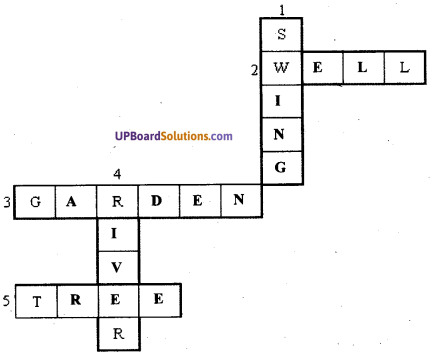
Fill the letters in the crossword (UPBoardSolutions.com) puzzle and form the words you read in the poem.
Answer:
UP Board Solutions for Class 7 English Chapter 9 The Swing img-1

UP Board Solutions
Activity     Note: Do it yourself.

We hope the UP Board Solutions for Class 7 English Chapter 9 The Swing help you. If you have any query regarding UP Board Solutions for Class 7 English Chapter 9 The Swing, drop a comment below and we will get back to you at the earliest.

Learning Together Class 6 English Chapter 1 Question Answer UP Board Solutions

UP Board Class 6th English Chapter 1 Learning Together Questions and Answers

कक्षा 6 अंग्रेजी पाठ 1 के प्रश्न उत्तर

These Solutions are part of UP Board Solutions for Class 6 English. Here we have given UP Board Solutions for Class 6 English Chapter 1 Learning Together.

Learning Together

TRANSLATION OF THE LESSON (पाठ का हिन्दी अनुवाद)

Sixth grade is ……………………………………………………………… things everyday.
हिन्दी अनुवाद – छठी श्रेणी एक विशेष स्थान है, देखो मेरे चेहरे पर बड़ी मुस्कुराहट । हमारी कक्षा एक महान टीम है, हम अपने अध्यापकों को खुश रखते हैं, हम हर व्यस्त दिन में कठिन परिश्रम करते हैं, फिर बाहर मैदान में खेलने जाते हैं। गुणा करना मजेदार है, नौ बार नौ इक्यासी होते हैं, एक से दस तक गणित तथ्यों को याद करना, अभ्यास करना (UPBoardSolutions.com) बार-बारे। खेल खेलना, गाना गाना, बहुत सा मज़ा पूरे साल तक, किताबें पढ़ना, कविताएँ कहना, हर दिन नई चीजें याद करना।

UP Board Solutions

Reading, Writing…………………………………………….. on my face.
हिन्दी अनुवाद – पढ़ना, लिखना और वर्तनी भी, इतना कुछ याद करना, इतना कुछ करना, इतिहास, भूगोल, विज्ञान भी, हमें नीले महासागर के बारे में भी पढ़ाते हैं। साल के अंत तक कठिन (UPBoardSolutions.com) परिश्रम करना, हम सहपाठी हैं और अच्छे मित्र हैं, हमें अपनी की हुई प्रगति पर गर्व है, हम सातवीं श्रेणी के लिए तैयार हो रहे हैं। छठी श्रेणी एक विशेष स्थान है, देखो मेरे चेहरे पर बड़ी मुस्कुराहट।।

EXERCISE (अभ्यास)

Comprehension Questions

Question 1.
Answer the following questions :
Answer:
Question a.
How do you make your teachers beam?
Answer:
By listening to the teachers attentively, and doing our homework timely, we make our teachers beam.

Question b.
What new things do you learn everyday?
Answer:
From every subject we learn new things everyday. Even in activities like music, dance and sports, we learn new techniques, methods and ways.

Question c.
Name the subjects you study in your class.
Answer:
We study history, geography, civics, science, english, hindi, and mathematics.

UP Board Solutions

Question d.
How do you enjoy with your friends in school?
Answer:
We study together, play together in the games period and share our tiffins in the break. In a free period, we talk at length on the topics of our interest.

Question 2.
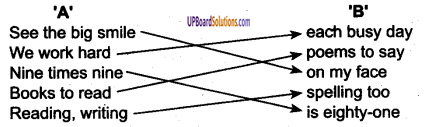
Match column ‘A’ with column ‘B’ to complete the lines of the poem:
Answer:
UP Board Solutions for Class 6 English Chapter 1 Learning Together img-1

Word Power.

Question 1.
Make a list of rhyming words from the poem. One has been done for you:
place – face
Answer:
UP Board Solutions for Class 6 English Chapter 1 Learning Together img-2

We hope the UP Board Solutions for Class 6 English Chapter 1 Learning Together help you. If you have any query regarding UP Board Solutions for Class 6 English Chapter 1 Learning Together, drop a comment below and we will get back to you at the earliest.

UP Board Class 10th English Chapter 1 Question Answer The Fountain (James Russell Lowell).

Class 10 English Poetry Chapter 1 Questions and Answers UP Board The Fountain (James Russell Lowell).

कक्षा 10 अंग्रेजी पाठ 1 प्रश्न उत्तर

These Solutions are part of UP Board Solutions for Class 10 English. Here we have given UP Board Solutions for Class 10 English Poetry Chapter 1 The Fountain (James Russell Lowell).

Comprehension Questions 

In the examination paper, there are asked only two questions from each paragraph. Given below are some more questions for extra practice.

Read the following stanzas and answer the questions put there upon :

(1) Into the sunshine, ……….. From morn till night ! [2011]

Question .
1. How does the fountain appear in the sunshine ?
(धूप में फव्वारा कैसा प्रतीत होता है ?)
                   Or
When is the fountain full of the light ?
(फव्वारा प्रकाश से भरा हुआ कब होता है ?)
2. What does the poet describe in the above lines ?
(उपर्युक्त पंक्तियों में कवि क्या वर्णन करता है ?) ।
                   Or
What does the fountain do from morning till night?
(सुबह से रात्रि तक फव्वारा क्या करता है ?)
Answer:
1. The fountain looks full of light in the sunshine.
(फव्वारा धूप में प्रकाश से भरा हुआ (UPBoardSolutions.com) प्रतीत होता है।)
2. In the above lines the poet describes that a fountain is leaping and flashing
from morning till night. (उपर्युक्त पंक्तियों में कवि वर्णन करता है कि सुबह से शाम तक एक फव्वारा उछलता रहता है और चमकता रहता है।)

UP Board Solutions

(2) Into the moon light, …………….. When the winds blow ! [2010, 11, 12, 14, 15, 16, 17, 18]

Question .
1. How does the fountain look like in the moon light ?
(चन्द्रमा की रोशनी में फव्वारा कैसा दिखाई देता है ?)
2. What kind of movement does the word ‘waving’ suggest ? What is meant by the word ‘so used in the third line?
(शब्द ‘waving’ किस प्रकार की गति को बताता है ? तीसरी पंक्ति में ‘so’ शब्द का क्या तात्पर्य है ?)
3. What colour is the fountain in moonlight ? What is the significance of the Word into in first line?”
(चन्द्रमा की रोशनी में फव्वारे का रंग कैसा होता है ? पहली पंक्ति में ‘into’ शब्द का क्या महत्त्व है ?)
4. What is the effect of the moon light on the fountain ?
(फव्वारे पर चन्द्रमा की रोशनी का क्या प्रभाव पड़ता है ?)
5. what happens when the winds blow?
(जब हवाएँ चलती हैं तब क्या होता है ?)
                      Or
How does the fountain look when the winds blow?
(जब हवाएँ चलती हैं तब फव्वारा कैसा लगता है ?)
                     Or
What is the effect of the winds on the fountain ?
(फव्वारे पर हवाओं का क्या प्रभाव होता है ?)
Answer:
1. In the moon light the fountain looks whiter than snow.
(चन्द्रमा की रोशनी में फव्वारा बर्फ से भी अधिक सफेद दिखाई देता है।)
2. Waving suggests the (UPBoardSolutions.com) movement to and fro. So’ means like’. |
(Waving’ इधर-उधर (दाएँ-बाएँ) की गति को बताता है। ‘So’ का अर्थ है ‘समान।)
3. In the moonlight the colour of the fountain is white. The word ‘into’ in first line denotes to move eternally in every condition.
(चन्द्रमा की रोशनी में फव्वारे की रंग सफेद होता है। पहली पंक्ति का शब्द ‘into’ प्रत्येक दशा में ‘लगातार आगे बढ़ने का संकेत दे रहा है। )
4. Moonlight makes the fountain whiter than snow.
(चन्द्रमा की रोशनी फव्वारे को बर्फ से भी अधिक सफेद बना देती है।)
5. When the winds blow, the fountain waves like a flower.
(जब हवाएँ चलती हैं तब फव्वारा फूल के समान लहराता हुआ दिखाई देता है।)

UP Board Solutions

(3) Into the starlight,…………………Happy by day! [2009]

Question .
1. How do you know that the fountain is always happy?
(आप कैसे जानते हैं कि फव्वारा सदैव प्रसन्न रहता है ?)
2. Which quality of the fountain affects the poet?
(फव्वारे का कौन-सा गुण कवि को प्रभावित कर रहा है ?)
3. What do you understand by the word ‘spray used in the poem ?
(कविता में प्रयुक्त ‘spray शब्द से क्या अभिप्राय है ?)
Answer:
1. The fountain is joyfully busy in moving up and up all the whole day and night. It indicates that it is always happy.
(फव्वारा दिन-रात खुशी-खुशी (UPBoardSolutions.com) ऊपर और ऊपर उठने में व्यस्त रहता है। अत: कहा जा सकता है कि
वह सदैव प्रसन्न रहता है।)
2. The poet affects much with the pleasure of the fountain as it is always happy in all conditions. It sprays at midnight or by day in all directions.
(कवि फव्वारे की प्रसन्नता से अधिक प्रभावित होता है, क्योकि यह प्रत्येक परिस्थिति में प्रसन्न रहता है। यह आधी रात में भी और दिन में भी अपनी फुहार रूपी प्रसन्नता सभी दिशाओं में छोड़ता रहता है।)

3. ‘Spray suggests that the fountain spreads its happiness in all directions.
(Spray’ शब्द से अभिप्राय है कि फव्वारा अपनी प्रसन्नता सभी दिशाओं में फैलाना चाहता है।)

UP Board Solutions

(4) Ever in motion, ……Never a weary; [2014, 16, 18]

Question .
1. From which poem has the above stanza been taken? Who is the author of the
(उपर्युक्त पद्यांश किस कविता से लिया गया है? इस कविता के रचयिता कौन हैं?)
2. How does the fountain remain in motion?
(फव्वारा चलते समय कैसा रहता है ?)
3. In which direction does the fountain climb ?
(फव्वारा किस दिशा में ऊपर जाता है ?)
4. What lesson can we learn from the constantly ‘heavenward’ moving | fountain ?
(लगातार आकाश की ओर उठते हुए फव्वारे से हम क्या सीख सकते हैं ?)
5. Why has the fountain been called ever in motion’ ? ।
(फव्वारे को सदैव गतिशील क्यों कहा गया है ?)
6. Describe the qualities of fountain as mentioned in the above noted stanza.
(उपर्युक्त पद्यांश में वर्णित फव्वारे के गुणों का वर्णन कीजिए।)
7. Point out the rhyming words in the above stanza.
(उपर्युक्त पद्यांश में से समान तुक वाले शब्द छाँटिए।)
Answer:
1. The above stanza has been (UPBoardSolutions.com) taken from the poem “The Fountain’. The author
of the poem os James Russell Lowell.
(उपर्युक्त पद्यांश The Fountain’ नामक कविता से लिया गया है। इसके रचियता James Russell Lowell हैं।)
2. The fountain remains blithesome and cheery in motion.
(फव्वारा जब चलता है, प्रसन्न और प्रफुल्लित रहता है।)
3. The fountain climbs heavenward.
(फव्वारा ऊपर की ओर ही जाता है। )
4. We can learn from the fountain that we should also work hard constantly to achieve higher goals of life.
(फव्वारे से हम सीख सकते हैं कि हमें जीवन के उच्च लक्ष्यों को प्राप्त करने के लिए सतत प्रयत्न करना चाहिए।)
5. The fountain has been called ‘ever in motion’ because it never stops and always moves upward.
(फव्वारे को ‘सदा गति में कहा गया है, क्योंकि यह कभी रुकता नहीं और सदा ऊपर की ओर चलता है।)
6. The qualities of the fountain as mentioned in the above stanza are :
(उपर्युक्त पद्यांश में वर्णित फव्वारे के गुण (UPBoardSolutions.com) इस प्रकार हैं )
(a) always active,
(b) happy and cheerful,
(c) going upward,
(d) never tired.
7. The rhyming words are: cheery and aweary.

UP Board Solutions

(5) Glad of all weathers, ……………. Motion the rest; [2009, 12, 16]

Question .
1. What is the condition (state) of the fountain in all weathers ?
(प्रत्येक मौसम में फव्वारे की क्या दशा होती है ?)
                    Or
How does the fountain look in all weathers ?
(प्रत्येक मौसम में फव्वारा कैसा दिखाई देता है ?)
2. How does the fountain move?
(फव्वारा कैसे गतिमान होता है ?)
3. What does the poet mean by the line motion the rest’ ?
(Motion thy rest’ पंक्ति से कवि का क्या आशय है ?)
4. What lesson does the poet want to give us in the above stanza ?
|(उपर्युक्त पद्यांश में कवि हमें क्या शिक्षा देना चाहता है ?)
Answer:
1. The fountain looks glad in all weathers.
(फव्वारा सभी मौसमों में प्रसन्न प्रतीत होता है।) ।
2. The fountain moves upward (UPBoardSolutions.com) and downward (for rest).
(फव्वारा ऊपर की ओर तथा नीचे की ओर (आराम के लिए) गतिमान रहता है।)
3. The fountain never takes rest. It always moves upward and downward. It always remains in motion. Motion is its rest.
(फव्वारा कभी विश्राम नहीं करता है। यह हमेशा कभी ऊपर तो कभी नीचे की ओर बहता रहता है। यह हमेशा गतिमान रहता है। गति ही इसका विश्राम है।)
4. The poet teaches us always to be active to achieve higher goals of life.
(कवि हमें शिक्षा देता है कि जीवन के उच्च लक्ष्यों को प्राप्त करने के लिए हमें सदा गतिशील रहना चाहिए।)

UP Board Solutions

(6) Full of nature……………………….. Ever the same; [2009]

Question .
1. What do the first two lines of the given stanza mean?
(पद्यांश की पहली दो पंक्तियों का क्या अर्थ है ?)
                        Or
Why can nothing ‘tame’ (control) the fountain ?
(कोई भी फव्वारे को क्यों नहीं रोक सकता ?) ”
2. What is the nature of the fountain?
(फव्वारे की प्रकृति क्या है ?)
3. What do the words ‘Changed every moment, ever the same’ indicate about the Fountain?
(Changed every moment, every the same’ शब्द फव्वारे के बारे में क्या बताते हैं ?)
4. How is the fountain ever the same ?
(फव्वारा सदैव एक-सा कैसे रहता है ?)
Answer:
1. The fountain has a natural instinct (UPBoardSolutions.com) and power to go up and up and nothing can stop it from doing so.
(फव्वारे में एक प्राकृतिक शक्ति होती है जिससे वह ऊपर और ऊपर उठना चाहता है। उसे कोई नहीं रोक सकता।)
2. The nature of the fountain is uncontrollable.
(फव्वारे की प्रकृति अनियन्त्रणीय है।)
3. These words indicate that the fountain always remains the same in every moment. It never changes.
(ये शब्द बताते हैं कि फव्वारा हमेशा हर स्थिति में ज्यों-का-त्यों रहता है। यह कभी भी बदलता नहीं है।)
4. The fountain keeps on changing every moment but looks ever the same. .
(यद्यपि फव्वारा परिवर्तनशील है फिर भी सदैव एक समान ही प्रतीत होता है।)

UP Board Solutions

(7) Ceuseless aspiring, ……. The element; [2009, 11, 13, 16]

Question .
What qualities of the fountain have been described ?
(फव्वारे के कौन-से गुणों का बखान किया गया है ?)
2. What are the elements of the fountain?
(फव्वारे के तत्त्व कौन-कौन से हैं ?)
3. What is the nature of the fountain ? What do the words ‘darkness and ‘sunshine’ indicate?
(फव्वारे का क्या स्वभाव होता है ? ‘darkness’ तथा ‘sunshine’ शब्द क्या प्रकट करते हैं ?)
4. What lesson does the poet want to give us in the above stanza ?
(उपर्युक्त पद्यांश में हमें कवि क्या सन्देश देना चाहता है ?
5. Point out the rhyming words in the above stanza.
(उपर्युक्त पद्यांश में से समान तुक वाले शब्द छाँटिए।)
Answer:
1. The quality of the fountain is (UPBoardSolutions.com) that it is always eager to go up but is always
satisfied.
(फव्वारे का यह गुण है कि यद्यपि यह सदैव ऊपर और ऊपर उठना चाहता है तथापि उसमें सन्तोष होता है।)
2. Darkness and sunshine are the elements of the fountain.
(अन्धकार और प्रकाश अथवा रात और दिन फव्वारे के तत्त्व हैं।)
3. The nature of the fountain is always to go up without stopping. ‘Darkness’ indicates night’ and ‘sunshine’ indicates “day’.
(फव्वारे का स्वभाव है बिना रुके सदा ऊपर की ओर जाना। darkness रात्रि को और sunshine दिन को प्रकट करते हैं।)
4. In the above stanza, the poet wants us to keep ourselves always fresh and changing but steady. We should always look towards higher things. We should work hard from morning till night and should never feel tired.
(उपर्युक्त पद्यांश में कवि चाहता है कि हम स्वयं को सदा (UPBoardSolutions.com) तरोताजा और परिवर्तनशील रखें, किन्तु दृढ़ रहें। हम सदा उच्च बातों की ओर देखें। हमें प्रात:काल से सायंकाल तक परिश्रम करना चाहिए
और थका हुआ अनुभव नहीं करना चाहिए।
5. The rhyming words are: : content and element.

UP Board Solutions

(8) Glorious fountain! ……Upward like thee! [2009, 10, 12, 14, 16, 17]

Question .
From which poem has the above stanza been taken? Who is the author of the poem?
(उपर्युक्त पद्यांश किस कविता से लिया गया है? इस कविता के रचयिता कौन हैं?)
2. Why has the fountain been addressed as glorious ?
(फव्वारे को शानदार कहकर क्यों सम्बोधित किया गया है ?)
3. What qualities of the fountain does the poet wish to have ?
(फव्वारे के कौन-से गुण कवि भी ग्रहण करना चाहता है ?)
                             Or
What kind of heart does the poet wish to have ?
(कवि किस प्रकार का हृदय चाहता है ?)
4. The poet has called the fountain changeful’ and ‘constant. Why has he used these contradictory words for the fountain ? (कवि ने फव्वारे को ‘changeful’ तथा ‘constant’ कहा है। उसने फव्वारे के लिए परस्पर विरोधी
शब्द क्यों प्रयोग किये हैं ?)
5. What qualities of the fountain have been mentioned by the poet in these lines ?
(इन पंक्तियों में कवि ने फव्वारे के किन गुणों का वर्णन किया है ?)
6. Point out the rhyming words in the above. stanza. ?
(उपर्युक्त पंद्याश में से समान तुक वाले शब्द छाँटिए।)
Answer:
1. The above stanza has been taken (UPBoardSolutions.com) from the poem ‘The Fountain’. The author of the poem is James Russell Lowell.
(उपर्युक्त पद्यांश The Fountain’ नामक कविता से लिया गया है। इसके रचयिता James Russell Lowell हैं।)
2. The fountain looks very beautiful when it goes up. So the poet addresses it as glorious.
(फव्वारा जब ऊपर को जाता है तब अत्यन्त सुन्दर लगता है। इसीलिए कवि इसे glorious कहकर सम्बोधित कर रहा है।)
3. The poet wishes to be fresh, changeful, constant and upward like the fountain.
(कवि भी फव्वारे की भाँति ताजा, परिवर्तनशील, सतत और प्रगतिशील बनना चाहता है।)
4. Like the changeful fountain, we have ups and downs in our life, but we should move forward with firmness like the constant fountain.
(हमारे जीवन में changeful फव्वारे की तरह उतार-चढ़ाव आते हैं, परन्तु हमें constant फव्वारे
की तरह सदैव अडिग भाव से आगे बढ़ते रहना चाहिए।)
5. The poet has described in these lines that the fountain is fresh, changeful and constant.
(इन पंक्तियों में कवि ने बताया है कि (UPBoardSolutions.com) फव्वारा ताजा, परिवर्तनशील और सतत प्रगतिशील है।)”
6. The words be’ and ‘thee’ rhyme.

UP Board Solutions

APPRECIATION OF THE POEM

Question 1.
Who is addressing and to whom in this poem ?
(इस कविता में कौन किसे सम्बोधित कर रहा है ?)
Answer:
In this poem the poet is addressing to the fountain.
(इस कविता में कंवि फव्वारे को सम्बोधित कर रहा है।)

Question 2.
What qualities of the fountain does the poet wish to have ?
(कवि फव्वारे के कौन-से गुण प्राप्त करना चाहता है ?)
Answer:
The poet wishes to have the qualities of freshness, changefulness and constancy.
(कवि ताजगी, परिवर्तनशीलता और (UPBoardSolutions.com) निरन्तरता जैसे गुण प्राप्त करना चाहता है।)

UP Board Solutions

CENTRAL IDEA OF THE POEM

[2009, 10, 11, 12, 13, 14, 15, 16, 17, 18]
The fountain is a source of inspiration for the poet. It looks charming day and night. It remains glad in all weathers. Its movements are natural and it cannot be trained. It is untiring, ever-happy, ceaselessly aspiring, ever fresh and glorious. The poet also wishes to remain fresh, constant and upward like the fountain.
(फव्वारा कवि के लिए प्रेरणा का स्रोत है। यह पूरे दिन और रात् को सुन्दर दिखाई देता है। यह सभी मौसमों में प्रसन्न रहता है। इसकी गतियाँ स्वाभाविक हैं और इसे प्रशिक्षित नहीं किया जा सकता। यह थकता नहीं, सदा प्रसन्न रहता है, अविरत (UPBoardSolutions.com) ऊँचा उठने की महत्त्वाकांक्षा रखता है, सदैव ताजा और यशस्वी रहता है। कवि भी फव्वारे के समान तरोताजा, दृढ़ और प्रगतिशील बनना चाहता है।)

UP Board Solutions

ADVICE OF THE POET

We learn from the fountain to keep ourselves always fresh and changing but steady. We should always look towards higher things. We should work hard from morning till night and should never feel tired.
(हम फव्वारे से सीखते हैं कि हम स्वयं को सदा तरोताजा और परिवर्तनशील (UPBoardSolutions.com) रखें, किन्तु दृढ़ रहें। हम सदा उच्च बातों की ओर देखें। हमें प्रात:काल से सायंकाल तक परिश्रम करना चाहिए और थका हुआ अनुभव नहीं करना चाहिए।)

Hope given UP Board Solutions for Class 10 English Poetry Chapter 1 are helpful to complete your homework.

If you have any doubts, please comment below. UP Board Solutions try to provide online tutoring for you.